Categoría: Miscellaneous
Haverford Moodle
Resultados de la búsqueda: 388

- Profesor: Kevin Quin
Categoría: Africana Studies
- Profesor: Kevin Quin
Categoría: Africana Studies
- Profesor: Zeynep Sertbulut
Categoría: Anthropology
- Profesor: Zolani Ngwane
Categoría: Anthropology

And most of all beware, even in thought, of assuming the sterile attitude of the spectator, for life is not a spectacle, a sea of grief is not a proscenium, a man who wails is not a dancing bear . . .
–Aimé Césaire
How do we turn our collective full-bodied intelligence towards collaboration, if that is the way we will survive?
–adrienne maree brown
The State is a condition, a certain relationship between human beings, a mode of behavior; we destroy it by contracting other relationships, by behaving differently toward one another....
–Gustav Landauer
There are no dangerous thoughts–thinking itself is dangerous.
–Hannah Arendt
I do think that if I had to choose one word to which hope can be tied, it is hospitality… practice of hospitality recovering threshold, table, patience, listening, and from there generating seedbeds for virtue and friendship on the one hand. On the other hand, radiating out for possible community, for rebirth of community.
–Ivan Illicch
A problem calls for a solution; the only question is whether one can be found and made to work, and once this is done, the problem is solved. A predicament, by contrast, has no solution. Faced with a predicament, people come up with responses. Those responses may succeed, they may fail, or they may fall somewhere in between, but none of them ‘solves’ the predicament, in the sense that none of them makes it go away.
– John Michael Greer
This course will introduce students to the field of environmental anthropology which focuses on the interrelationship between human cultures and natural environments. In particular we will attend to the challenge of anthropological confrontations with the climate crisis related cascading crises, including inequality and white supremacy. Environmental anthropology studies the various ways in which our biological survival and our social structures are influenced by environmental factors around us, while at the same time analyzing how our actions shape these environmental factors in turn. We will look towards anthropology (and related disciplines) for intellectual, imaginative and action-oriented resources for addressing what may be the most critical issue of our time—climate change–and how it intersects with inequality and intensifying authoritarianism. We will approach these issues through experiential methods and collaborative work.
Broadly there are three segments to this course--the self, ecologies, and collaborations (though not in a linear way). Underlying each of them is a search for ways to live differently with and resist authoritarianism, racial capitalism, and the intensifying climate crisis. While these topics may not always be explicitly present in our readings, they are built into the architecture of the course and should be kept in mind throughout it.
I take seriously the notion that our time together is valuable, that we are in an urgent situation that in many ways the institutions we inhabit (Haverford included) have yet to awaken to our predicament. I also believe that anthropological thinking offers some possibilities for imagining and enacting alternatives. From studies of environmental racism and environmental justice, to indigenous movements and speculative design tools, the anthropological approach is often improvisational, lending itself to experiences that allow for novel juxtapositions, and listening to essential quieter voices that often go unnoticed, viewing the world in imaginative ways, and offering possibilities for new configurations. We engage all of our senses and collaborative capacities in this course. Please come ready to experiment...
- Profesor: Joshua Moses
Categoría: Anthropology
- Profesor: Zainab Saleh
Categoría: Anthropology
- Profesor: Michael D'Arcy
Categoría: Anthropology
- Profesor: Zolani Ngwane
Categoría: Anthropology

This advanced seminar is an anthropological exploration of empire both as an analytic category and a historical phenomenon. In this course, we will first discuss anthropology’s historical entanglements with empire as the discipline that studies the non-European Others. Then we will read from anthropologists who have criticized this epistemological legacy and incorporated the study of imperialism, empire and imperial formations in their research agenda since the second half of the twentieth century. By looking at cases from the Caribbean, Africa, America, and the Middle East, this course explores key concepts and major debates such as race, genocide, settler colonialism, security, militarism, diaspora, material culture and museums. Students will emerge from this course with an in-depth understanding of anthropological approaches to empire, methodologies ranging from archival research to ethnography, and the analytical limits and possibilities of empire in making sense of our contemporary world.
- Profesor: Ezgi Guner
Categoría: Anthropology
This interdisciplinary seminar explores Africa’s global connections and diasporic formations through ethnographic case studies. Moving beyond narratives that position Africa as peripheral or passive in global processes, the course places African people, histories, and cultural practices at the center of global inquiry. Drawing from richly textured ethnographic accounts, we will examine how African communities engage with, shape, and challenge global structures of power—including capitalism, religion, media, migration, and humanitarianism.
At the same time, we turn a critical eye to the methodologies and politics of ethnographic writing itself. Whose stories are told, how are they framed, and to what ends? Students will engage deeply with questions of representation, voice, and the ethics of knowledge production in African and diasporic contexts. Together, we will rethink what it means to study “Africa” and “the diaspora” as lived, contested, and globalized experiences. The course combines critical reading, discussion, writing, and independent research, culminating in a final ethnographic or analytical project.
At the same time, we turn a critical eye to the methodologies and politics of ethnographic writing itself. Whose stories are told, how are they framed, and to what ends? Students will engage deeply with questions of representation, voice, and the ethics of knowledge production in African and diasporic contexts. Together, we will rethink what it means to study “Africa” and “the diaspora” as lived, contested, and globalized experiences. The course combines critical reading, discussion, writing, and independent research, culminating in a final ethnographic or analytical project.
- Profesor: Ezgi Guner
- Profesor: Zolani Ngwane
Categoría: Anthropology
- Profesor: Zolani Ngwane
Categoría: Anthropology

- Profesor: Emily Hong
Categoría: Anthropology
- Profesor: Emily Hong
Categoría: Anthropology

This course of Intensive First Year Arabic is designed for students with no previous knowledge, or very limited knowledge, of the Arabic language. Through the communicative approach and audio/visual materials, students learn the sounds, writing system, and basic grammar of Modern Standard Arabic, the form of literary Arabic shared by all Arab countries. Emphasis is placed on the simultaneous development of all the four skills necessary for acquiring any language (listening, speaking, reading and writing). Various aspects of modern Arabic culture and society will provide contexts for the language learning process.
There are no prerequisites for First Year Arabic, and the course assumes no prior knowledge of Arabic. Students who are native or heritage speakers of Arabic or have studied Arabic prior to enrolling in the course have to take the placement exam to assess if they can test out of this course, and into a higher level.
There are no prerequisites for First Year Arabic, and the course assumes no prior knowledge of Arabic. Students who are native or heritage speakers of Arabic or have studied Arabic prior to enrolling in the course have to take the placement exam to assess if they can test out of this course, and into a higher level.
- Profesor: Manar Darwish
Categoría: Arabic

This course of Intensive First Year Arabic is designed for students with no previous knowledge, or very limited knowledge, of the Arabic language. Through the communicative approach and audio/visual materials, students learn the sounds, writing system, and basic grammar of Modern Standard Arabic, the form of literary Arabic shared by all Arab countries. Emphasis is placed on the simultaneous development of all the four skills necessary for acquiring any language (listening, speaking, reading and writing). Various aspects of modern Arabic culture and society will provide contexts for the language learning process.
There are no prerequisites for First Year Arabic, and the course assumes no prior knowledge of Arabic. Students who are native or heritage speakers of Arabic or have studied Arabic prior to enrolling in the course have to take the placement exam to assess if they can test out of this course, and into a higher level.
There are no prerequisites for First Year Arabic, and the course assumes no prior knowledge of Arabic. Students who are native or heritage speakers of Arabic or have studied Arabic prior to enrolling in the course have to take the placement exam to assess if they can test out of this course, and into a higher level.
- Profesor: Manar Darwish
- Profesor: Amira Ghazy
Categoría: Arabic
This course of Intensive First Year Arabic is designed for students with no previous knowledge, or very limited knowledge, of the Arabic language. Through the communicative approach and audio/visual materials, students learn the sounds, writing system, and basic grammar of Modern Standard Arabic, the form of literary Arabic shared by all Arab countries. Emphasis is placed on the simultaneous development of all the five skills necessary for acquiring any language: listening, speaking, reading, writing and intercultural competency. Exploring various aspects of modern Arabic culture and society will provide contexts for the language learning process.
The two required textbooks have audio and video components available through the textbooks’ website: Lingco which will help you develop your listening and pronunciation skills, and will immensely help you in your studies and with your homework. Closely studying the content of the audio and video material and trying to reproduce them will help you acquire more vocabulary and expression.
The two required textbooks have audio and video components available through the textbooks’ website: Lingco which will help you develop your listening and pronunciation skills, and will immensely help you in your studies and with your homework. Closely studying the content of the audio and video material and trying to reproduce them will help you acquire more vocabulary and expression.
- Profesor: Manar Darwish
- Profesor: Radwa El Barouni
Categoría: Arabic

This course of Intensive First Year Arabic is designed for students who have already completed Intensive first semester First Year Arabic, or its equivalent. We will continue learning, through the communicative method and audio/visual material to listen to, speak, read and write Modern Standard Arabic, the form of Arabic shared by educated people of the Arabic Speaking World. Classroom time is mainly devoted to activating the material students already prepared through conversation, discussions, short writing activities and grammar drills. The class will be regularly introduced to authentic cultural materials derived from a variety of the living contexts of the more than 300 million Arabic-speaking people. The aim is to advance students to a higher level of the language and proficiency.
Our main textbook has audio/video components made available on the publisher’s website: Lingco (Please get access if you have not already done that in the Fall.) There are many activities that will help you continue to develop your listening and pronunciation skills, and will immensely help you in your studies. Closely studying the content of the audio/video material and trying to reproduce them will help you acquire more vocabulary and express yourself more eloquently.
No language can be studied in a vacuum and has to be tied to the culture that utilizes it. Arabic is spoken in over twenty African and Asian countries. The written language is standardized, mainly because of the Qur’ân, the spoken dialects vary from one country to another and even from one region to another within the same country. In addition to MSA, you can become familiar with one or another of two major dialects if you so wish; later, you can select other dialects to suit your needs, especially as you travel overseas.
- Profesor: Manar Darwish
- Profesor: Amira Ghazy
Categoría: Arabic

This is a reading course in classical Arabic texts. Because there is a vast array of literature to choose from ranging from the religious to the secular from the 8th century on, and it is all extraordinarily interesting, we will choose selections from books with the interest of the enrolled students in in mind. We will also use supplemental sources for comparison as time allows.
The first book we will start with is written by ‘Abd al-Laṭīf al-Baghdādī (1162-1231). It consists of two parts, the first a kind of anthropology of Egypt, including many archaeological references and descriptions (59 pages) and the second a very short annalistic chronicle of the years 1200-1202 in Egypt. This whole book was written in 1204. The author, who was an Iraqi physician from al-Mawṣil (Mosul) was an employee of the ‘Abbāsid caliphal government in Iraq, sojourned in Egypt for a number of years.
A second book that is worth exploring together, and is an earlier work, consists of two short travel reports by Abū Zayd al-Sīrāfī (fl. c. 915-6) and Aḥmad Ibn Faḍlān. The work by al-Sīrāfī itself consists of two parts, the first by an earlier anonymous author writing in 851-2 (22 pages) and the second by al-Sīrāfī, probably written around or after 915 (34 pages). The topic is travel by sea to India, Southeast Asia, and China, giving an account of ninth and tenth century conditions as well as the extent of Middle Eastern knowledge or those areas and their peoples at the time of writing. The second work (35 pages) by Aḥmad Ibn Faḍlān (fl. 921-2) consists of a description of an embassy of 921-2 from the ‘Abbāsid caliph in Baghdad to the Volga Bulgars, whose capital was located in what is now Tatarstan, Russia, about 60 miles south of Kazan. All that is known of this author’s life is what can be deduced from his writing. Ibn Faḍlān’s book is considered one of the most important early sources for the early history of Russia, as well as for diplomacy in the ‘Abbāsid caliphate.
In addition, we will be using An Introduction to Modern Arabic by Farhat J. Ziadeh and R Bayly Winder as it introduces grammar in an easy to follow manner for students of all backgrounds. Students at the Advanced/ Superior Level will find it a refreshing review and will provide an insight into the structure of the language from a different perspective.
- Profesor: Manar Darwish
Categoría: Arabic

Placement Exam for Incoming Students who have previously studied Arabic in school or are heritage speakers.
- Profesor: Manar Darwish
Categoría: Placement Exams and orientation activities
- Profesor: Jonathan Goodrich
Categoría: Arts

Often considered a gateway for a fine arts education, drawing teaches us not just how to render a likeness in pencil, charcoal or ink, but what it means to see. In this seven-week introductory course for students with little or no previous experience, we will first learn how to see with a painter’s eye. Working from live models, still life, landscape, imagination and masterworks, we’ll study perspective, light, tones, proportion, composition, and other fundamentals.
- Profesor: Jonathan Goodrich
Categoría: Arts

Often considered a gateway for a fine arts education, drawing teaches us not just how to render a likeness in pencil, charcoal or ink, but what it means to see. In this seven-week introductory course for students with little or no previous experience, we will first learn how to see with a painter’s eye. Working from live models, still life, landscape, imagination and masterworks, we’ll study perspective, light, tones, proportion, composition, and other fundamentals.
- Profesor: Jonathan Goodrich
Categoría: Arts

A seven-week introductory course for students with little or no experience in drawing. Students will first learn how to see with a painter's eye. Composition, perspective, proportion, light, form, picture plane and other fundamentals will be studied. We will work from live models, still life, landscape, imagination and masterwork.
- Profesor: Jonathan Goodrich
Categoría: Arts

Often considered a gateway for a fine arts education, drawing teaches us not just how to render a likeness in pencil, charcoal or ink, but what it means to see. In this seven-week introductory course for students with little or no previous experience, we will first learn how to see with a painter’s eye. Working from live models, still life, landscape, imagination and masterworks, we’ll study perspective, light, tones, proportion, composition, and other fundamentals.
- Profesor: Jonathan Goodrich
Categoría: Arts
- Profesor: Zachary Hill
Categoría: Arts

Often considered a gateway for a fine arts education, drawing teaches us not just how to render a likeness in pencil, charcoal or ink, but what it means to see. In this seven-week introductory course for students with little or no previous experience, we will first learn how to see with a painter’s eye. Working from live models, still life, landscape, imagination and masterworks, we’ll study perspective, light, tones, proportion, composition, and other fundamentals.
- Profesor: Jonathan Goodrich
Categoría: Arts

A seven-week introductory course for students with little or no experience in painting. Students will be first introduced to the handling of basic tools, materials and techniques. We will study color theory, including interactions of color, value & color, warms & cools, complementary colors and optical mixtures, as well as texture and surface quality. We will work from live model, still life, landscape, imagination and masterwork.
- Profesor: Jonathan Goodrich
- Profesor: Ying Li
Categoría: Arts
An introductory seven-week course covers B/W and color woodcuts using innovative laser cutting and traditional methods including cutting, proofing, rolling-up, color preparation, and registration. Students study techniques and concepts in relief mediums as well as visual expressions through hands-on experiences. Visual problems, composition, color values and separation, and successful solutions of concepts and ideas will be explored. Students are encouraged to express personal visual statements during the course as well as to study professional artists’ works. Individual discussions and group critiques will be held for aesthetic explorations and visually successful solutions. Additional drawings are requested.
- Profesor: Hee Sook Kim
Categoría: Arts
ARTSH124D01.FA25 is an introductory course providing a comprehensive foundation and skillset for monotype printing through hands-on activities, demonstrations, and discussions. Masks and stencils, subtractive and additive imaging, direct painting with solvents experiments, collage, and painterly methods are addressed. Creative ideas and approaches are highly encouraged. Individual discussions and group critiques regarding visual components, ideas, and concepts are held periodically. Practice is necessary during and outside of class meetings. Additional drawings are requested.
- Profesor: William Pangburn
Categoría: Arts
An introductory course provides a comprehensive foundation and skills of Monotype Printing through hands-on activities. Exploration in Masks and Stencils method, Subtractive imaging, Direct Painting in Solvents experiments, Embossing, Collage, and painterly methods are addressed. Creative ideas and approaches are highly encouraged. Individual discussions and group critiques regarding visual components, ideas, and concepts are held periodically. Practice is necessary during and outside of class meetings. Additional drawings are requested.
- Profesor: Hee Sook Kim
Categoría: Arts
An advanced course covers Color Etching using multiple plates. Viscosity printing, line
etching, aquatint, soft-ground, surface roll, Chin-collè, plate preparation, registration,
and editioning are covered. Students study techniques and concepts in Intaglio method
as well as visual expressions through hands-on experiences. Development of technical
skills of Intaglio and personal visual study are necessary and creative and experimental
approaches beyond two-dimensional outcomes encouraged. A strong body of work
following a specific theme is required. Individual discussions and group critiques are
held periodically. Additional research on the history of printmaking is requested.
- Profesor: Hee Sook Kim
Categoría: Arts
Materials and Techniques: Etching is an intermediate course in which students study intaglio techniques, processes, and concepts, as well as develop personal composition and visual expression through hands-on experiences. This course covers plate preparation, drypoint, line etching, aquatint, soft-ground, surface roll, Chin-collè, color etching techniques, registration, printing, and editioning. It is expected that students will acquire proficiency in technical skills. Creative and experimental approaches are encouraged. A strong body of work following a specific theme is required. Individual discussions and group critiques are held periodically.
- Profesor: William Pangburn
Categoría: Arts
An intermediate course covering Computer software (Imaging in Photoshop and Illustrator) and Printmaking techniques (Printing in Lithography). Students will study techniques and concepts in computer and printmaking as well as visual expressions through hands-on experiences. Students are expected to master digital tools and combine their ideas with printmaking media such as the Polyester Lithographic method. Creating images based on consistent thematic ideas or subjects is required, along with successful visual solutions. Creative and experimental approaches are encouraged. Individual discussions and group critiques are held periodically. Additional research on the history of printmaking is requested.
- Profesor: Hee Sook Kim
Categoría: Arts

Students are encouraged to experiment with various painting techniques and materials in order to develop a personal approach to self-expression. We will emphasize form, color, texture, and the relationship among them; influences of various techniques upon the expression of a work; the characteristics and limitations of different media. Students will work from observation, conceptual ideas and imagination. Course includes drawing projects, individual and group crits, slide lectures, museum and gallery visits.; Lottery Preference: Fine Arts majors and minors; Enrollment Limit: 12
- Profesor: Jonathan Goodrich
- Profesor: Ying Li
Categoría: Arts
An advanced course covers Color Etching using multiple plates. Viscosity printing, line
etching, aquatint, soft-ground, surface roll, Chin-collè, plate preparation, registration,
and editioning are covered. Students study techniques and concepts in Intaglio method
as well as visual expressions through hands-on experiences. Development of technical
skills of Intaglio and personal visual study are necessary and creative and experimental
approaches beyond two-dimensional outcomes encouraged. A strong body of work
following a specific theme is required. Individual discussions and group critiques are
held periodically. Additional research on the history of printmaking is requested.
etching, aquatint, soft-ground, surface roll, Chin-collè, plate preparation, registration,
and editioning are covered. Students study techniques and concepts in Intaglio method
as well as visual expressions through hands-on experiences. Development of technical
skills of Intaglio and personal visual study are necessary and creative and experimental
approaches beyond two-dimensional outcomes encouraged. A strong body of work
following a specific theme is required. Individual discussions and group critiques are
held periodically. Additional research on the history of printmaking is requested.
- Profesor: Hee Sook Kim
Categoría: Arts

Students will build on the work done in 200 level courses to develop further their individual approach to painting. Students are expected to create projects that demonstrate the unique character of their chosen media in making their own art. Completed projects will be exhibited at the end of semester. Class will include weekly crits, museum visits, visiting artists' lecture and crits. Each student will present a 15- minute slide talk and discussion of either their own work or the work of artists who influenced them.; Enrollment Limit: 12
- Profesor: Jonathan Goodrich
- Profesor: Ying Li
Categoría: Arts

ASTR101, “Astronomical Ideas" provides an introduction to both modern and ancient astronomy with minimal mathematics. My goal is to provide a framework to discuss the nature of science and astronomy. This will cover three main topics on the theme of “Our place in the Universe" - (1) the view we have from Earth and how humans have interacted with it and used it to learn about the Universe; (2) our understanding of planets (including our own Earth as a planet and the latest knowledge of planets outside our solar system), (3) what we know about galaxies (including ours and our neighbours) and the rest of universe, and the process of science used to understand this.
- Profesor: Karen Masters
Categoría: Astronomy

ASTR 204 is the Introduction to Astrophysics class required for both astronomy and astrophysics majors and astronomy minors. This course provides a broad physical foundation to astronomy and astrophysics and serves as a prerequisite for the study of advanced topics. We will cover the physics of stars and stellar remnants, nebulae and star formation, as well as an introduction to Galactic and extragalactic astronomy and the basics of observational and theoretical cosmology.
- Profesor: Alyssa Bulatek
Categoría: Astronomy

Astro 341 is a laboratory class for observational astrophysics consisting of observing projects using the CCD camera on the 16" Schmidt-Cassegrain telescope (in the large dome of the Strawbridge Observatory), and/or using small radio telescope(s) during an (optional) trip to the Green Bank Observatory. Data from your observations will be analyzed with either an image processing software package (AstroImageJ) or Python. A detailed observing log will be kept (and submitted) along with one sets of results written up as formal reports in the style of scientific paper and presented at the end of the semester. Various scaffolding assignments across themes related to observational astrophysics will be done by all students, used to support project work.
- Profesor: Karen Masters
Categoría: Astronomy

Astro 341 is a laboratory class for observational astrophysics consisting of observing projects using the CCD camera on the 16" Schmidt-Cassegrain telescope (in the large dome of the Strawbridge Observatory), and/or using small radio telescope(s) during an (optional) trip to the Green Bank Observatory. Data from your observations will be analyzed with either an image processing software package (AstroImageJ) or Python. A detailed observing log will be kept (and submitted) along with one sets of results written up as formal reports in the style of scientific paper and presented at the end of the semester. Various scaffolding assignments across themes related to observational astrophysics will be done by all students, used to support project work.
- Profesor: Karen Masters
- Profesor: Paul Thorman
Categoría: Astronomy
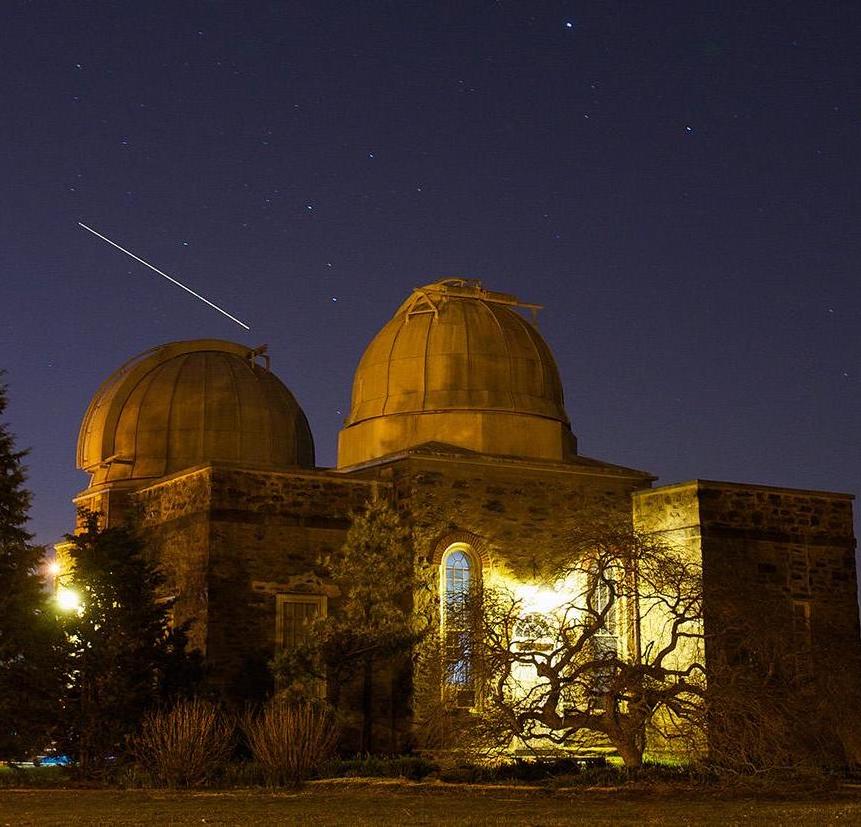
Astro 341 is a laboratory class for optical observational astrophysics consisting of observing projects using the CCD camera on the 16" Schmidt-Cassegrain telescope (in the large dome of the Strawbridge Observatory). Data from your observations will be analyzed with either an image processing software package (AstroImageJ) or Python. A detailed observing log will be kept (and submitted) along with one sets of results written up as formal reports in the style of scientific paper and presented at the end of the semester. Various scaffolding assignments across themes related to observational astrophysics will be done by all students, used to support observational work. For a visual overview of the themes, assignments and projects see the last page.
- Profesor: Karen Masters
- Profesor: Paul Thorman
Categoría: Astronomy

In this course, you will learn the fundamentals of star formation, from gravitational collapse of a molecular cloud to formation of a nuclear burning core. You will gain experience solving physical problems and developing physical insights. You will learn about physical processes and order-of-magnitude estimation techniques. This class will fill in the size scales between ISM and stars, and will have some overlap with each.
- Profesor: Alyssa Bulatek
Categoría: Astronomy
- Profesor: Andrea Lommen
Categoría: Astronomy

Astro 352 is a 0.5 credit upper level astronomy/astrophysics elective. We will cover the basics of modern extragalactic science (a review of our knowledge of the Milky Way and external galaxies) alongside hands on projects in python involving data science/statistical techniques used to investigate them. Assessment will be project based, with regular coding assignments (in python) done during class time, and guided reading of both current, and classic astrophysical literature. Students will leave with an understanding of extragalactic astrophysics as a modern data focused science.
- Profesor: Karen Masters
Categoría: Astronomy

Image Credit: Steve Gschmeissner/Science Photo Library/Getty Images
Cell Biology and Physiology:
In Quarter 3 of BIO201, students first explore the unity and diversity of cells, from prokaryotic to eukaryotic. They then investigate membrane composition, emphasizing lipid bilayers and fluidity, and learn about various transport processes. Students will examine how the chemistry of cells is essential for nerve cell signaling and the propagation of action potentials. Students will develop an understanding of the cytoskeleton, an internal network of protein filaments that gives cells their shape, helps organize internal components, and enables movement. Students then examine extracellular matrices, connective tissues, and how stem cells can differentiate to any cell type, or the collection of certain mutations in certain genes can cause uncontrolled cell division in cancer. Other key topics include cellular signaling and physiology, focusing on adaptation mechanisms at the molecular level, thermal regulation, and strategies for managing ionic and water balance through exploring kidney function.
- Profesor: Lee Dietterich
- Profesor: Aimee Farria
- Profesor: Geoffrey Hutinet
- Profesor: Roshan Jain
- Profesor: Kristen Whalen
Categoría: Biology

Biochemistry is the study of the chemical processes that drive life. In this course, we will delve into the molecular world of cells, exploring the structures and functions of the four major macromolecules: nucleic acids, amino acids, carbohydrates, and lipids. We will investigate how enzymes catalyze reactions, how cells generate and utilize energy, and how some of these processes are regulated. Through lectures, discussions, case studies, and assessments, you will develop a strong foundation in biochemistry, preparing you for advanced studies in biology and related fields.
- Profesor: Amy Cooke
- Profesor: Geoffrey Hutinet
- Profesor: Kristen Whalen
Categoría: Biology

Hi everyone,
Please fill out the mid-semester survey sometime between now and October 23! You must submit the picture linked at the end that counts as 'proof of completion' to the assignment in order to earn points for completing it.
Thanks!
Lee & Amy
Please fill out the mid-semester survey sometime between now and October 23! You must submit the picture linked at the end that counts as 'proof of completion' to the assignment in order to earn points for completing it.
Thanks!
Lee & Amy
- Profesor: Amy Campbell
- Profesor: Lee Dietterich
- Profesor: Aimee Farria
Categoría: Biology

Introduction: When you look around in your everyday life it is possible to find a vast array of different kinds of animals, from ants to humans to squirrels and everything in between! All the more incredible is the fact that this is just a small subset of the entire variety of animals – there are many more animals no longer alive and many living animals that you can’t even see by just looking around. Despite this impressive diversity we are all related to one another by a shared genetic code. There has been long-standing curiosity about the origins of animal diversity and more recently about how changes to the genetic code may lead to changes in animal form. However, to begin to understand these types of questions we first need to examine another, equally incredible process: how a single fertilized egg transforms into a whole organism. This process is what we term “developmental biology” and at its core again is the genetic code. The genetic code contains information needed to build an organism and during development that genetic information is translated into physical form. But if the cells of an organism all contain basically identical genetic information how is this used to make the many different cells of the body and to direct the assembly of those cells into a functional unit such as ourselves? Once we begin to understand this process of building individual organisms we can then ask how changes in developmental mechanisms lead to differences we see between organisms. In this upper-level biology course we therefore explore some of the basic principles of developmental biology and how they relate to questions of evolution and animal diversity.
Goals:
• In the first half of this course we will review the basic mechanisms and principles of developmental biology with a specific emphasis on the use of “model systems” in modern research.
• Throughout the course we will continue to develop skills of critical thinking in evaluating the techniques and experiments that provide the basis for our knowledge in this field.
• In the second half of the course we will become familiar with some principles of evolutionary biology as they relate to developmental biology.
• The second half of the course will also involve reading and assessing primary literature for specific example case studies.
- Profesor: Rachel Hoang
Categoría: Biology

This course covers an understanding of the biochemical pathways that are essential for metabolic processes, and extending this to appreciate select biochemical pathways responsible for metabolism in the central nervous system. A two-pronged approach will be applied, studying: (1) structure/function relationships in enzymes; and (2) the creation of biomolecules and their role in metabolism. A complementary goal is to appreciate the importance of mutation in metabolic proteins and their impact on human metabolic disease. The central metabolic roles of glycolysis, the citric acid cycle, and oxidative phosphorylation will be reviewed at the start of this course, building on learning goals in Bio201.
- Profesor: Robert Fairman
Categoría: Biology

This course covers an understanding of the biochemical pathways that are essential for metabolic processes, and extending this to appreciate select biochemical pathways responsible for metabolism in the central nervous system. A two-pronged approach will be applied, studying: (1) the creation of biomolecules and their role in metabolism; and (2) structure/function relationships in enzymes. A complementary goal is to appreciate the importance of mutation in metabolic proteins and their impact on human metabolic disease. The central metabolic roles of glycolysis, the citric acid cycle, and oxidative phosphorylation will be reviewed at the start of this course, building on learning goals in Bio201.
- Profesor: Robert Fairman
Categoría: Biology
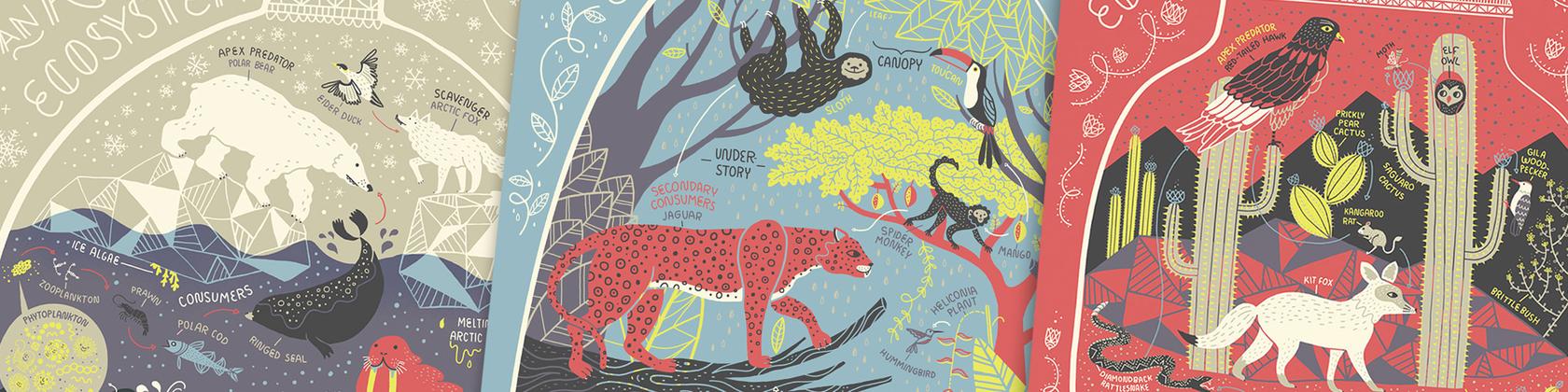
Welcome to Biochemical Adaptations!
The primary goal of this 7-week course is to gain an appreciation for the incredible diversity of physiological mechanisms and biochemical strategies organisms use to survive and thrive in different environmental regimes. More simply put, we’ll be discussing how life…finds a way! Emphasis will be placed on the physiological/biochemical evolution in response to environmental conditions, including climate change and life in extreme environments. I am approaching this class with the desire to integrate a wide range of information from studies of topics like the metabolic biochemistry, protein structure-function relationships, transcriptomics, and proteomics into a framework that will allow the participant to gain a deeper understanding of broadly important issues in evolution, ecology, biodiversity, adaptation, and biogeography. My hope is that participants will gain an appreciation of an organism’s genetic and proteomic ‘tool kit’ used to orchestrate a diverse range of biochemical and molecular events that underlie an organism’s capacity to thrive across diverse environmental regimes. In addition, I hope you will leave this course with the confidence to (i) interpret, synthesize, and critically evaluate primary scientific literature, (ii) develop your own hypotheses, and (iii) find your scientific voice by writing and defending an original research proposal.
The primary goal of this 7-week course is to gain an appreciation for the incredible diversity of physiological mechanisms and biochemical strategies organisms use to survive and thrive in different environmental regimes. More simply put, we’ll be discussing how life…finds a way! Emphasis will be placed on the physiological/biochemical evolution in response to environmental conditions, including climate change and life in extreme environments. I am approaching this class with the desire to integrate a wide range of information from studies of topics like the metabolic biochemistry, protein structure-function relationships, transcriptomics, and proteomics into a framework that will allow the participant to gain a deeper understanding of broadly important issues in evolution, ecology, biodiversity, adaptation, and biogeography. My hope is that participants will gain an appreciation of an organism’s genetic and proteomic ‘tool kit’ used to orchestrate a diverse range of biochemical and molecular events that underlie an organism’s capacity to thrive across diverse environmental regimes. In addition, I hope you will leave this course with the confidence to (i) interpret, synthesize, and critically evaluate primary scientific literature, (ii) develop your own hypotheses, and (iii) find your scientific voice by writing and defending an original research proposal.
- Profesor: Kristen Whalen
Categoría: Biology
Welcome to Immunology! I am excited to meet you all and talk about the beauty macrophages, B-cells, T-cells and more in the coming weeks!
- Profesor: Kimberly Wodzanowski
Categoría: Biology

Bioinformatics is now an essential tool in biological research. This course will introduce you to the fundamental concepts and techniques of bioinformatics, providing you with the skills to analyze biological data and address important research questions. You'll gain hands-on experience in analyzing DNA and protein sequences to identify genes, predict protein function, and investigate evolutionary relationships. You'll also learn how to use bioinformatics tools to design cloning experiments, predict the 3D structure of proteins, and explore the vast amount of information stored in biological databases.
- Profesor: Geoffrey Hutinet
Categoría: Biology
Biological research depends on collecting, analyzing, and presenting data. This course will introduce the art of working with data at all stages of the scientific process, including data organization, analysis, and visualization. By analyzing real datasets, we will discuss the logic behind several foundational statistical tests and consider their strengths and limitations. Along the way, we will learn to detect misleading uses of statistics and graphs, and develop proficiency in Excel and R.
- Profesor: Lee Dietterich
Categoría: Biology
Organisms live in constant interaction with other organisms and with their environments. In ecology, we study these interactions at scales from individual organisms to the Earth as a whole. This course will introduce foundational topics, concepts, and research techniques in ecology at many scales. Along the way, we will cultivate skills such as field observation and experimentation, and discussion and critique of current ecological research.
- Profesor: Lee Dietterich
Categoría: Biology
Organisms live in constant interaction with other organisms and with their environments. In ecology, we study these interactions at scales from individuals to the Earth as a whole. This course will introduce foundational topics, concepts, and research techniques in ecology at many scales. Along the way, we will cultivate skills such as field observation and experimentation, and discussion and critique of current ecological research.
- Profesor: Lee Dietterich
Categoría: Biology

This intensive 7-week module dives into the molecular mechanisms that drive cancer—spanning oncogenic signaling, genome instability, epigenetics, RNA dysregulation, and the tumor microenvironment. Students will sharpen their ability to read, critique, and present primary research while drawing connections between molecular alterations and therapeutic response or resistance. Assessments highlight discussion, analysis, and a final mini-review or proposal, offering 3rd and 4th-year students a rigorous opportunity to practice the skills of working scientists.
By the end of the course, students will be able to:
Explain key molecular mechanisms driving cancer initiation and progression.
Critically evaluate and present primary literature in cancer biology.
Discuss the relationship between molecular alterations, tumor microenvironment, and therapeutic response.
Compare mechanisms of therapy resistance and emerging strategies to overcome them.
Lectures, activities and quizzes cover foundational concepts; journal clubs explore applications to specific cancers and latest findings.
- Profesor: Jenea Adams
Categoría: Biology
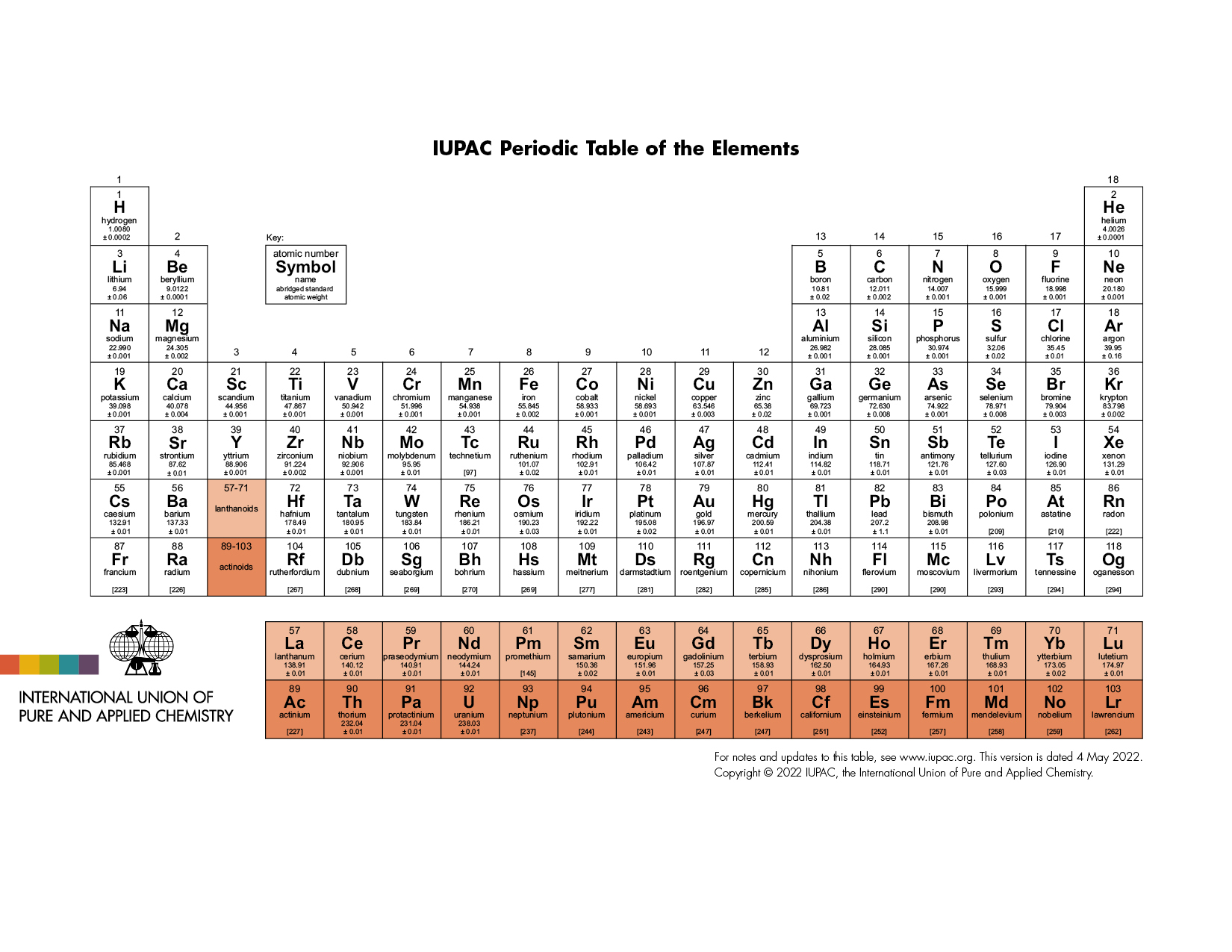
This is the Moodle site for Chem H111A in fall 2026, all four sections taught by Casey Londergan and Diana McDonough.
There is a separate Moodle site for all sections of Chem H111L (the lab) taught by Kelly Matz and Diana McDonough. There is also a separate site for Chem H113A taught by Alex Norquist, which will share major assessments with Chem H111A.
Access to the full site is gated by the "Course Expectations" tile where all sections must be completed to open up the rest of the site.
- Profesor: Casey Londergan
- Profesor: Diana McDonough
- Profesor: Gordon Peterson
Categoría: Chemistry
Course Overview: This course explores specialized topics in bioinorganic chemistry, focusing on the synthesis, characterization, and applications of bioactive molecules and transition metal complexes, particularly those designed for cellular imaging, anticancer photodynamic therapy, and photoredox catalysis. Emphasis will be on understanding the role of metal ions in biological systems and how these principles can be harnessed in therapeutic and diagnostic settings.
Learning Objectives:
Understand the principles of bioinorganic chemistry as they relate to cellular imaging and therapeutic applications.
Develop proficiency in synthesizing bioactive and fluorophore-appended transition metal complexes.
Gain hands-on experience in characterizing metal complexes and ligands using spectroscopic techniques.
Explore the mechanisms of photodynamic therapy and photoredox catalysis.
Topics Covered:
Introduction to Coordination Chemistry, Bioinorganic Chemistry
Overview of metal ions in biological systems
Fundamental principles of coordination chemistry
Synthesis of Transition Metal Complexes
Strategies for designing bioactive complexes
Fluorophore conjugation for imaging applications
Characterization Techniques
Nuclear Magnetic Resonance (NMR) Spectroscopy: Analyzing ligand environments and metal coordination
Infrared (IR) Spectroscopy: Functional group analysis
UV-Visible (UV-Vis) Spectroscopy: Electronic transitions and complex stability
Emission Studies: Photophysical properties for imaging applications
Assessment Methods:
Quizzes: 2-3 quizzes to assess foundational knowledge.
Literature Review Presentation: Students will present a selected paper, analyzing the approach, results, and relevance to course themes.
Project Proposal: A written proposal on a bioinorganic chemistry topic focusing on novel applications in cellular imaging or PDT.
Lab Reports: Based on hands-on spectroscopic characterizations conducted in class.
Course Schedule:
Lectures: Twice weekly (55 MIN each session)
Office Hours: By appointment
Required Materials:
Textbook: Selected readings from Principles of Bioinorganic Chemistry and relevant research papers.
Software: Access to spectroscopic analysis tools (provided by the Haverford/Lab).
Additional Notes: This seven-week quarter course is intended for advanced undergraduate students. Based on class progress, adaptations may occur.
- Profesor: Md Kausar Raza
- Profesor: Joseph Smith
Categoría: Chemistry
Bioinorganic Chemistry (second half of inorganic chemistry introduction, with a biological focus)
instructor: Casey H. Londergan
meets MWF 10:30-11:30 am EDT, remotely
instructor: Casey H. Londergan
meets MWF 10:30-11:30 am EDT, remotely
- Profesor: Casey Londergan
Categoría: Miscellaneous
This course explores the role of metalloenzymes, particularly zinc and iron-sulfur [Fe-S] cluster proteins, in viral diseases and pathogens. Students will learn about the structure, function, and spectroscopic characterization techniques, including Electron Paramagnetic Resonance (EPR) and Mössbauer spectroscopy. The course will begin with an introduction to essential concepts in inorganic chemistry, including coordination chemistry, to provide a solid foundation. The syllabus may be adjusted based on class progress. Students will also present literature reviews and submit a final research proposal, with 2-3 quizzes administered throughout the course.
- Profesor: Md Kausar Raza
Categoría: Chemistry
Welcome to “Process Chemistry vs Discovery Chemistry”. In this quarter-long seminar, we will look at real world examples regarding the synthesis of drugs and agrochemicals. Discovery chemistry refers to the synthetic/biological process of synthesizing and evaluating drug candidates while process chemistry refers to the large-scale manufacturing of a drug candidate for further evaluation or commercial production. The synthetic routes regarding a discovery chemistry route and a process chemistry route are often drastically different—this is because in the discovery phase the goal is simply to make the compound to test (sometimes as little as 1 mg) while in the process route the goal is to design the cleanest, safest, cheapest, and greenest way to make kilograms of a small molecule. We will use the principles of reactivity learned in Chemistry 222/225 to work through the types of reactions used in complex molecule synthesis. While the principles of reactivity and arrow pushing learned in 222/225 are fundamental, realistically the reactions we learn are not the ones used to make small molecules. The goal of this course is to teach you to apply the principles you already know to complex molecule synthesis, specifically in the context of drugs/agrochemicals which is perhaps the largest industry for organic chemists. Many of these reactions will be unfamiliar and intimidating but we will work together as a class to get more familiar and comfortable looking at new reagents, pushing arrows in new mechanisms, and understanding key differences between discovery and process routes.
- Profesor: Gavin Smith
Categoría: Chemistry
Introduction to the intellectual and software tools used to create and study algorithms: formal and informal problem specification; problem solving and algorithm design techniques; reliability, formal verification, testing, and peer code review techniques; program clarity, complexity, and efficiency; functional and imperative paradigms; associated programming skills.
- Profesor: John Dougherty
- Profesor: Suzanne Lindell
Categoría: Computer Science
An introduction to the fundamental data structures of computer science: strings, lists, stacks, queues, trees, BSTs, graphs, sets, and their accompanying algorithms. Principles of algorithmic analysis and object reasoning and design will be introduced using mathematical techniques for both complexity and correctness. The course will also cover more practical issues, such as memory management and hashing. The programming language used to illustrate and implement these concepts will be able to support functional, imperative, and object-oriented approaches.
Prerequisites: ((CS H105 OR BMC equivalent) AND ≥ 2.0) OR (Placement AND instructor consent)
Prerequisites: ((CS H105 OR BMC equivalent) AND ≥ 2.0) OR (Placement AND instructor consent)
- Profesor: John Dougherty
- Profesor: Michael Wehar
Categoría: Computer Science
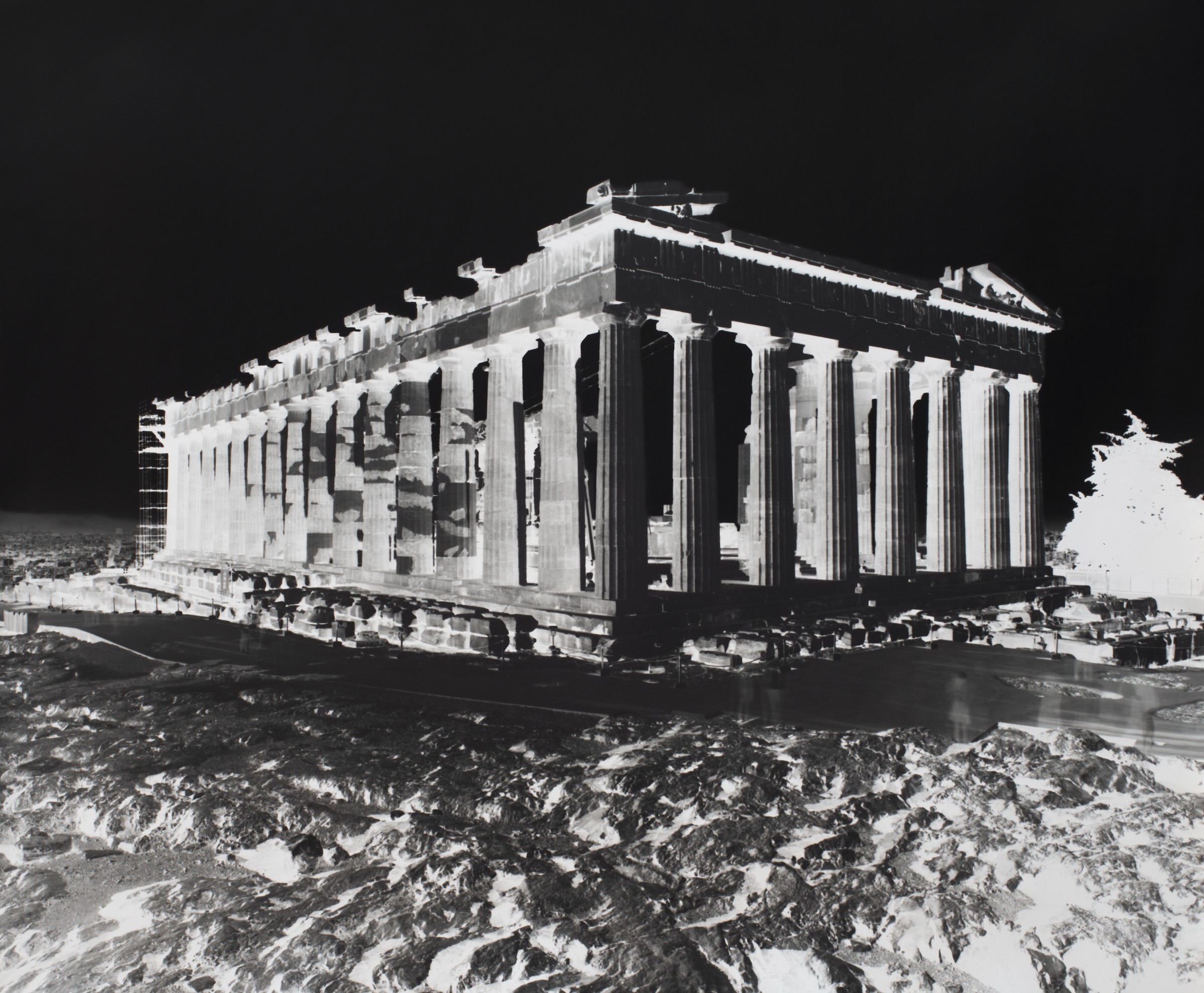
This course introduces you to the turbulant and dynamic past of ancient Athens
In the fifth century BCE, Athens experienced a remarkable period of political, military, and intellectual ascendency. Against the background of establishing a democracy, spearheading Greek resistance against an expansionist Persian Empire, and forging (and losing) an empire of their own, Athenians produced stunning achievements in philosophy, tragedy, comedy, rhetoric, political theory, sculpture, and architecture.
The ancient Athenians were a people defined by striking contradictions. They invented one of the most radical forms of democracy the world has ever seen, yet kept a large portion of their population enslaved. They prided themselves on welcoming all refugees, yet took every opportunity to conquer their neighbors and expand their empire. Their city stood at the epicenter of Greek art, thought, and religion under the watchful gaze of an imposing warrior goddess of wisdom, yet the women of the city were among the most oppressed in the Greek world. Cosmopolitan and parochial, pious and brutal, vulgar and elegant, the Athenians suffered and wrought horrors; they reveled in scandal and scatological humor; they forged works of beauty while developing ideas of lasting relevance. In short, they were people: eerily like us; yet also radically alien from our experience.
The works of Athenians and their contemporaries will be the main sources for our inquiry in this course. As we learn about the important events and developments of this time and place, we will examine the workings of Athenian democracy, economy, love, art, science, education, religion, and more always with an eye on the tensions, conflicts, and contrasts inherent in Athenian culture. We will explore categories of Athenian identity, including gender and sexuality, race and ethnicity, freedom and enslavement. We will confront Athenian civilization in all its messy reality, and uncover the ways Athenian ideas and ideas about Athens continue to shape our lives today.
- Profesor: Madeleine Lampietti
- Profesor: Ava Shirazi
Categoría: Classical Studies

This course introduces you to the turbulant and dynamic past of ancient Athens
In the fifth century BCE, Athens experienced a remarkable period of political, military, and intellectual ascendency. Against the background of establishing a democracy, spearheading Greek resistance against an expansionist Persian Empire, and forging (and losing) an empire of their own, Athenians produced stunning achievements in philosophy, tragedy, comedy, rhetoric, political theory, sculpture, and architecture.
The ancient Athenians were a people defined by striking contradictions. They invented one of the most radical forms of democracy the world has ever seen, yet kept a large portion of their population enslaved. They prided themselves on welcoming all refugees, yet took every opportunity to conquer their neighbors and expand their empire. Their city stood at the epicenter of Greek art, thought, and religion under the watchful gaze of an imposing warrior goddess of wisdom, yet the women of the city were among the most oppressed in the Greek world. Cosmopolitan and parochial, pious and brutal, vulgar and elegant, the Athenians suffered and wrought horrors; they reveled in scandal and scatological humor; they forged works of beauty while developing ideas of lasting relevance. In short, they were people: eerily like us; yet also radically alien from our experience.
The works of Athenians and their contemporaries will be the main sources for our inquiry in this course. As we learn about the important events and developments of this time and place, we will examine the workings of Athenian democracy, economy, love, art, science, education, religion, and more always with an eye on the tensions, conflicts, and contrasts inherent in Athenian culture. We will explore categories of Athenian identity, including gender and sexuality, race and ethnicity, freedom and enslavement. We will confront Athenian civilization in all its messy reality, and uncover the ways Athenian ideas and ideas about Athens continue to shape our lives today.
In the fifth century BCE, Athens experienced a remarkable period of political, military, and intellectual ascendency. Against the background of establishing a democracy, spearheading Greek resistance against an expansionist Persian Empire, and forging (and losing) an empire of their own, Athenians produced stunning achievements in philosophy, tragedy, comedy, rhetoric, political theory, sculpture, and architecture.
The ancient Athenians were a people defined by striking contradictions. They invented one of the most radical forms of democracy the world has ever seen, yet kept a large portion of their population enslaved. They prided themselves on welcoming all refugees, yet took every opportunity to conquer their neighbors and expand their empire. Their city stood at the epicenter of Greek art, thought, and religion under the watchful gaze of an imposing warrior goddess of wisdom, yet the women of the city were among the most oppressed in the Greek world. Cosmopolitan and parochial, pious and brutal, vulgar and elegant, the Athenians suffered and wrought horrors; they reveled in scandal and scatological humor; they forged works of beauty while developing ideas of lasting relevance. In short, they were people: eerily like us; yet also radically alien from our experience.
The works of Athenians and their contemporaries will be the main sources for our inquiry in this course. As we learn about the important events and developments of this time and place, we will examine the workings of Athenian democracy, economy, love, art, science, education, religion, and more always with an eye on the tensions, conflicts, and contrasts inherent in Athenian culture. We will explore categories of Athenian identity, including gender and sexuality, race and ethnicity, freedom and enslavement. We will confront Athenian civilization in all its messy reality, and uncover the ways Athenian ideas and ideas about Athens continue to shape our lives today.
- Profesor: Caroline Lucas
- Profesor: Ava Shirazi
Categoría: Classical Studies
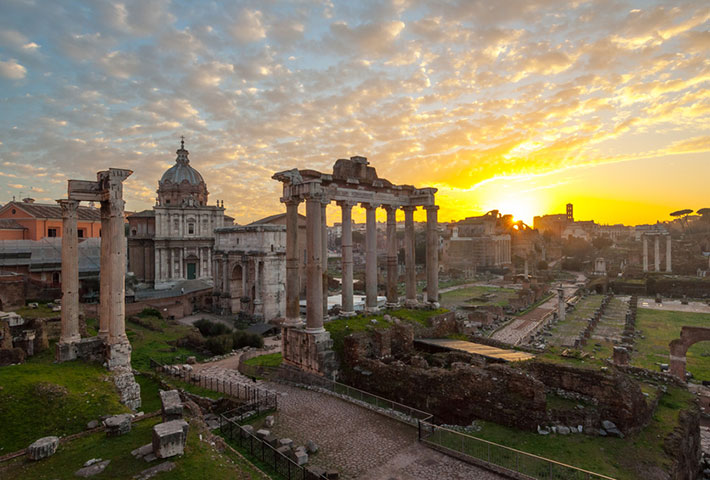
The object of this course is no less than you to learn what it is like to be an ancient Roman—and why that still matters in 21st century. To do so we will investigate what made the Romans revolutionary in their time and of lasting influence thereafter. This course is a rara avis (a rare bird). It is not only a history course—although we will encounter 1,000 years of Roman history, some of it in delicious detail. Still less is this only a literature course or an art history course—although we will be reading some of the greatest literature ever written and studying the sculptural and architectural monuments that gave shape to the European tradition, mediating the Greek achievement to what became known (for good and ill) as the West. Think of this instead as a moral orientation to the Romans and their republic. What do we mean by “moral” or “republic,” or for that matter “Roman”? Fourteen weeks from now you will know!
- Profesor: Bret Mulligan
Categoría: Classical Studies

Is the reception of what we call “Classical Antiquity” a passive exercise of memory and inheritance? Or can it be a truly creative action, a kind of reclaiming, even subversion of inherently exclusionary ideas and media? What happens when we try to actively take part in this dialogue with a past that was transmitted to us as important, foundational, original, and authoritative? This course attempts to address such questions both in theory and practice. It starts with a seminar, devoted to the analysis and discussion of primary sources from the ancient Mediterranean and their afterlives in modern media. It then turns into a workshop that is both scholarly and creative.
This year, the topic of our seminar will be Pier Paolo Pasolini’s cinematic rewriting of Greek tragedies: Medea, Oedipus Rex, and Oresteia, shot in Morocco, Turkey, Italy, Uganda, Tanzania, and Syria. Pasolini was a queer (but Catholic), communist (but conservative), poet (but mostly famous film maker) who scandalized bourgeois audiences in Postwar Europe. Trained as a philologist, art historian, and linguist, he looked at Greek literature from a (post)colonial, Marxist point of view, and played with its different traditions. We will read the texts that he read, we will watch his films, and we will discuss them as if they were creative essays by an unruly classicist. Then, we will collaborate to make our own visual experiments based on the tragedies and on Pasolini’s cinematic and poetic techniques.
This year, the topic of our seminar will be Pier Paolo Pasolini’s cinematic rewriting of Greek tragedies: Medea, Oedipus Rex, and Oresteia, shot in Morocco, Turkey, Italy, Uganda, Tanzania, and Syria. Pasolini was a queer (but Catholic), communist (but conservative), poet (but mostly famous film maker) who scandalized bourgeois audiences in Postwar Europe. Trained as a philologist, art historian, and linguist, he looked at Greek literature from a (post)colonial, Marxist point of view, and played with its different traditions. We will read the texts that he read, we will watch his films, and we will discuss them as if they were creative essays by an unruly classicist. Then, we will collaborate to make our own visual experiments based on the tragedies and on Pasolini’s cinematic and poetic techniques.
- Profesor: Ava Shirazi
Categoría: Classical Studies
- Profesor: Katheryn Hofmann
Categoría: Classical Studies
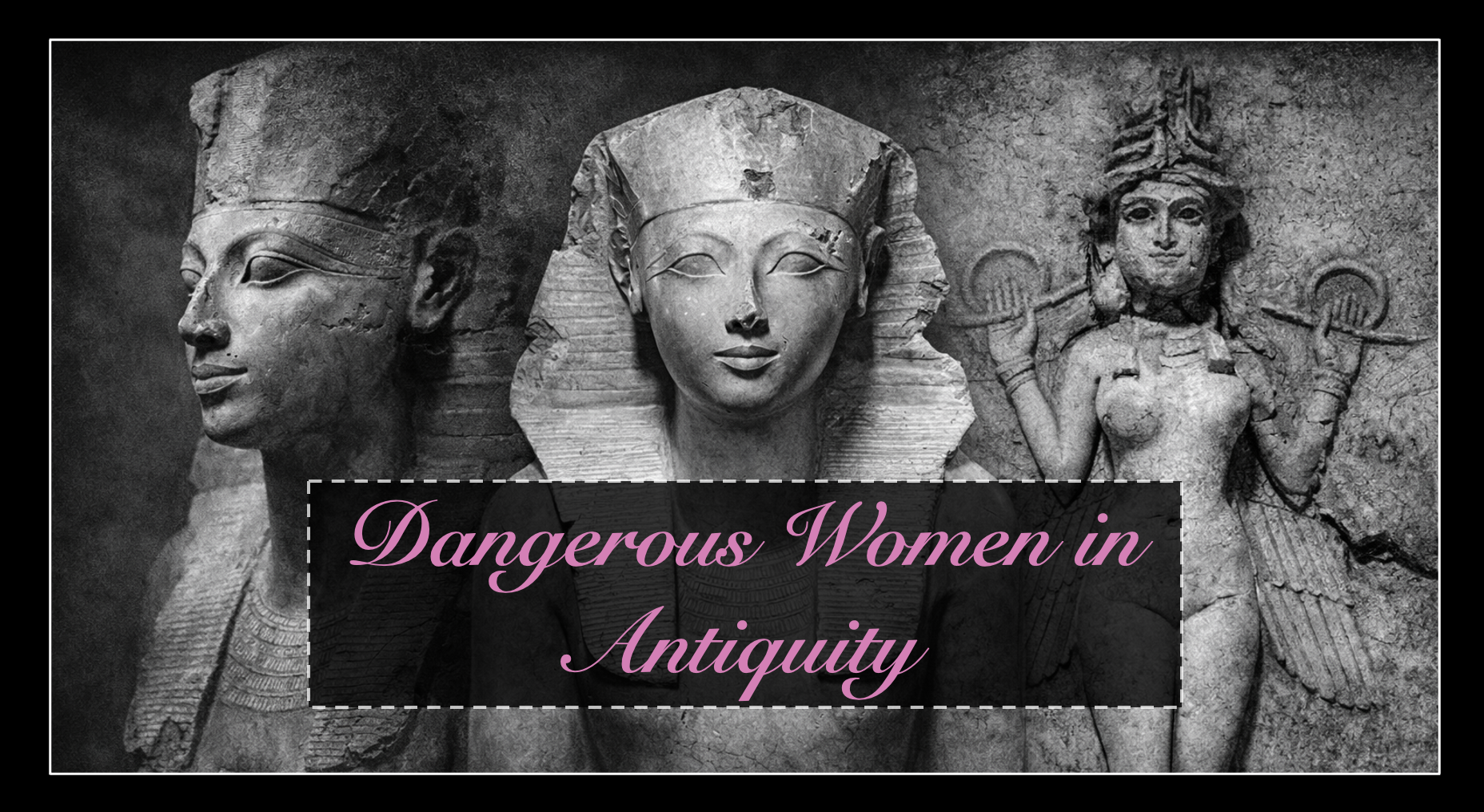
From goddesses who upend cosmic order to queens who reshape empires, “dangerous women” haunt the ancient imagination. Their stories register deep cultural anxieties about power, who may wield it, how it is legitimized, and what happens when women occupy positions of authority that challenge social, political, or cosmic hierarchies. Across the ancient Mediterranean and Near Eastern worlds, powerful women were alternately revered, instrumentalized, feared, and condemned, especially when their authority intersected with sexuality, foreignness, violence, or religious transgression.
This course analyzes how ancient societies constructed female power as “dangerous,” from mythic figures such as Ishtar and Sekhmet to historical rulers including Queen Puabi, Hatshepsut, Nefertiti, Cleopatra, and Zenobia, in order to negotiate authority within systems of kinship, kingship, empire, and gender. Through literary, historical, artistic, and archaeological sources, students will analyze how representations of “dangerous women” functioned within social boundaries, justify political control, or articulate alternative models of power. By tracing how these figures were remembered, erased, or transformed over time, the course reveals how gendered narratives of danger illuminate the political and social structures of antiquity, and why they continue to shape modern debates about authority, legitimacy, and power.
This course analyzes how ancient societies constructed female power as “dangerous,” from mythic figures such as Ishtar and Sekhmet to historical rulers including Queen Puabi, Hatshepsut, Nefertiti, Cleopatra, and Zenobia, in order to negotiate authority within systems of kinship, kingship, empire, and gender. Through literary, historical, artistic, and archaeological sources, students will analyze how representations of “dangerous women” functioned within social boundaries, justify political control, or articulate alternative models of power. By tracing how these figures were remembered, erased, or transformed over time, the course reveals how gendered narratives of danger illuminate the political and social structures of antiquity, and why they continue to shape modern debates about authority, legitimacy, and power.
- Profesor: Nisha Kumar
Categoría: Classical Studies
- Profesor: Ryan Warwick
Categoría: Classical Studies

THIS COURSE EXPLORES the visual and poetic life of sports, ancient and modern. It brings together literature, art, history, criticism, and lived experience as a way to theorize the beauty of athletics. It is a space and an opportunity for us to think together about what it is that draws us to sports and how we can elevate our language for talking about our love of the game. The complex and productive relationship between sports as/and art is a way for us to do this; to think about what various art forms (painting, sculpture, photography, poetry, music, videography) afford our thinking about sports and vice versa.
Part of our work is historical: the class juxtaposes visual and literary models for thinking about athletics from Ancient Greece and Rome with contemporary art and writing around sports. But our engagement with the past is always in relation to the contemporary moment. Concepts of the body, gender, race and performance will inform our weekly work. We will also engage with tropes such as “for the love of the game,” “feel for the game” and “poetry in motion” to explore the sensory and aesthetic dimensions of sports.
Part of our work is historical: the class juxtaposes visual and literary models for thinking about athletics from Ancient Greece and Rome with contemporary art and writing around sports. But our engagement with the past is always in relation to the contemporary moment. Concepts of the body, gender, race and performance will inform our weekly work. We will also engage with tropes such as “for the love of the game,” “feel for the game” and “poetry in motion” to explore the sensory and aesthetic dimensions of sports.
- Profesor: Gopal Patel
- Profesor: Ava Shirazi
Categoría: Classical Studies
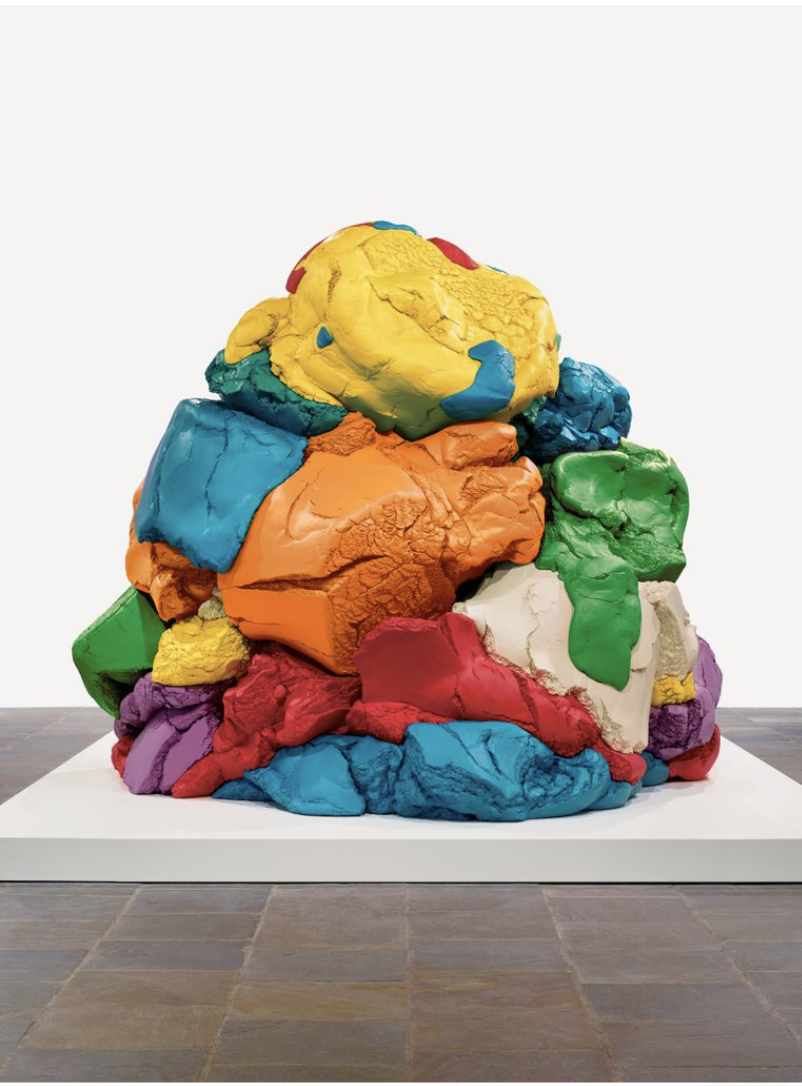
THIS COURSE is PART I of your Senior Experience. It prepares you for research, writing, and project development in the field of Classics, with the goal of helping you make significant progress towards your Senior Capstone Project. The course is also designed to introduce you to the history, problems, and current state of Classics and its various subfields.
- Profesor: Ava Shirazi
Categoría: Classical Studies
Japanese Civilization
EALC 132, Fall 2026
Prof. Hank Glassman
Office: Founders 125
Office hours: Monday 1-3 and by appointment on Zoom
Email: hglassma@haverford.edu
[see appendix for academic support resources, AI policy]
Class: Chase 104 T and TH 11:30-12:50
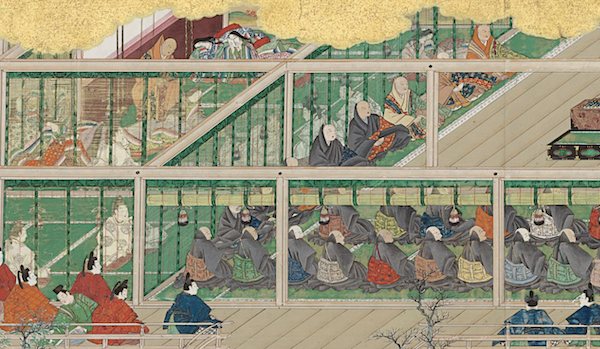
(from “Gio monogatari emaki,” based on Tale of Heike, New York Public Library, early 17th c.)
COURSE DESCRIPTION:
This course will introduce aspects of major historical, social, cultural, and artistic traditions of Japan from circa 1000 BCE (the Jōmon Period 縄文) until present times. We will adopt both chronological and thematic approaches in this inquiry.
Generally, we will consider how Japanese religious, political, and cultural systems developed in and through history. (This is the chronological part!) While this course is a survey and introduces the basic arc of Japanese history, it is not meant to be comprehensive in any way or to tell “the story of Japan” in an unbroken narrative. Instead, we will focus on specific epochs and moments in Japanese history that reflect: the changing status and roles of groups like aristocrats, monastics, warriors, merchants and farmers; the transition from a feudal to a modern society; world war and recovery; natural and manmade disasters; and, the formation of the modern Japanese nation as we know it today.
Additionally, in our study of Japanese civilization we will also engage with six major themes: 1) cultural encounters; 2) national identity; 3) religion; 4) gender; 5) war; and 6) the place of human beings in the natural environment. (This is the thematic part!) Throughout the semester in a variety of contexts, we will examine how these themes express the changing social and political landscape of Japan. We will also use these six themes to engage fundamental questions such as: What is the nation of Japan? Who are the Japanese? For the whole of the twentieth century, intellectuals and cultural leaders in Japan were strongly focused on the idea of “national character” or kokuminsei 国民性. Do you personally think that there such thing as a national character or not? What are the implications if it does exist? Would its origins linguistic or genetic or otherwise?
In addition to offering a chronological/thematic exploration of Japanese history and culture, this course also serves as an introduction to humanistic inquiry more generally and helps students develop basic academic skills that will serve them throughout their college career and beyond. These skills include the ability to identify and use of primary and secondary sources; critical thinking, writing, and looking; and, a facility for expressing ideas orally in front of peers in formal and informal settings. (It is a Domain A course.)
- Profesor: Hank Glassman
Categoría: East Asian Languages & Culture
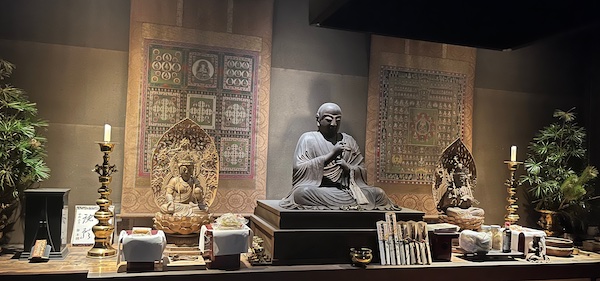
Religion in Japan is, since the start of recorded history and down to the present day, profoundly hybrid and combinatory. (There is a saying that people “are born Shintō and die Buddhist.”) One aim of this course is to challenge the way that students think about the category of religion, both as doctrine and as practice. Much of the material we examine during beginning of the semester will be premodern. In the second half of the course, students may to choose to explore modern and contemporary religion in individual research.
This course is an introduction and assumes no prior knowledge of Japan, East Asia, or of the topic of religion. If you come with some background knowledge, then so much the more you will learn. Either way, there will be things that do not add up or may seem contradictory. This is in part due to the distorting effects of our investigation. This will be OK.
The course takes a thematic approach to examine such topics as deities, pilgrimage, ritual, literature, and doctrine across historical periods to offer a sense of the rich complexity of lived religion. In the first half of the course we will explore a number themes in the history and historiography of Japanese Religion, and in the second half students will take up research, engaging with these themes more deeply.
Two Opening Queries: There are two background questions floating around this course – shadow issues of a sort – not directly related to one another, but both having to with how we manage or curate information and our experience as human beings. One question is the category of “Religion” – what is encompassed by this term? The other is AI as a research tool – where is it helpful and where is it worse than useless? (That is, at this moment in Fall 2026, and with our purposes in mind.) We will talk informally about these two topics in class during the first couple of weeks as we start to form small discussion groups and get to know another. You will each have already had various sorts of exposure to each of these topics of Religion and AI and I feel sure that you have thoughts and opinions to share.
- Profesor: Hank Glassman
Categoría: East Asian Languages & Culture

- Profesor: Erin Schoneveld
- Profesor: Charles Woodard
Categoría: East Asian Languages & Culture
Premodern Japanese Literature introduces students to central texts of Japanese literature from earliest times until the nineteenth-century. We will consider major literary forms (waka poetry, literary diary, court tale, warrior tale, Noh drama, Bunraku puppetry, travel narrative, and illustrated popular fiction) and how they relate to, respond to, and build upon each other. We will also explore the relationship between text and performance, and the material culture surrounding the production, transmission and reception of literary texts. Through readings, discussions, weekly writings, students will gain familiarity with the major genres of pre-modern Japanese literature, and develop observation and analytical skills to approach literary texts within their specific cultural and historical contexts. Works surveyed include well-known pieces such as The Tale of Genji, The Pillow Book and Bashō's Narrow Road to the Deep North, as well as recently transcribed illustrated manuscript Shudō tsūya monogatari (1713).
- Profesor: Honglan Huang
Categoría: East Asian Languages & Culture
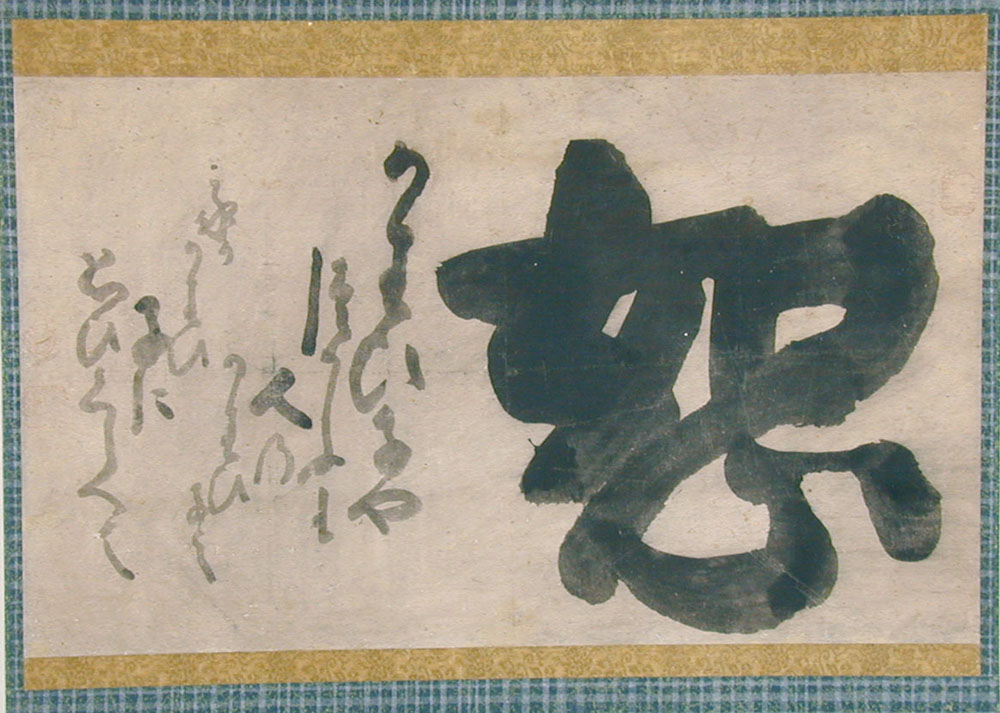
Course Description: This is a course on the sort of Buddhism known as Zen in Japanese. Also known as Chan, Seon, and Thìên respectively in the East Asian cultures of China, Korea, and Vietnam. (Below, we will call it by the familiar name of Zen regardless of context, to simplify matters. This is only a shorthand and is not meant to signal the priority of the Japanese tradition over others, it is merely that the term “Zen” is the one best known in English.)
Zen is famous for promising a special sort of insight that provides sudden and astounding liberation from psychological and spiritual suffering and doubt -- an enlightenment on par with that of a Buddha, unmediated by texts or teachers or images, unencumbered by rules or notions of progress along a path. (In this way, it can be read as a radical critique of the tradition it grows out of.)
The course examines the development of this sect in the context of East Asian Mahāyāna Buddhism, incorporating aspects of the following: legendary histories, debates over mediation styles, monastic lifestyle, musical expression and visual culture.
In the main, this is a course on some primary texts and philosophical tenets of the Zen tradition. Some of our focus will be placed on primary sources, written (mostly) in classical Chinese and translated into English. Also, we will read in scholarly secondary sources that assume a fairly extensive background in the topic. You are not expected to come into this class with this background knowledge! Please be patient with yourself and read carefully to glean what you can from these. We will drive straight into the works themselves, and strive to pick up the background in Buddhism we need “along the way” as we progress. That is, we will confront the texts in a fairly “raw” manner, with regard to both primary and secondary sources, and will do our best to make sense of these with the knowledge we possess and the resources at hand. Questions are always welcome and we can certainly take the time to go deeper into the material at any point. We will take time in class to discuss the readings at length; considerable class time can be devoted clearing up murky passages. This is time well spent.
The course is divided into four sections: 1) studying the founding myth of Zen enlightenment, its transmission to China by the legendary figure Bodhidharma, and the establishment of “sudden doctrine” of the Southern School; 2) exploring classical modes of Zen practice, daily rules and modes of discipline, as developed during the Song period (c. 10th-11th C.) based on Tang period (8th-9th C.) models and continuing up to the present; 3) engaging in a critical examination of the rhetorical claims of Zen to gain a contextual view of the creation and popularization of the Zen school; 4) a study and investigation of the one-page sacred text known as the Heart Sutra (摩訶般若波羅蜜多心経 Jpn. Maka hannya haramitsu shingyō, Ch. Mohe bore boluomida xin jing) a condensation of the literature known as prajñāpāramita or “perfection of wisdom” on the philosophy of Emptiness with a wonder-working magical spell at the end. Throughout the course, we will make reference to visual sources and films. Short documentaries and one feature-length film are woven into our journey through the semester. Not a class will go by where we do not examine and discuss some sort of image. Sonic and visual sources will be a key to the world of Zen along with the written works we encounter.
Course Learning Goals
To become familiar with the Zen Buddhist tradition and examine aspects of its history, practice, theory, and soteriology. To gain a sense of religious ideas and practices as they developed in historical and intellectual context. To learn about working with sources, incorporating them into arguments, and citing them accurately. To practice expressing your ideas and your understanding of the material in front of other people succinctly and clearly.
- Profesor: Hank Glassman
Categoría: East Asian Languages & Culture
 IMG_9019.jpg
What happens when we pay attention to how books are made and how readers physically engage with the books? How do we think about books and printing beyond traditional emphasis on replication and transmission? What might different printing techniques teach us about our own perceptual and interpretive processes? In this course, we will focus on Japanese book art from early illustrated scrolls to contemporary artists' books and explore a range of printmaking processes such as mokuhanga (woodblock printing), katazome (precursor to modern screen printing), lithography and mimeograph printing. Each unit is paired with a hands-on exercise that introduces a printmaking or bookmaking technique such as suminagashi, stab binding, stencil cutting, and kitchen lithography. Through readings, discussions, and hands-on activities, students will gain vocabulary to describe the materiality of printed books and contemplate their social and conceptual implications, as well as discovering how books and printing can challenge perceived assumptions about art and reading.
- Profesor: Honglan Huang
Categoría: East Asian Languages & Culture
THIS IS THE LAB COMPONENT OF ECON 203.
Beginning Tuesday, September 1, we will meet for a computer lab every Tuesday from 7:30 to 9:55 PM. The lab is an integral part of the course and attendance is required.
During the lab you will learn to use scriptable software to manage and analyze statistical data. The application we use will be Stata (version 19), but the principles and methods you learn with Stata apply to other programs as well, including MATLAB, Python, R, SAS, and SPSS.
Over the course of the semester you will complete a weekly data exercise. In parts of these exercises you will apply concepts developed in class to real data; in other parts you will explore the theoretical foundations of some fundamental methods of statistical analysis. In all of the exercises there will be an emphasis on organizing and documenting your work in ways that ensure everything you do with your data is transparent and reproducible.
- Profesor: Daniel Banko-Ferran
Categoría: Economics
- Profesor: Richard Ball
Categoría: Economics
- Profesor: Richard Ball
Categoría: Economics
ECONH206B01.SP25 - Why Low-Income Families and Small Business lack access and how to make it better.
- Profesor: Shannon Mudd
Categoría: Economics
- Profesor: Alberto Arredondo-Chavez
Categoría: Economics

- Profesor: Chanelle Wilson
Categoría: Education
“Yes—oh dear yes—the novel tells a story.” Such was E. M. Forster’s definition, or his best guess. But there are other and more daring explanations for the elasticity and staying power of what is arguably the most dominant cultural form of modernity. In this class, we will be studying a wide range of theories of the novel. To test out those theories, we will also be reading an eclectic cluster of novels from the classic to the contemporary to ask some fundamental questions about the form: What distinguishes novels from other artistic forms? What kinds of thinking can the novel perform? How does it imagine the relation between the individual and society? In what ways might novels challenge and critique the worlds they are so invested in describing? Why are certain plots, or recognizable types of imaginary person, more lasting than others? To answer these questions, we will work to estrange ourselves a little from key features of novelistic writing, things we may well take for granted—plot, character, point of view, style, genre, mimesis—so that we can consider their distinctiveness afresh. By reading across a long literary historical timeline we will trace continuities, divergences, and innovations in the history and theory of the novel.
- Profesor: Alexander Millen
Categoría: English
This course approaches the study of literature (and cultural expression more broadly) through the arts of borrowing, sampling, copying, recycling, and remixing. We’ll ask: how did “originality” become the standard of literary value? How has this standard operated as a powerful form of cultural distinction? And how have literary, sonic, and visual remixes worked to rewrite this standard? As we explore these questions, we’ll encounter theories of authorship, intellectual property, and plagiarism—ideas shaped and reshaped by social and technological transformation. Approaching the remix as a creative/critical practice rather than a fixed genre, we’ll learn how literary genres themselves develop through borrowing and experimentation, and we’ll analyze related practices of allusion, adaptation, collage, intertextuality, parody, satire, and sampling. Together we’ll read texts that foreground modes of cultural theft, refuse originality and authenticity as such, and mobilize the remix as an important source of knowledge production. As these texts help to demonstrate, the remix offers alternative ways of imagining cultural value, remaps matrices of community and identification, and produces new (or newly reconfigured) modes of pleasure and possibility.
Throughout, we’ll be especially concerned with how our cultural understanding of intellectual property has been shaped by legacies of theft and commodity exchange rooted in racial capitalism. We’ll explore how nineteenth-century African American writers theorized intellectual property in the context of the slave trade and the forced circulation of persons-as-property; examine various twentieth- and twenty-first-century avant-garde, experimental, and postmodern texts and artworks as they challenge and/or reinforce the historical occlusion of women, queer people, and people of color from these categories; and consider cultural capital as it accrues (and gets transformed) in and out of the academy.
Finally, this course will ask you to analyze your own role as an author, and to actively and energetically theorize your reading and writing practices. We’ll explore how citation serves as a form of intellectual community building–a substrate of ethical and scholarly relation–and experiment with capacious modes of marking how the voices of others live in and animate our scholarly writing. We’ll aim to inhabit the anarchic spirit of the remix in our discussions, and learn to craft arguments while discovering how the remix operates as its own kind of argument against cultural hierarchy.
- Profesor: Lindsay Reckson
Categoría: English
This course examines what it means to be Caribbean, or of Caribbean descent, in the diaspora – either the United States, England, and France due to their stake in colonizing the Caribbean in the quest for imperial power and modernity. Within this historical and contemporary context, Caribbean literature offers a lens to learn about how this has affected and defined Caribbean culture. In this course, students will learn how legacies of colonialism and modernity affect Caribbean populations through the inevitable formations of diasporas and migrations. Students will also learn how to differentiate between migration and diaspora while recognizing how Caribbean literature is a meditation of home, culture, belonging, community, identity, and displacement. In this special-topics literary course, students will study and compare varied texts in mixed genres, including poetry, memoir, essay, and academic texts, in addition to the course novels, A Small Place, The Brief and Wondrous Life of Oscar Wao, and Black Skin, White Masks. Students will examine how various writers from the Caribbean negotiate empire, identity, language, culture, and notions of home as they make critical observations in their works. “Topics in Caribbean Literature” offers an interdisciplinary understanding of Caribbean culture, society, and identity in a trans-hemispheric and transnational context that explores (pop) culture, memory, literature, revisionism, and media to understand Caribbean diasporic cultural formations.
- Profesor: Keishla Rivera-López
Categoría: English
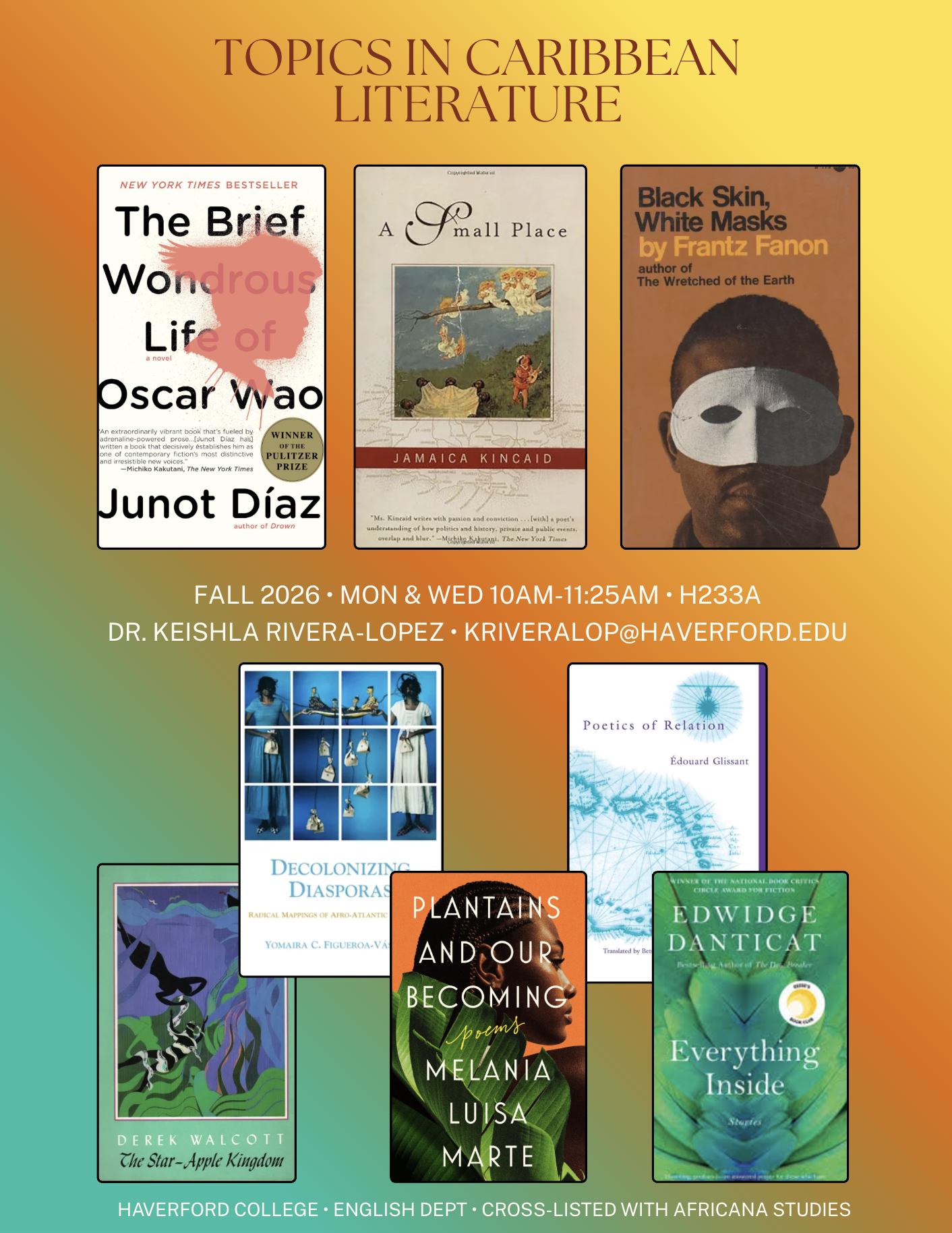
Course Description: This course examines what it means to be Caribbean, or of Caribbean descent, in the diaspora – either the United States, England, and France due to their stake in colonizing the Caribbean in the quest for imperial power and modernity. Within this historical and contemporary context, Caribbean literature offers a lens to learn about how this has affected and defined Caribbean culture. In this course, students will learn how legacies of colonialism and modernity affect Caribbean populations through the inevitable formations of diasporas and migrations. Students will also learn how to differentiate between migration and diaspora while recognizing how Caribbean literature is a meditation of home, culture, belonging, community, identity, and displacement. In this special-topics literary course, students will study and compare varied texts in mixed genres, including poetry, memoir, essay, and academic texts, in addition to the course novels, A Small Place, The Brief and Wondrous Life of Oscar Wao, and Black Skin, White Masks. Students will examine how various writers from the Caribbean negotiate empire, identity, language, culture, and notions of home as they make critical observations in their works. “Topics in Caribbean Literature” offers an interdisciplinary understanding of Caribbean culture, society, and identity in a trans-hemispheric and transnational context that explores (pop) culture, memory, literature, revisionism, and media to understand Caribbean diasporic cultural formations.
- Profesor: Keishla Rivera-López
Categoría: English
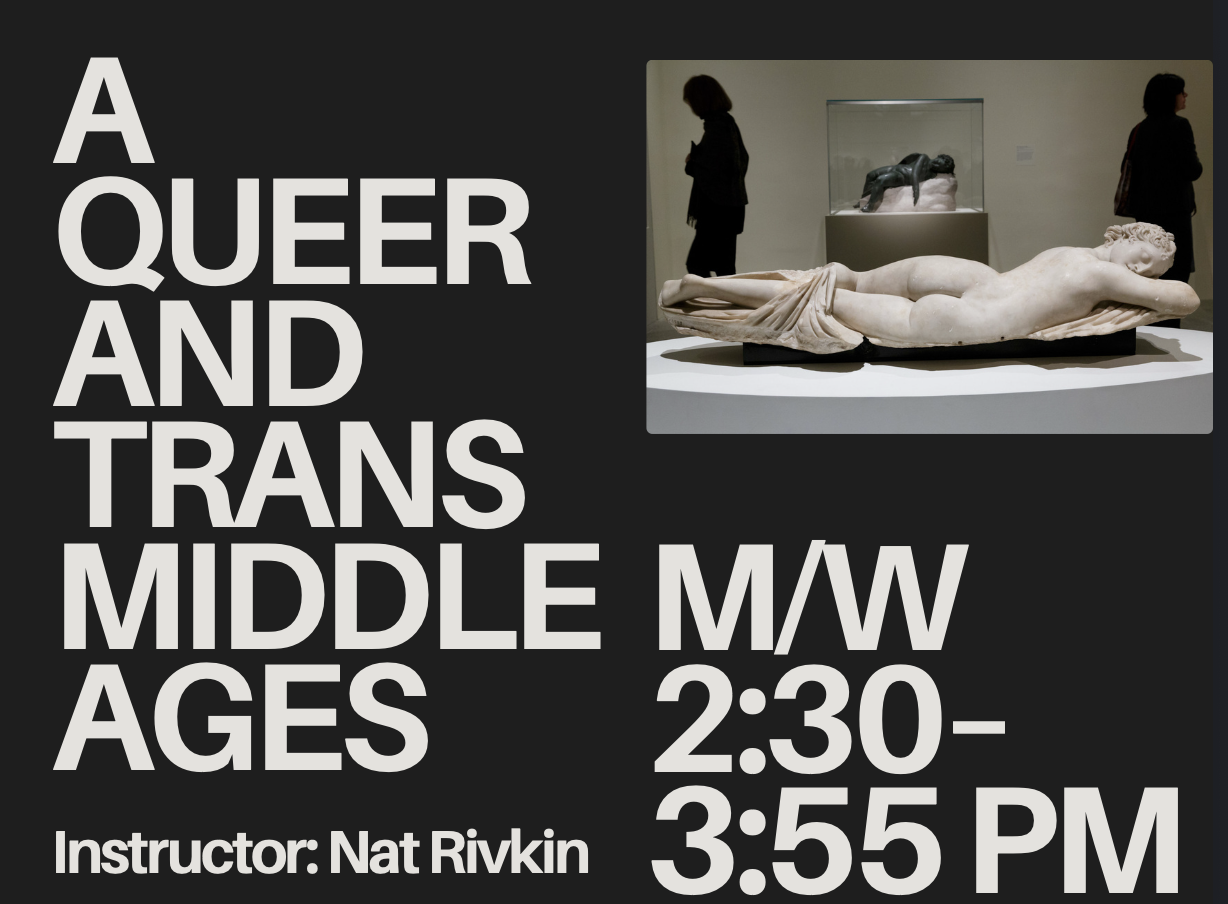
A man takes the form of a hawk and then that of a woman to seduce his imprisoned lover. A knight exchanges kisses with the lady and the lord who host him in the wilderness. A sex worker is accused of shedding her male name and calling herself Eleanor. A martyr disguises herself as a eunuch and adopts masculine pronouns. A lump of flesh is baptized and becomes a white boy.
This course travels across the queer and trans Middle Ages. We will consider how medieval texts––from Arthurian romances to Ovidian myths––both theorize and animate gender, desire, and racial difference. Our shared purpose in this class is to understand how sex and sexuality sustain power, flesh, and faith in Middle English and Old French writing. As we read alliterative verse and mystical prose, we will attend to the strenuous work that literature performs to sanction certain bodies and desires while casting others aside. We will encounter, for instance, monsters at the edges of the world in Mandeville’s Travels and the erotic musings of a woman’s diary in The Book of Margery Kempe. Throughout the semester, we will also engage with scholarship in medieval studies, queer and trans theory, and critical race studies, and we will then practice applying these frameworks to interpret literature. And we will observe how race, class, and ability are tightly bound to the assignment of sex, then and now. Crucially, we will discuss the present-day uses of the straight and cis Middle Ages, which drive dangerous forms of nostalgia. Other possible course topics include angels, daemons, dream visions, werewolves, and witches.
No previous experience with medieval literature is required. We will read all of our texts with facing-page translations or glossaries. Course assignments include a weekly reading journal, an oral research presentation, in-class writing exercises, a close-reading paper, and a final research project.
- Profesor: Danielle Allor
- Profesor: Nat Rivkin
Categoría: English
In thinking about this course, I recalled an essay by Alison Jones and Kuni Jenkins (Māori). In it, they write that “learning (about difference) from” Indigenous peoples “rather than learning about” Indigenous peoples is key to collaborative approaches between Indigenous and settler researchers (471). We might begin by considering how this prepositional difference might act as a guide to approaching Indigenous literatures. Then, I heard CHamoru lawyer, activist, and writer Julian Aguon discuss on a podcast the notion of “radical listening,” which we might consider as an active mode of engaging with Indigenous texts. How might we learn from and listen to Indigenous voices as a guiding interpretive framework? Or how might we learn from and listen to the texts as sources for methods of analysis as Kimberly Blaeser (White Earth Nation) suggests? Also, how might we learn from and listen to the moments of rupture, where the limits of our positionalities might preclude certain forms of engagement—the moment when “somethings might be out of one’s grasps” (Jones and Jenkins 481)? Importantly, we must also attend to power dynamics at work in these questions. Jones and Jenkins (Māori) write that “the liberal injunction to listen to the Other can turn out to be access for dominant groups to the thoughts, cultures, and lives of others” connoting “imperialist resonances [that] are uncomfortably apt” (480). I offer this reflection as a small constellation of some of my preliminary thoughts, some approaches I have been thinking about in constructing this syllabus.
The main objective for this course is to provide a variety of literary methodologies for approaching Indigenous literatures. As Daniel Heath Justice (Cherokee) writes, he “fundamentally believe[s] that the study of Indigenous writing offers us something different, a complementary but distinctive way of thinking about Indigenous belonging, identities, and relationships” (27). And because “the study of Indigenous writing offers us something different,” then different critical vocabularies, analytic tools, and theoretical frameworks will be needed to approach Indigenous literatures. Specifically, the centering of Indigenous scholarship by Indigenous peoples is crucial to this aim, as is set out by Craig Womack (Creek and Cherokee): “Native literature, and Native literary criticism, written by Native authors, is part of sovereignty” (14). Much has been written about ways to approach Indigenous literatures, and this course hopes to bring diverse perspectives together, alongside selections of poetry and prose, to lay out the critical landscape of Indigenous literatures and theories. We will cover methods and ideas such as Indigenous literary nationalism, Indigenous feminisms, Indigenous queer studies, Indigenous ecopoetics and environmental humanities, amongst other key concepts in Indigenous studies.
The main objective for this course is to provide a variety of literary methodologies for approaching Indigenous literatures. As Daniel Heath Justice (Cherokee) writes, he “fundamentally believe[s] that the study of Indigenous writing offers us something different, a complementary but distinctive way of thinking about Indigenous belonging, identities, and relationships” (27). And because “the study of Indigenous writing offers us something different,” then different critical vocabularies, analytic tools, and theoretical frameworks will be needed to approach Indigenous literatures. Specifically, the centering of Indigenous scholarship by Indigenous peoples is crucial to this aim, as is set out by Craig Womack (Creek and Cherokee): “Native literature, and Native literary criticism, written by Native authors, is part of sovereignty” (14). Much has been written about ways to approach Indigenous literatures, and this course hopes to bring diverse perspectives together, alongside selections of poetry and prose, to lay out the critical landscape of Indigenous literatures and theories. We will cover methods and ideas such as Indigenous literary nationalism, Indigenous feminisms, Indigenous queer studies, Indigenous ecopoetics and environmental humanities, amongst other key concepts in Indigenous studies.
- Profesor: B Bastie
Categoría: English
Unearth the power of real-life stories in this immersive creative nonfiction workshop. Focusing on student writing, this course encourages writers to push boundaries and explore the impacts of real-life narratives. Students will expand their repertoire and gain a deeper understanding of creative nonfiction craft related to memoir, the essay, and documentary projects, with storytelling as the through-line. We'll explore stories where lives and issues are at stake and those that reverberate in larger, unexpected ways beyond the single story. The goal is to traverse the often vexed and uncharted ground of untold stories and lives. You'll develop the skills to craft compelling narratives that resonate beyond the page.
Students will engage in workshops, both in small groups and as a whole class. By the end of the course, you'll have developed a portfolio that includes several shorter pieces, such as a revised character sketch and two creative nonfiction projects.
Creative nonfiction is a genre that blends the storytelling techniques of fiction with the factual accuracy of journalism. It crafts true stories using narrative structure, vivid descriptions, dialogue, and character development to bring real events and people to life. This genre allows writers to explore personal experiences, various histories, and idiosyncratic subjects through a creative lens, drawing readers in with a strong voice and clear perspective. The course offers a chance to combine research skills with creative expression, enabling the crafting of compelling narratives while reporting facts and events.
- Profesor: Thomas Devaney
Categoría: English

This course examines the cultural, material, literary, and academic scholarship related to the study of Bad Bunny, an iconic figure in Puerto Rican music and culture and a leading figure in the genre of Latin trap and Reggaeton. Through a literary analysis of his music, which will be read as poetics of resistance and defiance, students will learn how Bad Bunny resists cultural norms and colonialism in Puerto Rico and how he has become a symbol for various Latina/o populations. Additionally, his short films, performances, and concepts will be studied as current markers of Puerto Rican memory, demonstrating how archiving and remembering the nation happens now. The interdisciplinary course will be rooted in literary analysis, reading Bad Bunny’s song lyrics as poetics and framed with archival theory and practice, Puerto Rican history, and cultural studies to render Bad Bunny’s materials (music, albums, films, and performance) as making Puerto Rican memory.
- Profesor: Keishla Rivera-López
Categoría: English
- Profesor: Gustavus Stadler
Categoría: English
- Profesor: Gustavus Stadler
Categoría: English
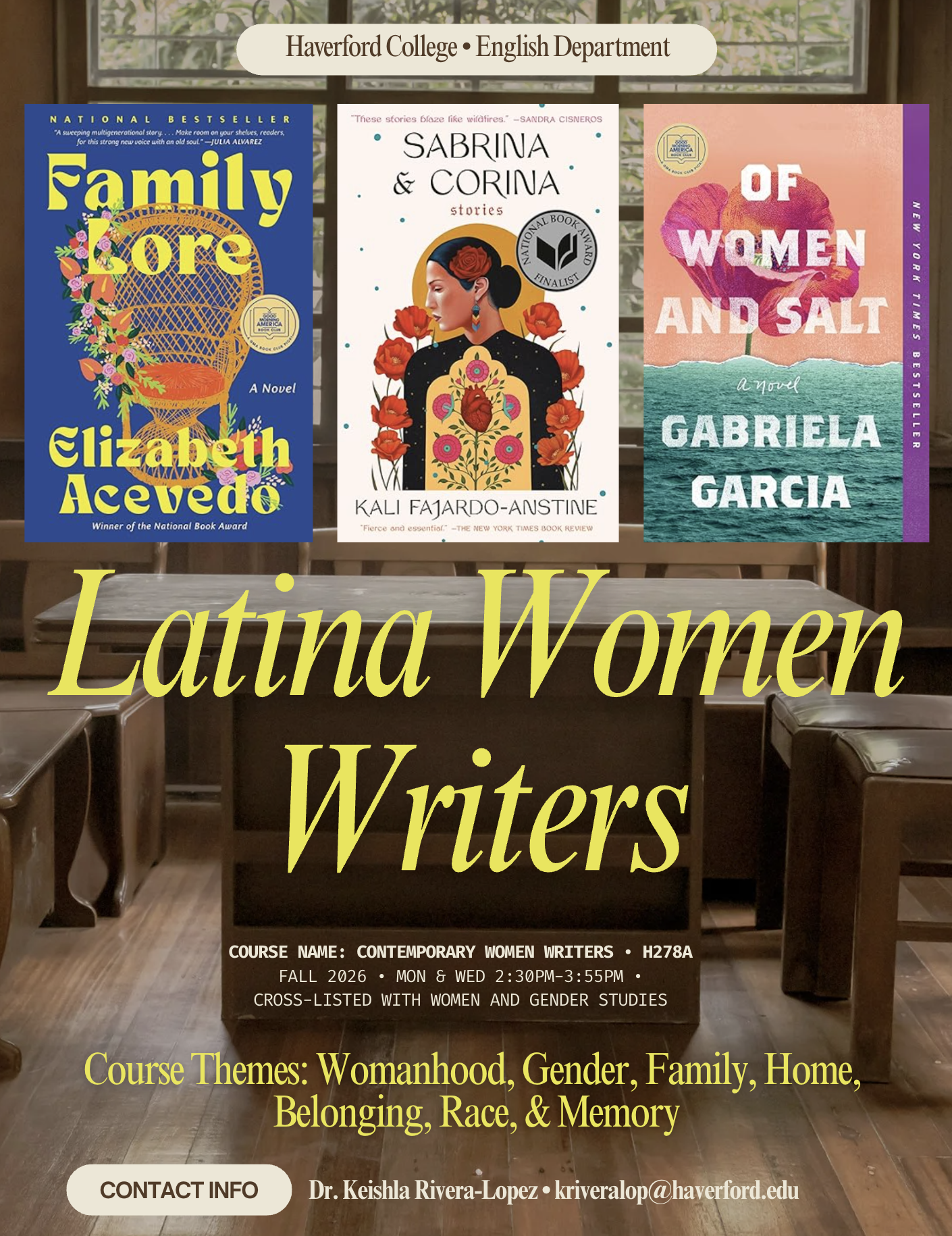
Course Description: In this course students will be reading works from the Latinx literary canon as a survey of Latinidad written by and framed by Latina women writers. Through the course theme, students will study and examine how Latina women write resistance, Latinidad, gender, race, sexuality, language and home as they navigate their lives ‘here’ and ‘there’ via notions of diaspora, migration, and belonging. This course analyzes contemporary literary works in the Latinx literary canon, including the course books, Of Women and Salt, Sabrina and Corina, and Family Lore, while weaving complimentary works in various genres. Students will form written arguments juxtaposing and analyzing the texts in the course considering how authors and poets write about home, racialized experiences as Afro-Latinas and Indigenous Latinas, girlhood and womanhood and resistance. In doing so, students will seek to answer, “why do gender and race matter,” “what is home,” “who belongs,” and “what forms of power affect my humanity?” while also synthesizing canonical and non-canonical novels, short stories, and poems. The course is framed with feminist theory produced by Latina women that demonstrates how theoretical frameworks are informed by lived experience and also become practice.
- Profesor: Keishla Rivera-López
Categoría: English
This course is a survey of Puerto Rican literature that examines how various writers negotiate empire, the Puerto Rican nation, identity, culture, and coloniality through a study of fiction. The selected course novels, The House on the Lagoon, The Taste of Sugar, and Velorio, are literary narratives situated in different historical contexts that speak to experiences of the Spanish and American empires in Puerto Rico, and their afterlives in the present. The course is centered around three novels and also includes short story, poetry, and short film and music as contemporary responses to modernity projects. Students will learn how writers from the late twentieth century and early twenty-first century, Rosario Ferre, Marisel Vera, Xavier Aquino Navarro, Rene Marques, and Jose Luis Gonzalez etc., and contemporary artists like Bad Bunny and Chuwi take on questions of empire, (neo)colonialism, displacement, and migration in their respective genres. This ongoing dialogue about the American influence and dominance in Puerto Rico since 1898 has preoccupied many artists and writers alike, and it has motivated various fictive projects in different mediums. As the world’s oldest colony, how has Puerto Rico been impacted by empire in the past and present? How does Puerto Rico’s colonial status affect Puerto Ricans and their constructions of identity, culture, and the nation? How does the Puerto Rican diaspora shape the archipelago? These are some of the notions and questions leading the study of this semester. While this course is focused on Puerto Rican literature, students will understand how representations and criticisms of Puerto Rico in fiction can be useful in studying other Caribbean diasporic populations, nations, and modern colonies with histories related to Spanish and American empires through an exploration of diaspora theory and archipelagic relations.
- Profesor: Keishla Rivera-López
Categoría: English

- Profesor: Elizabeth Kim
Categoría: English

- Profesor: Elizabeth Kim
Categoría: English

- Profesor: Elizabeth Kim
Categoría: English

- Profesor: Elizabeth Kim
Categoría: English
- Profesor: Asali Solomon
Categoría: English
- Profesor: Elise Juska
Categoría: English
- Profesor: Asali Solomon
Categoría: English

Reading and writing speculative fiction to learn about character, conflict, place, voice, and what makes a story effective.
- Profesor: Stephanie Feldman
Categoría: English
- Profesor: Asali Solomon
Categoría: English
This course aims to offer an introduction to the craft and culture of playwriting as an art-form and space of social justice activation. Students will familiarize themselves with the structure of dramatic narratives through an interdisciplinary exploration of performance, design, and theatre for social change practices that center social justice in the generating of new work for the theatre. Coursework will include weekly writing assignments towards the completion of a new play draft, periodic assignments introducing the principles of collaboration essential to the theatre making process and the reading of playscripts. Class sessions will be centered on the workshopping of written text both for short-term and committed play idea assignments, the discussion and dissection of noteworthy contemporary plays, and an active engagement in current conversations that are shaping the future of the artform.
- Profesor: Alex Espinoza
Categoría: English

The Junior Seminar is a year-long intensive study in the theory and practice of literary interpretation, or how and why we read literature the way we do. Having grappled with poetry and poetic theory in the first semester of Junior Seminar, this semester our focus will be on narrative and prose forms (acknowledging that poetry/narrative is an imperfect delineation, with a range of hybrid forms within these categories and a world of literary genres that lies beyond them). The loose theme of this semester’s seminar is “Narrative Survivance.” From Gerald Vizenor’s concept of “survivance” to Toni Morrison’s emphasis on “re-memory,” this semester we will grapple with how narrative functions in the work of historical memory, how criticism and critique are bound up in narrative, and how storytelling is linked to our individual and collective survival. What is the work of narrative–and narrative critique–in the long afterlife of colonialism and racial slavery, in the ravages of late stage capitalism and the ongoing slow (but increasingly fast) wreck of climate catastrophe? How does narrative order our understanding of the past, present, and future? How does the novel form–a constantly reconfigured and de-configured historical structure–encode a politic? How do we theorize narrative, and how do narratives themselves theorize the work and power of storying? What are the world(s) that narrative enables us to critique or, alternatively, imagine into being? Throughout the semester, we’ll attend to the colonial history of English as a discipline and to the interdisciplinary decolonial methods that sustain the urgency of literary studies today. We’ll also explore how the collective study of literature might constitute an undisciplined practice of care in the midst of intersecting global crises.
- Profesor: Lindsay Reckson
Categoría: English

- Profesor: Maud McInerney
Categoría: English

- Profesor: Jeremy Gallion
Categoría: English
- Profesor: Kimberly Benston
Categoría: English
Dido, queen of Carthage, reprimands her fleeing lover Aeneas and invents a pregnancy so that he will stay. Medea, priestess of Hecate, murders her and Jason’s children. Ophelia, a noblewoman of Denmark, goes mad and dies by drowning. Eve, that first woman, bites into the fruit and falls.
This course examines early modern anti-heroines, from their origins in classical antiquity to their resurgence in sixteenth- and seventeenth-century English drama and verse. Our shared goal in this class is to determine what strategies our readings use to condemn, reclaim, or altogether explode unruly femininity. We will examine how women who want more and those who want differently––be they Renaissance poets or protagonists on stage––deploy their writing and speech to new ends. We will discover, for instance, how the earliest woman to publish a collection of poetry in English, Æmelia Lanyer, wrote biblical fan fiction in which Eve speaks back. And we will enjoy the recent afterlives of similar phenomena in, say, Taylor Swift’s adaptation of an early modern script in “The Fate of Ophelia.” Course authors may include Virgil, Ovid, Thomas Dekker and Thomas Middleton, Christopher Marlowe, John Milton, and William Shakespeare. We will draw these texts into conversation with the series Station 11’s dystopian drama troupe and Chloé Zhao’s Oscar-winning biopic Hamnet. Other class topics include girlbosses, madwomen, sorceresses, saints, and thieves.
No previous experience with early modern literature is required. Course assignments include a weekly reading journal, an oral research presentation, in-class writing exercises, a close-reading paper, and a final research project, which can take a variety of critical and creative forms.
- Profesor: Nat Rivkin
Categoría: English
- Profesor: Asali Solomon
Categoría: English

- Profesor: Gustavus Stadler
Categoría: English

In 2000, atmospheric chemist Paul J. Crutzen identified the late-18th century as the start of the Anthropocene, the epoch marking humans as the dominant geologic force on earth. While we may think of environmental crisis as a relatively new problem in our present age of global climate change, this course asks how those who ushered us into the Anthropocene viewed their shifting relationship to nature. Can we trace the origins of the environmental crisis in 19th-century literature and culture? How do Romantic and Victorian writers grapple with the environmental challenges that confront us now as we teeter on the edge of human-induced apocalypse? What new perspectives do these texts offer on sustainability, environmental justice, and climate futures? We will explore topics such as industrial changes to the rural landscape, the growth of the carbon economy and pollution, ecologies of empire and resource extraction, and visions of climate apocalypse and utopia.
- Profesor: Hannah Schultz
Categoría: English

Environmental problems are never only scientific or technical problems. They are also legal and political questions about power, responsibility, value, and harm. This course introduces students to environmental law and policy as evolving frameworks through which societies define environmental injury, assign accountability, and imagine obligations to human and nonhuman life.
Working across U.S., comparative, and international contexts, we will ask several core questions: Who or what counts as a legal subject? How do regulatory systems address pollution whose causes and effects cross borders? What roles do corporations, states, courts, and social movements play in environmental governance? Can law respond adequately to ecological crisis, or does it reproduce the same forms of inequality and extractive logic that generated the crisis in the first place?
Working across U.S., comparative, and international contexts, we will ask several core questions: Who or what counts as a legal subject? How do regulatory systems address pollution whose causes and effects cross borders? What roles do corporations, states, courts, and social movements play in environmental governance? Can law respond adequately to ecological crisis, or does it reproduce the same forms of inequality and extractive logic that generated the crisis in the first place?
- Profesor: Jessica Croteau
Categoría: Environmental Studies
ENVSH302B01.SP26 - Death and Politics: The Political, Ethical, and Environmental Dimensions of Death

This course explores the intersections of death, politics, and the environment across literature, philosophy, political theory, and cultural studies. Students will examine how societies reckon with mortality, how death shapes political life, and how ecological crises reframe our relationship with extinction and regeneration. The course also engages with the paradoxical possibilities of death, both as loss and as a condition of renewal, especially in the face of climate change and environmental degradation. Combining seminar-style discussion with occasional short lectures to situate texts historically and theoretically, students will be encouraged to make connections between classical traditions, modern political theory, and contemporary ecological challenges. Special emphasis will be placed on interdisciplinary dialogue across literature, philosophy, and environmental humanities.
- Profesor: Jessica Croteau
Categoría: Environmental Studies
- Profesor: Talia Young
Categoría: Environmental Studies
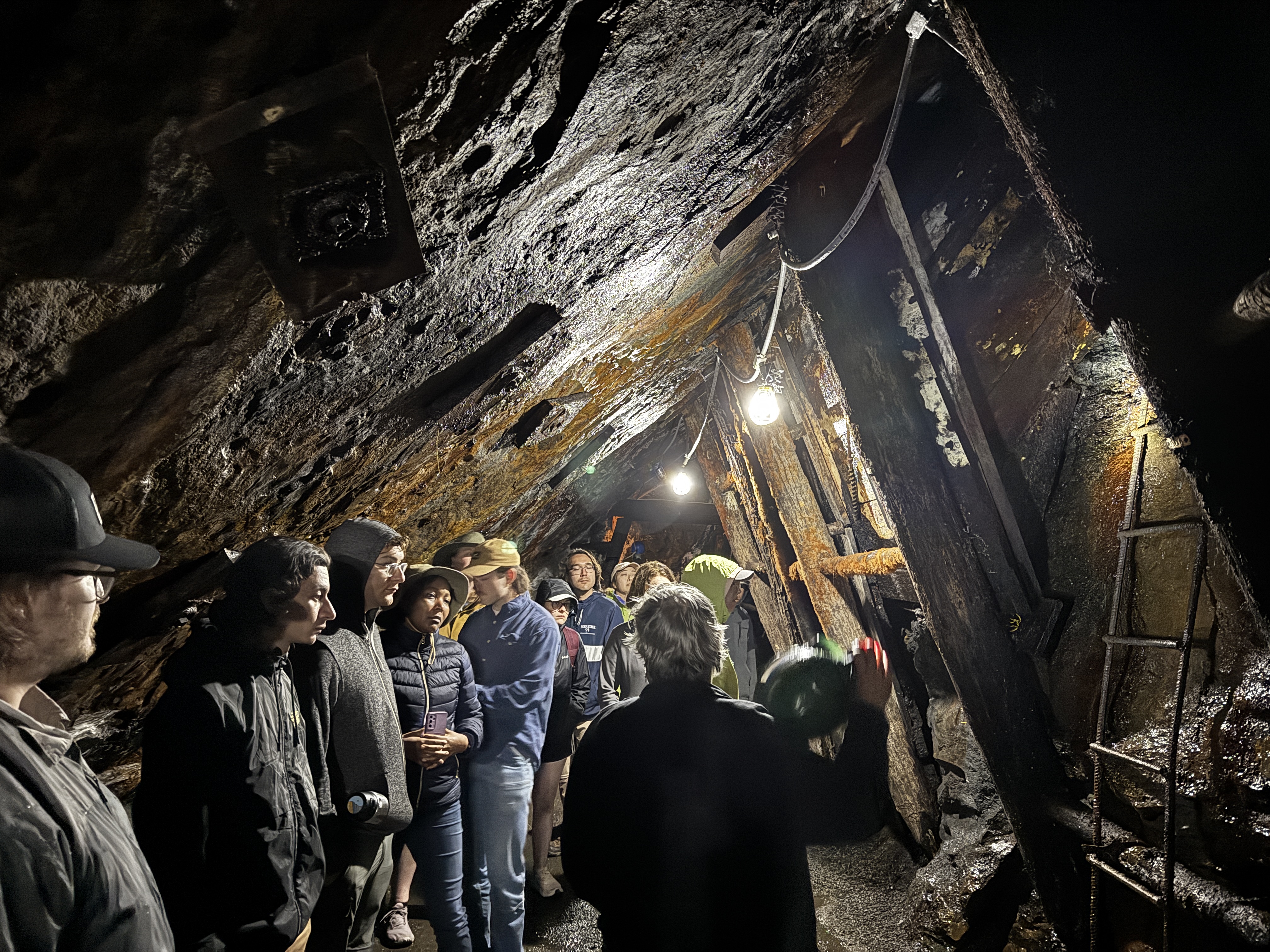
This course is an investigation of the function, origin, and evolutionary history of photosynthesis, from the biochemistry of marine microbes to the diversity of present-day land plants.
Emphasis will be placed on plant structure, physiology, and adaptation.
Emphasis will be placed on plant structure, physiology, and adaptation.
- Profesor: Jonathan Wilson
Categoría: Environmental Studies
- Profesor: Talia Young
Categoría: Environmental Studies

What if waste—something we often overlook as mere garbage—held significant political and social power? This course invites an exploration of waste as a complex and deeply political subject, examining how pollution and discarded materials impact ecological and social systems in ways that are both profound and frequently unnoticed. We will critically engage with issues such as plastic and food waste, nuclear waste, waste colonialism, and the concept of “wasteland.”
- Profesor: Jessica Croteau
Categoría: Environmental Studies

Materials for this course can be found at the following Google Drive link:
https://drive.google.com/drive/u/0/folders/1gBjeuec-SvoBP3WXgpLNjUeNMy5zV9cY
https://drive.google.com/drive/u/0/folders/1gBjeuec-SvoBP3WXgpLNjUeNMy5zV9cY
- Profesor: Kathryne Corbin
Categoría: French
- Profesor: Christophe Corbin
Categoría: French

The Center for Career and Professional Advising (CCPA) is excited to launch Haverford's Future-Ready Ford Success Plan, a step-by-step interactive online resource designed to guide Haverford students in exploring career-building opportunities and developing career-ready competencies. Self-enroll in the plan at any point during your Haverford experience. The plan is tailored to help you cultivate five key career competencies: Self-awareness, Communication, Professional Identity, Multicultural Proficiency, and Career Management.
The Future-Ready Ford Success Plan provides a proactive approach to career and professional development through structured activities known as "career actions." These interactive, asynchronous activities are conveniently accessible through Moodle, with all necessary content built into the platform.
In addition to the plan, the CCPA offers individual advising services, career events, and programs to support your professional journey. Visit www.haverford.edu/career-and-professional-advising to learn more.
- Profesor: Marissa Deitch
- Profesor: Kayla Delaney
- Profesor: Jill Milon
- Profesor: Mia Wittels
Categoría: Miscellaneous
- Profesor: Michael Burri
Categoría: German
- Profesor: Bryan Norton
Categoría: German

- Profesor: Matthew Farmer
Categoría: Greek

This course is an introduction to Greek poetry via the works of “Homer”. We will be reading the Odyssey, a tale of a wandering, lost man on his journey home. Our focus will be on the original language. We will spend the majority of our time with the Greek text, translating, discussing its grammar, syntax, meter and poetics. You will also be expected to listen to/read the Odyssey as a whole in translation. Each week, we will also explore a variety of literary and theoretical approaches to the study of Homeric texts as well as their reception.
- Profesor: Ava Shirazi
Categoría: Greek
Sex, gender, and sexuality affect just about every aspect of our lives. From the moment a doctor announces “girl” or “boy,” the sexes we’re assigned and the genders we perform influence everything from the clothes we are expected to wear to the relationships we pursue to the spaces we’re allowed to enter. Of course, in practice everyone deviants in some way from the demands built into binary categories like male/female, cis/trans, or straight/queer, and the failure to conform to these ideal types can carry heavy penalties, leading many people to resist, refuse, or attempt to redefine them. Moreover, gender and sexuality always intersect with other social power systems – including but not limited to race, religion, class, ability, ethnicity, nationality, and so on – so that nobody experiences sex, gender, or sexuality in precisely the same way as anyone else.
This course explores the historical constitution of modern categories of gender and sexuality and the ways that these unbalanced social power systems shape everything from global geopolitics to the intimate spaces of our households. You do not need to have a background in Gender and Sexuality Studies to succeed in this class. We will be learning about core concepts, such as power and difference, alongside different theoretical approaches to gender and sexuality. The approach we take in the course will be a ‘history of the present,’ meaning that, in order to contextualize our contemporary categories, concepts, and debates, much of the material we engage will comprise historically or genealogically significant (that is, old) texts associated with the fields of feminist and gender studies. But, understanding that the meaning of ideas is not static, we will make every effort not only to understand the historical circumstances that produced these ideas, but also their relevance to our lives today.
By the end of this course, you should be able to mobilize multiple conceptual tools to discuss how gendered power systems shape historical narratives, cultural representations, and our everyday lives in generally unequal but context-dependent ways.
This course satisfies Humanities, A: Meaning, Interpretation (Texts) and B: Analysis of the Social World.
- Profesor: Danny Foster
Categoría: Gender and Sexuality Studies
Sex, gender, and sexuality affect just about every aspect of our lives. From the moment a doctor announces “girl” or “boy,” our assigned genders influence everything from the clothes we are expected to wear to the spaces we feel comfortable occupying. While many people historically and at present reject this dualistic model, societal expectations weigh heavily. Moreover, gender and sexuality always intersect with other social power systems – including but not limited to race, religion, class, ability, ethnicity, nationality, and so on – so that nobody experiences gender in precisely the same way as anyone else.
This course explores the historical constitution of modern categories of gender and sexuality and the ways that these unbalanced social power systems shape everything from global geopolitics to the intimate spaces of our households. The emphasis will be on the spatial or geographical aspects of gender and sexuality. This means that we will be thinking about how particular places - such as laboratories, hospitals, kitchens, and borderlands - come to be unevenly gendered and/or sexualized, and how these gendered places shape people who occupy them.
You do not need to have a background in Gender and Sexuality Studies to succeed in this class. We will be learning about core concepts, such as power and difference, alongside different theoretical approaches to gender and sexuality, such as performativity and intersectionality. By the end of this course, you should be able to mobilize multiple conceptual tools to discuss how unbalanced gendered power systems shaped historical processes (including colonial encounters, declarations of war, and scientific inquiries); how unbalanced gendered power systems shape spaces all around us on a daily basis; and how unbalanced gendered power systems intersect with other axes of inequality to produce contemporary social injustices. You can also expect to improve your critical reading, writing, and oral presentation skills.
- Profesor: Danny Foster
Categoría: Gender and Sexuality Studies
- Profesor: Maurice Rippel
Categoría: Gender and Sexuality Studies

What counts as kinship? Can kinship be “queered”? How do queer lives challenge preconceived notions of kinship? Or how might kinship itself be unstable, fugitive, “queer”? This course introduces students to queer theory through the framework of kinship, with particular attention given to the ways kinship is shaped by race, class, gender, sexuality, and the state. We will explore queer theory’s complicated relationship to academic fields such anthropology, historiography, and sociology, insofar as they produce and reinforce the primacy of blood-relations, or the sanctity of the nuclear family. To practice using theory as a method of interpretation, and in order to explore how literature, film, and visual culture challenge normative kinship or construct new affinities across time and space, theoretical readings will be paired with creative works. The course is designed for students with no prior background in queer theory.
- Profesor: Indie Halstead
Categoría: Gender and Sexuality Studies
This advanced seminar examines feminist theory as a dynamic and contested field of inquiry. Feminist theory does not comprise a settled canon; rather it represents an ongoing dialectic about power, embodiment, knowledge, and liberation. Rather than surveying schools or “kinds” of feminism in sequence, the course is organized around the central questions feminist theory takes up—about its own subject, about work, race, colonialism, normativity, the state, and technology. Each week stages several thinkers in relation to one another so that we can learn how to map debates and conversations, trace where arguments emerge and diverge, and locate our own positions within the conversations. The course should help us move beyond “wave” narratives and instead trace how feminist theory has been shaped, challenged, and reconsidered by Black feminist, queer of color, trans, and decolonial interventions. These perspectives recur across the term rather than as separate units so that we can explore how feminist theories challenge racism, capitalism, colonialism, cisnormativity, state violence, and technology.
- Profesor: Thelathia "Nikki" Young
Categoría: Gender and Sexuality Studies
- Profesor: Jamie Schneck
- Profesor: Katherine Van Aken
Categoría: Miscellaneous
- Profesor: Lisa Jane Graham
Categoría: History
- Profesor: Linda Gerstein
Categoría: History
- Profesor: Linda Gerstein
Categoría: History

This course analyzes the complex histories, shifting geographies, and unequal relationships of power denoted by the term “Global South,” a designation that maps unevenly onto the formerly colonized regions of Africa, Asia and Latin America. As we shall see, the term is also used to describe marginalized populations and places within the “Global North,” a convenient though not entirely accurate label for today’s relatively rich and developed world regions. A basic concern of the course will be to analyze the origins, relevance, and strengths and limitations of the concept of the “Global South.” To do so we must assess how centuries of colonialism and its legacies have influenced our contemporary world. Our collective goal will be to develop new ways of thinking about our pasts, presents and futures, while respectfully engaging, discussing and debating a range of at times controversial topics.
- Profesor: James Krippner
Categoría: History
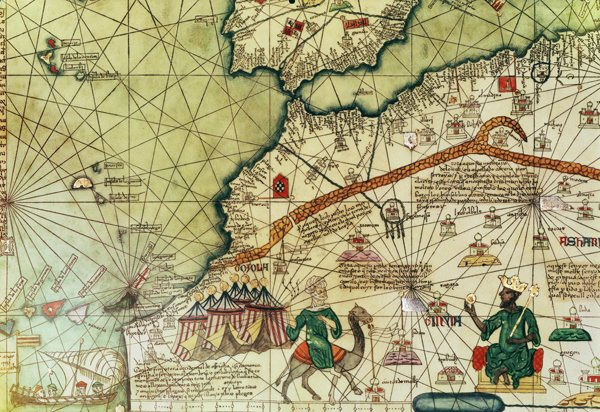
This course analyzes the complex histories, shifting geographies, and unequal relationships of power denoted by the term “Global South,” a designation that maps unevenly onto the formerly colonized regions of Africa, Asia and Latin America. As we shall see, the term is also used to describe marginalized populations and places within the “Global North,” a convenient though not entirely accurate label for today’s relatively rich and developed world regions. A basic concern of the course will be to analyze the origins, relevance, and strengths and limitations of the concept of the “Global South.” To do so we must assess how centuries of colonialism and its legacies have influenced our contemporary world. Our collective goal will be to develop new ways of thinking about our pasts, presents and futures, while respectfully engaging, discussing and debating a range of at times controversial topics.
History 114 will be taught in a seminar style emphasizing discussion and participatory “co-learning” through dialogue, analysis and writing. The instructor firmly believes that sharing our various perspectives, thoughts and insights is a responsibility that comes with the privilege of a Haverford College education. We shall take a broadly “historiographical” approach, asking big questions and critiquing the different methodologies historians have employed to answer them. Reading materials will range chronologically from antiquity into the present, focusing on topics such as the emergence of states and the formation of empires; trade and technology transfers; many types of cultural exchanges, including the emergence, spread and redefinition of world religious traditions; ethnic “othering” and racism as defined and redefined over time and in different contexts; and enduring realities of violence, militarism, war, and struggles for peace. In the instructor’s view, history is best understood as a discipline of rigorous contextualization, a practice that can lead to better dialogues, more informed arguments, and new understandings. If we work hard enough, we might even find solutions for enduring problems!
This seminar will be a “hands on” experience introducing you to the study of history at the college level. In addition to reading innovative historical scholarship produced by specialists, we will work with primary sources that ask you to be the historian. These include written documents (in translation) from the eras under consideration as well as visual sources including art, architecture, photography and film. The instructor believes that history is most interesting when taught as a craft involving original research, innovative analysis and creative writing. Assignments for History 114 have been designed to develop these skills, which are especially necessary for those thinking about becoming History Majors at Haverford College!
- Profesor: James Krippner
Categoría: History
- Profesor: Bethel Saler
Categoría: History
- Profesor: Bethel Saler
Categoría: History
Founded in 1206, the Mongol Empire remains the largest contiguous empire in history. This course examines this remarkable empire from its founding to its division into four successor states in the fourteenth century. Students will read The Secret History of the Mongols, an indigenous chronicle of the empire’s rise and the crowning achievement of Mongolian literature. Along the way, the course introduces the early histories of East and Central Asia. No prior knowledge is necessary.
- Profesor: Griffin Creech
Categoría: History
- Profesor: Lisa Jane Graham
- Profesor: Darin Hayton
Categoría: History
- Profesor: Linda Gerstein
Categoría: History

- Profesor: Glauco Schettini
Categoría: History

This course explores the intellectual ferment that fueled political upheaval during the Age of Revolutions (1770s-1840s), focusing on key thinkers and ideas across Europe and the Americas. Starting in nearby Philadelphia, where Thomas Paine published his inflammatory pamphlet, Common Sense, in 1776, we will conclude in an increasingly industrialized London, where Karl Marx and his intellectual partner, Friedrich Engels, released their Communist Manifesto in 1848. Along the way, we will traverse the Atlantic multiple times, touching Paris and Mexico City, Italy and Haiti, Germany and Spain. Through a combination of primary and secondary sources, we will trace the emergence of modern concepts of liberty, equality, human rights, and revolution, alongside the darker forces of terror, total war, populism, and authoritarianism. We will also examine the birth of ideological movements—liberalism, conservatism, nationalism, and socialism—that continue to shape today’s political landscape.
- Profesor: Glauco Schettini
Categoría: History
This course introduces students to the history of Quakerism and its influences at Haverford College, from its origins in the early 19th century through the present. Haverford College’s official motto is “Non doctior, sed meliore doctrina imbutus.” This translates as “Not more learned, but imbued with better learning.” What on earth does this actually mean? History 252 attempts to answer this question. It emphasizes moments of debate, conflict and even crisis, as successive generations of Haverfordians have defined and redefined the College’s identity, goals and purpose. An underlying premise of the course is that this is an ongoing process you will contribute to during your years at Haverford College and afterwards, when you will take what you have learned as a student into the world beyond the campus gates.
- Profesor: Francis Betkowski
- Profesor: David Harrington Watt
- Profesor: James Krippner
Categoría: History
This course introduces students to the history of Quakerism and its influences at Haverford College, from its origins in the early 19th century through the present. Haverford College’s official motto is “Non doctior, sed meliore doctrina imbutus.” This translates as “Not more learned, but imbued with better learning.” What on earth does this actually mean? History 252 attempts to answer this question. It emphasizes moments of debate, conflict and even crisis, as successive generations of Haverfordians have defined and redefined the College’s identity, goals and purpose. An underlying premise of the course is that this is an ongoing process you will contribute to during your years at Haverford College and afterwards, when you will take what you have learned as a student into the world beyond the campus gates.
- Profesor: Francis Betkowski
- Profesor: David Harrington Watt
- Profesor: Elizabeth Jones-Minsinger
- Profesor: James Krippner
Categoría: History

Welcome! My name is Marlen Rosas. I'm looking forward to working with you this semester!
- Profesor: Marlen Rosas
Categoría: History
- Profesor: Marlen Rosas
Categoría: History
- Profesor: Ruodi Duan
Categoría: History
This research-oriented seminar provides an introduction to Mexican cultural history from antiquity through the present. It is designed to assist you in developing your research, writing and oral communication skills while participating in a supportive but challenging scholarly environment. As we shall see, authentic intellectual labor is hard and at times lonely work, though it can also be collaborative, stimulating, and fulfilling. The instructor spent over three decades thinking, researching, writing and teaching about sixteenth, eighteenth and twentieth century Mexican history. In this class, I hope to share what I learned through this experience about Mexico, the United States, and perhaps even life itself. The ultimate goal of the seminar is to encourage students to develop new understandings of the past while thinking about a better future. We shall also learn about historical research and have some fun.
- Profesor: James Krippner
Categoría: History
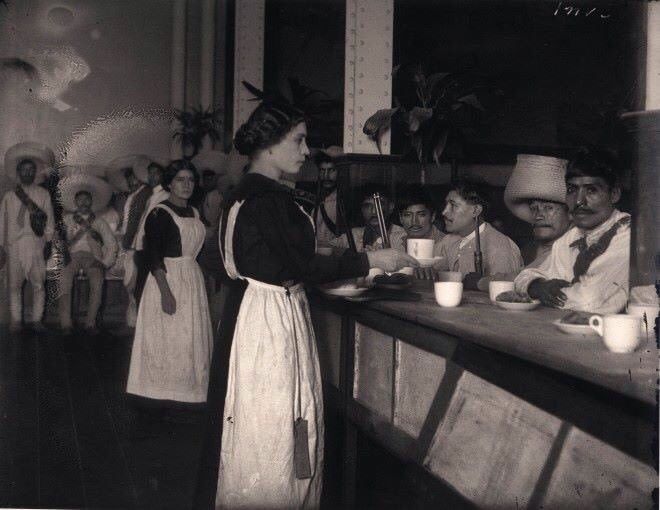
This research-oriented seminar provides an introduction to Mexican cultural history from antiquity through the present. It is designed to assist you in developing your research, writing and oral communication skills while participating in a supportive but challenging scholarly environment. As we shall see, authentic intellectual labor is hard and at times lonely work, though it can also be collaborative, stimulating, and fulfilling. The instructor spent over three decades thinking, researching, writing and teaching about sixteenth, eighteenth and twentieth century Mexican history. In this class, I hope to share what I learned through this experience about Mexico, the United States, and perhaps even life itself. The ultimate goal of the seminar is to encourage students to develop new understandings of the past while thinking about a better future. We shall also learn about historical research and have some fun.
- Profesor: James Krippner
Categoría: History

This research-oriented seminar invites you to analyze the fascinating history of Rio de Janeiro, Brazil, as it is transformed over the centuries by an intricate mixture of local and global histories. This geographic space has been a zone of indigenous settlement from antiquity through the formation of a hybrid colonial culture and into the present; a sixteenth and seventeenth century frontier outpost blessed with a beautiful natural harbor utilized by early modern religious dissidents, pirates, smugglers, and adventurers seeking their fortunes; the home of an important whaling industry as the colony matured; a vibrant port city and increasingly massive human trafficking center during the era of mass enslavement from the late-sixteenth through most of the nineteenth century; the seat of colonial and national governments from the mid-eighteenth through the mid-twentieth centuries; a transregional trade center linking the Americas, Europe, Africa, and Asia; at all times a site of complex labor, ethnic, racial, gender and sexual politics; since the end of WWII a cosmopolitan global tourist destination renowned for its multi-faceted popular culture, especially its beaches, music, dance, carnival, soccer and religious traditions; and in the twenty first century home to conflicts between “authoritarian new right” and “liberal-left” strands of populism, fueled by deep unresolved grievances and social media. As we shall see, Rio de Janeiro has been all these things and more since its founding on March 1, 1565.
- Profesor: James Krippner
Categoría: History
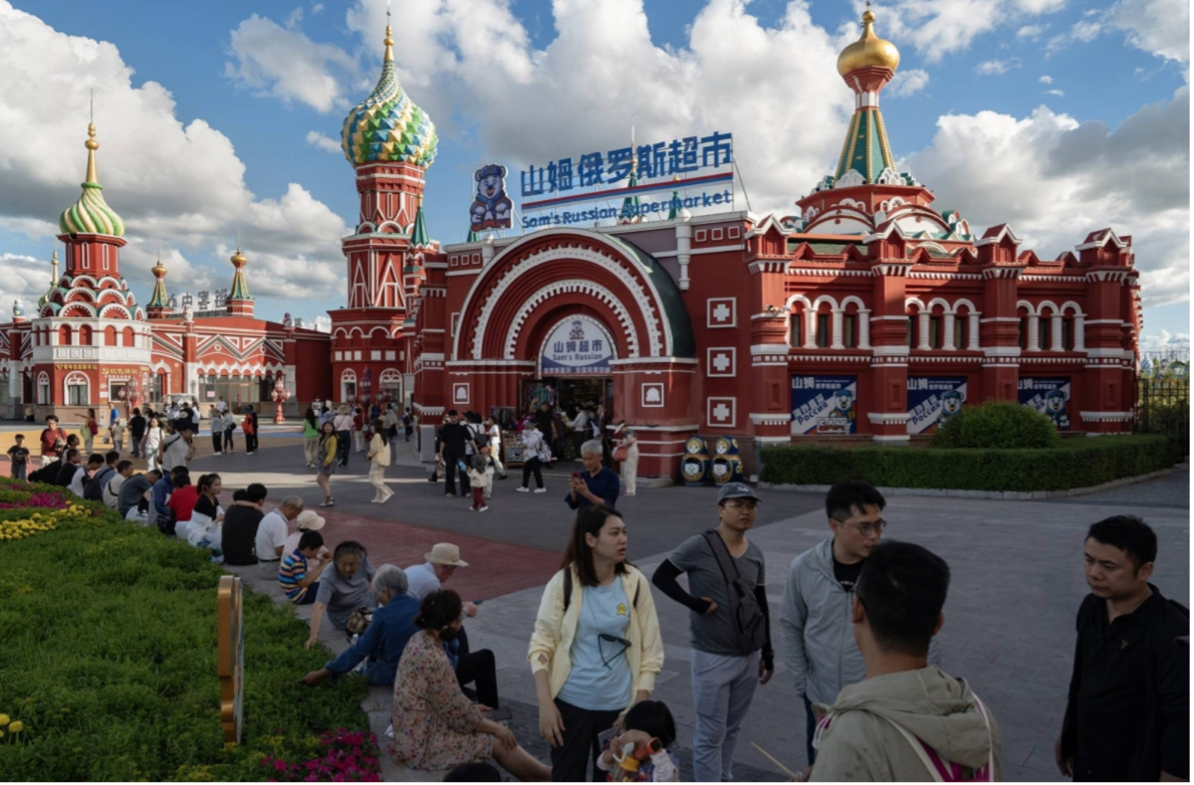
This course approaches contacts, conflicts, and exchanges between East Asia and Russia/the Soviet Union as a mutually constitutive history and reconsiders Europe and the West’s influence on Asia. The course is not a survey of East Asian or Russian history, but each session will contextualize a particular East Asia-Russia encounter. We will analyze key processes and events: colonialism, orientalism, reform movements, the rise of communism, the Cold War, and others. No prior knowledge is required.
- Profesor: Griffin Creech
Categoría: History

Conspiracies have always existed; conspiracy theories as we know them today are a creation of the early modern era. Between the fifteenth and the eighteenth centuries, a set of interconnected transformations reshaped European societies: the printing revolution made the circulation of information (including fake news) faster and easier; colonists sailed through the Atlantic to establish the first global empires; the Protestant Reformation opened a new season of religious hostility between neighboring countries; and kings consolidated their power, only to see it challenged by the rise of public opinion and representative systems. In this class, we will observe how conspiracy theories emerged as a response to these transformations, and how they were used to understand, reinforce, or resist them. Across the centuries of the early modern era, we will witness the emergence of world conspiracy theories––all-encompassing systems that supposedly explain the trajectory of world history at large, usually as the result of the plot of a small group of people aiming for world domination.
- Profesor: Glauco Schettini
Categoría: History
- Profesor: Lori Ginzberg
Categoría: History

History 400a thesis seminar is the senior research lab for thesis work. Students will continue on to History 400b in the spring where they will work with their assigned faculty advisor to complete the writing and revision of the thesis.
Over the course of this year, you will research and write an original piece of historical writing. In the fall semester, you will complete a series of writing assignments that will help you conceptualize, research, and draft/write your thesis. Remember that the thesis is a process as much as it is a product. Your initial ideas will evolve in response to the evidence and the problems it poses.
Over the course of this year, you will research and write an original piece of historical writing. In the fall semester, you will complete a series of writing assignments that will help you conceptualize, research, and draft/write your thesis. Remember that the thesis is a process as much as it is a product. Your initial ideas will evolve in response to the evidence and the problems it poses.
- Profesor: Darin Hayton
- Profesor: James Krippner
- Profesor: Bethel Saler
Categoría: History
This course is not a survey of diseases or the distribution of health and illness around the world. Rather, this course critically interrogates “global health” as a set of historically contingent ideas, systems, and activities carried out across geographic, cultural, and economic difference. We will ask: where, how, and why did paradigmatic global health interventions emerge? What activities have been carried out in the name of health promotion and with what consequences? How have global health actors imagined the people and communities whose health they seek to improve? How do health interventions cultivate subjects and subjectivities, both normative and revolutionary? To answer these questions, we look to histories of empire, colonialism, and globalization; to interactions between citizens, states, civil society, multilateral organizations, and private capital; and to the development ideologies and practices that have shaped global health over the past century. Topics include tropical and missionary medicine; eradication campaigns; sanitation and hygiene; reproduction; family planning; maternal health; infant nutrition; health systems and finance; hospitals and health infrastructures; racialized hierarchies of expertise and labor; primary health care and community-based programs; health education and behavior change communication; international cooperation and bilateral aid; neoliberalism; access to medicine; global health technologies; and partnerships. Readings are drawn from anthropology, social history, sociology, medicine, public health, medical humanities, and science studies.
- Profesor: Anna West
Categoría: Health Studies

Required culminating seminar, which integrates the three tracks of the Health Studies minor. Students share and critically assess their own and fellow students’ ongoing work to communicate across disciplines and understand the value and interconnectedness of different disciplinary approaches. Students present and defend their semester-long collaborative projects at the end of the course.
Fall 2026 Theme: Lead is a powerful neurotoxin that disproportionately affects children and can have lasting cognitive and behavioral effects. Failures to adequately regulate lead offer a unique window into the politicization of science, debates over the nature of evidence and the locus of responsibility, and the political ecology of health. We will trace the incorporation of lead into industrial processes, the fight to regulate lead in paint and gasoline, ethical and conceptual problems in epidemiological research on lead, and the pathways by which childhood lead poisoning worsens entrenched inequities. We will examine the impact of financialization on public health in Flint, Michigan and the role of citizen science and physician leadership in responses to the city's water crisis. Case studies from the Global South will further locate lead poisoning and mitigation efforts in transnational economic processes.
Fall 2026 Theme: Lead is a powerful neurotoxin that disproportionately affects children and can have lasting cognitive and behavioral effects. Failures to adequately regulate lead offer a unique window into the politicization of science, debates over the nature of evidence and the locus of responsibility, and the political ecology of health. We will trace the incorporation of lead into industrial processes, the fight to regulate lead in paint and gasoline, ethical and conceptual problems in epidemiological research on lead, and the pathways by which childhood lead poisoning worsens entrenched inequities. We will examine the impact of financialization on public health in Flint, Michigan and the role of citizen science and physician leadership in responses to the city's water crisis. Case studies from the Global South will further locate lead poisoning and mitigation efforts in transnational economic processes.
- Profesor: Anna West
Categoría: Health Studies

This course investigates the history, methodology, and ethical implications of Human- Centered Design (HCD). A cross-disciplinary methodology HCD grounded in fine arts, cognitive psychology, and systems engineering. It provides a creative, structured framework for solving complex problems by centering the lived experiences of people.
This course envisions design as an engine for social and systemic change. Situated within Visual Studies, we treat the "user experience" as a site of visual and sensory analysis. We create a structure for understanding usability design and research, while critically exploring Design Justice.
We will ask: Who is included in our "human-centered" focus? Who is marginalized by our "solutions"? Students will develop professional skills in visual research, synthesis, rapid prototyping, and strategic roadmapping. The semester culminates in capstone projects and presentations that address a real-world social, environmental, or economic challenge within the Haverford/Bi-Co community or the greater Philadelphia area.
- Profesor: Ronah Harris
Categoría: Independent College Programs

Course Summary
This course introduces the history, process and uses of the human centered design (HCD) framework.
What is Human-centered design? HCD is a methodology that emerges from several disciplines: cognitive psychology, art & design, and user design. It is a creative approach to problem solving and the method used by many companies and organizations to design products and services that relate directly to the people they serve.
Over the course of 6 weeks design methods and tools are introduced, and the student's design ability is developed in a capstone design project or equivalent. The course is organized around the following concepts: design research, analysis & synthesis, concept generation & creativity, prototyping, communication & visualization. Students will be expected to use tools and methods of professional practice and to consider the social, economic and environmental implications of their products, services or systems.
HCD is a process that starts with building an understanding of the people you are designing for and exploring new solutions that are made specifically to fit their needs. We will therefore look at the Why? We will learn design considering ethics, inclusivity, sustainability and access by designing a project.
Methodology
This short course is a project-based introduction to design, structured as a hands-on studio course. There is an emphasis on hands-on innovative thinking and professional practice. Students will learn key methods of design innovation and will work in teams to apply those methods, learning how to uncover opportunities, explore ideas, prototype solutions, and interact with users. Students are given the freedom to develop specific design skills which suit their interests and contribute to their team projects over the course of the class. At the end of the quarter, student teams present their design concepts, showcasing prototypes in engaging and thoughtful ways.
- Profesor: Ronah Harris
Categoría: Independent College Programs

This course is designed to improve your ability to autonomously speak and write in Italian at an elementary level on various topics, from basic routine tasks to popular, historical, and practical aspects of Italy’s culture. It builds on what you have learned in Beginning Italian I and completes the range of grammar and cultural topics that an independent speaker should know. It is based on four weekly 50-minute sessions (3 with me and one with my TA), and you are strongly encouraged to spend a minimum of one hour of study outside of class each day on the material presented in class.
- Profesor: Lillian Belzer
- Profesor: Iuri Moscardi
- Profesor: Luca Zipoli
Categoría: Italian and Italian Studies

This course is designed to improve your ability to autonomously speak and write in Italian at an elementary level on various topics, from basic routine tasks to popular, historical, and practical aspects of Italy’s culture. It builds on what you have learned in Beginning Italian I and completes the range of grammar and cultural topics that an independent speaker should know. It is based on four weekly 50-minute sessions (3 with me and one with my TA), and you are strongly encouraged to spend a minimum of one hour of study outside of class each day on the material presented in class.
- Profesor: Lillian Belzer
- Profesor: Giulio Genovese
- Profesor: Iuri Moscardi
- Profesor: Luca Zipoli
Categoría: Italian and Italian Studies

Postclassical Latin is both an advanced investigation of the Latin language and a literature seminar. You will improve your ability to understand Latin naturally, as a varied, organic language, by reading, analyzing, and discussing a variety of texts from the postclassical period, the more than seventeen hundred years (c. 300 ce to the present) when Latin evolved from a living into an immortal language.
Since there are nearly 1 trillion words of extant postclassical Latin (compared to a “mere” 100 million words of Classical Latin), this course will feature four topically and temporally distinct vignettes from the postclassical tradition: (a) late antique centonic and allegorical literature that recombines the lines and half-lines of Vergil into poems sacred (Proba’s Cento) and profane (Ausonius’ Cento Nuptialis), followed by selections of Prudentius’ Psychomachia, a graphic meditation on the war between virtue and vice; (b) vibrant, diverse sacred and secular Medieval works, with special focus on those by the visionary saint, Hildegard of Bingen; (c) a brief stop-over in the European Renaissance (Italian, Dutch, and/or English); and (d) the Latin of “New Spain”, including poems about Mexico and the Virgin of Guadalupe. Along the way, we will drop in on a range of postclassical “best sellers,” readable and popular texts from these periods.
Since there are nearly 1 trillion words of extant postclassical Latin (compared to a “mere” 100 million words of Classical Latin), this course will feature four topically and temporally distinct vignettes from the postclassical tradition: (a) late antique centonic and allegorical literature that recombines the lines and half-lines of Vergil into poems sacred (Proba’s Cento) and profane (Ausonius’ Cento Nuptialis), followed by selections of Prudentius’ Psychomachia, a graphic meditation on the war between virtue and vice; (b) vibrant, diverse sacred and secular Medieval works, with special focus on those by the visionary saint, Hildegard of Bingen; (c) a brief stop-over in the European Renaissance (Italian, Dutch, and/or English); and (d) the Latin of “New Spain”, including poems about Mexico and the Virgin of Guadalupe. Along the way, we will drop in on a range of postclassical “best sellers,” readable and popular texts from these periods.
- Profesor: Bret Mulligan
Categoría: Latin

Together in this seminar we will investigate several famed conspiracies in Roman history to consider how conspiracy narratives expose what is often left unsaid in a society, how they serve to reenforce social order and the expectations for "good" citizens, and how marginalized figures like women, slaves, and foreigners often play important roles in opening up the private words and deeds of the conspirators to public knowledge. Our attention this semester will be doubled, considering the narration of moments when conspiracies sought to topple power, and also how political conversation and action becomes tagged and narrated as conspiratorial. That is, we’ll be reading historical narratives as an insight into Roman history, literature, and culture; we will also be using Roman narratives as evidence for better understanding the phenomena of conspiracies themselves.
- Profesor: Bret Mulligan
Categoría: Latin
This course is intended to help students gain a beginning-level competency of communicating in Valley Zapotec, specifically Dizhsa (San Lucas Quiaviní Zapotec), an Indigenous language spoken in what is now Oaxaca, Mexico. The course will include instruction on grammar, conversational practice, as well as historical and modern cultural context of Zapotec language and life in Oaxaca and the diaspora. [Note this class does not satisfy the language requirement as it is only 0.5 units.]
- Profesor: Felipe Lopez
Categoría: Linguistics
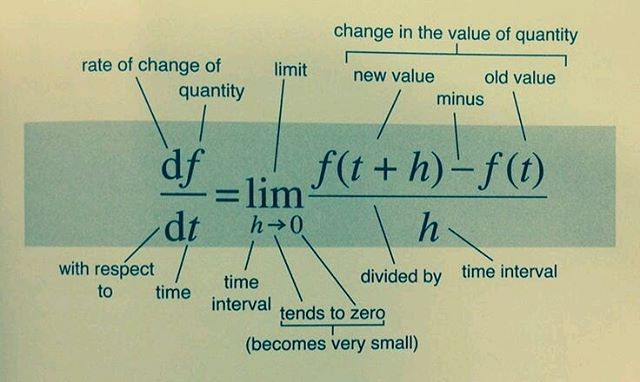
- Profesor: Reginald McGee
Categoría: Mathematics
- Profesor: Tarik Aougab
Categoría: Mathematics
- Profesor: Tarik Aougab
- Profesor: Julia Costacurta
Categoría: Mathematics

- Profesor: Ana López-Sánchez
Categoría: Miscellaneous

- Profesor: Ana López-Sánchez
Categoría: Miscellaneous

This will be a central hub for important information for the team. Links, groups, etc., so that you do not have to keep referring to GroupMe.
- Profesor: Kevin Brenner
Categoría: Miscellaneous

Thank you for visiting this site! The Chorale uses a Google website for all of its business.
Please visit us here for more info or contact Dr. Nate Zullinger (nzullinger@haverford.edu).
- Profesor: Nathan Zullinger
Categoría: Music
Overwhelmingly, the way most of us encounter music is through recordings, not live performance. But how does that influence the way we experience music? This course is designed as an introduction to thinking critically about the mediums on which music is recorded, distributed, and circulated. The class will provide a chronological overview of recording technologies with an emphasis on the relationship between medium, repertoire, and the experience of the listener, highlighting the unique affordances of different types and styles of recording technologies. After an initial unit during which we will establish shared vocabulary and theory for discussing recorded sound, we will move through a series of units focused on early phonography, radio, vinyl records, bootleg recordings, cassettes, CDs, digital mediums, and more. Readings and case studies are selected to intentionally highlight examples from regions beyond North America and Western Europe. Underlying themes include the environment, questions of genre, and music and capitalism. In addition to short readings (one article or book chapter per class meeting), students will undertake two hands-on projects: one in which they will work with LPs (from the library’s collection) to discuss and analyze these material objects as historical sources, and a hands-on creative project using cassette tapes.
- Profesor: Allison Brooks-Conrad
Categoría: Music
The term “girl power” first appeared in 1991 when the girl punk group Bikini Kill created the phrase, mashing together two words and concepts that were seemingly incongruous: “girl” and “power” of any kind. As cultural critic Sophie Gilbert notes, by the year 1997, the Spice Girls, the massively popular girl group, had coopted the phrase, vacating it of any transgressive, activist meaning. Instead, the term was a vacuous, empty container, a sign of the postfeminist wave sweeping workplaces, homes, and culture. This example begs the question: why is music (especially popular music) the venue of choice for so many different iterations of feminist expression? What makes music feminist? How does one musical context for the term “girl power” lead to such vastly different applications and understandings of the term? This course interrogates such questions and the broader discourse surrounding feminist musicology. By taking an approach that is intentionally non-chronological and inclusive of all musical genres, this course places in conversation a variety of repertoires, scholars, and practitioners to better understand how questions of music, femininity, and feminism are imbricated in larger matrices of racial, socioeconomic, and gender identity; political economies; and other forms of power.
- Profesor: Allison Brooks-Conrad
Categoría: Music
TRANSATLANTIC SOUNDS: EUROPE AND THE AMERICAS
This course covers various musical cultures of Europe and the Americas. It provides an overview with selected case studies that emphasize folk, traditional, and popular musics, together with their performers, audiences, and cultural contexts, including major musical instruments, traditional and popular genres, notation systems, musical concepts, and extra musical contexts. Thematically, Transatlantic Sounds explores the relationship between music and the construction of identity, including collective expressions (e.g., nationalism, “Swifties,” class) and individual modes (e.g., gender, sexuality). The course is open to students from all disciplines; there are no pre-requisites and knowledge of music performance and theory is helpful, but not necessary.
This course covers various musical cultures of Europe and the Americas. It provides an overview with selected case studies that emphasize folk, traditional, and popular musics, together with their performers, audiences, and cultural contexts, including major musical instruments, traditional and popular genres, notation systems, musical concepts, and extra musical contexts. Thematically, Transatlantic Sounds explores the relationship between music and the construction of identity, including collective expressions (e.g., nationalism, “Swifties,” class) and individual modes (e.g., gender, sexuality). The course is open to students from all disciplines; there are no pre-requisites and knowledge of music performance and theory is helpful, but not necessary.
- Profesor: Edwin Porras
Categoría: Music
PRIVATE VOCAL STUDY requires a preliminary meeting with Dr. Nate Zullinger. Please visit our website for more info and email Dr. Zulling with any questions.
Thank you!
https://www.haverford.edu/music/applied-music-study-and-ensembles/choral-and-vocal-study
Thank you!
https://www.haverford.edu/music/applied-music-study-and-ensembles/choral-and-vocal-study
- Profesor: Nathan Zullinger
Categoría: Music
Please see this Website for all Information on Instrumental Study
https://sites.google.com/haverford.edu/instrumentalmusicspring2025?usp=sharing
https://sites.google.com/haverford.edu/instrumentalmusicspring2025?usp=sharing
- Profesor: Heidi Jacob
Categoría: Music
To learn more about Chamber Singers, visit our website:
https://www.haverford.edu/music/applied-music-study-and-ensembles/choral-and-vocal-study
To sign up for an audition time (now through September 4), visit here:
https://www.signupgenius.com/go/10C0F4BADAA28A4F4C70-50704278-choralvocal
https://www.haverford.edu/music/applied-music-study-and-ensembles/choral-and-vocal-study
To sign up for an audition time (now through September 4), visit here:
https://www.signupgenius.com/go/10C0F4BADAA28A4F4C70-50704278-choralvocal
- Profesor: Nathan Zullinger
Categoría: Music
Please see this Website for all Information on Instrumental Study
https://sites.google.com/haverford.edu/instrumentalmusicspring2025?usp=sharing
https://sites.google.com/haverford.edu/instrumentalmusicspring2025?usp=sharing
- Profesor: Heidi Jacob
Categoría: Music
Core concepts and perspectives for the serious study of music. Students will explore music, meaning, and musicological methods in a variety of contexts through a set of foundational themes and questions, including:
• Music and the Idea of Genius
• Who Owns Music?
• Music and Totalitarianism
• Music and Difference
Each unit will use a small number of musical works, performances, or documents as focal points. In each unit we will also read current musicological work in an attempt to understand the methods, arguments, and perspectives through which scholars interpret music and its many meanings. We will encounter a wide range of music from different times and places, from Mozart to Maoist opera, and from minstrel songs to Shostakovich.
- Profesor: Allison Brooks-Conrad
Categoría: Music
A radio’s hum as a listener tunes it to a state-controlled station, the hiss of static giving way to the jaunty chorus of a song about loyalty to the homeland; a speech by Lenin, heard live in 1919, or heard decades later on a scratchy, plastic disk sold at newsstands, distributed in a magazine; thunderous booms as bombs rain from the sky over Leningrad, buildings toppling in their wake, interspersed with the metronomic tick of an after-hours radio, its quickening tempo warning residents of the next attack; a family’s greeting, recorded over a popular song, intended to be shared with loved ones to convey their best wishes for the new year; celebrities taking the stage for televised pageants to celebrate the “song of the year” as the calendar flips from 1984 to 1985, bringing with it perestroika’s new political order. These are but a few of the noises that comprised the soundscape of the Soviet Union.
This course brings together examples like those above with other remaining sonic traces of the USSR in an attempt to understand how the Soviet Union sounded. To answer this question, this course will chart the history of the Soviet Union, not through a chronology of political leaders and eras, as is typical for Soviet history surveys, but through the music, sound, and recording technologies that defined daily life for Soviet citizens. We will consider the unique contexts of a state-socialist society and how such a system required different modes of circulation. We will think about how people living in the Soviet Union accessed music, managed sound, and abated noise. Among our questions will be how individuals navigated the tension between Soviet state-proliferated culture and personal taste and beliefs. Together, we’ll learn how to use auditory sources to tell a version of the well-versed Soviet historical narrative, read across disciplines (learning about musicological, sound studies, media studies, and historical methods), and work with primary sources to practice using sonic materials to craft an historical argument.
This course brings together examples like those above with other remaining sonic traces of the USSR in an attempt to understand how the Soviet Union sounded. To answer this question, this course will chart the history of the Soviet Union, not through a chronology of political leaders and eras, as is typical for Soviet history surveys, but through the music, sound, and recording technologies that defined daily life for Soviet citizens. We will consider the unique contexts of a state-socialist society and how such a system required different modes of circulation. We will think about how people living in the Soviet Union accessed music, managed sound, and abated noise. Among our questions will be how individuals navigated the tension between Soviet state-proliferated culture and personal taste and beliefs. Together, we’ll learn how to use auditory sources to tell a version of the well-versed Soviet historical narrative, read across disciplines (learning about musicological, sound studies, media studies, and historical methods), and work with primary sources to practice using sonic materials to craft an historical argument.
- Profesor: Allison Brooks-Conrad
Categoría: Music
Music and Social Justice is an ethnomusicological exploration of the relationship between music and the various efforts of music makers toward social equity. The course introduces themes, concepts, tools, and methodologies of applied ethnomusicology, and discusses the role of the ethnomusicologist on a wide set of issues, including advocacy, indigenous people, education, agencies, and conflict. It considers various forms of musical expression around the world and their significance to the social movements for justice. The course is open to students from all disciplines; there are no pre-requisites and knowledge of music performance and theory is helpful but not necessary
- Profesor: Edwin Porras
Categoría: Music
NEUR200: Cellular and Molecular Neuroscience
Fall 2026
Haverford College
Tuesday, Thursday 11:30am – 12:55pm
Hilles 108
Professor: Courtney Marshall
Email: cmarshall2@haverford.edu
Office: KINSC Sharpless 114
Zoom Room: Meeting ID: 325 002 6190, Passcode: 165657
Office Hours: Wednesdays 10:30am – 12pm, Thursdays 3 – 4 pm
Course Description: Our brains rely on precise cellular and molecular mechanisms to function. But how does the brain maintain such stability and what happens when these mechanisms fail? This course explores how neuronal proteins, cellular homeostasis, and synaptic physiology sustain neural circuits. Students examine how functional impairment emerges from molecular and cellular disruptions. Through exploration of protein folding, gene regulation, neuroinflammation, and synaptic signaling students develop mechanistic reasoning skills essential for upper-level study of neurodegenerative diseases.
- Profesor: Courtney Marshall
Categoría: Neuroscience

This course offers an introduction to the study of peace, justice, and human rights, surveying philosophies of rights in relation to justice; historic and contemporary approaches to (and reasons for) peace, war, and nonviolence; clashes between human rights and conflict resolution approaches; the role of human rights prior to, during, and after violent conflict; rights in relation to race, gender, sexuality, and class; whether rights are only for human beings; domestic and international conflicts, social problems, and challenges to peace, justice, and human rights; and why the study of human rights is necessarily interdisciplinary.
- Profesor: Joshua Ramey
Categoría: Peace
This course offers an introduction to the study of peace, justice, and human rights, surveying philosophies of rights in relation to justice; historic and contemporary approaches to (and reasons for) peace, war, and nonviolence; clashes between human rights and conflict resolution approaches; the role of human rights prior to, during, and after violent conflict; rights in relation to race, gender, class, sexuality, ability, health and the environment; African, Asian, and Indigenous approaches to rights or justice; whether rights are only for human beings or might also apply to non-human animals and/or the natural world; some limitations imposed by an exclusive focus on rights and/or law as avenues for social change; traditional conflict resolution; restorative and transformative approaches to conflict; and why the study of human rights is necessarily interdisciplinary.
- Profesor: Tim Cunningham
Categoría: Peace
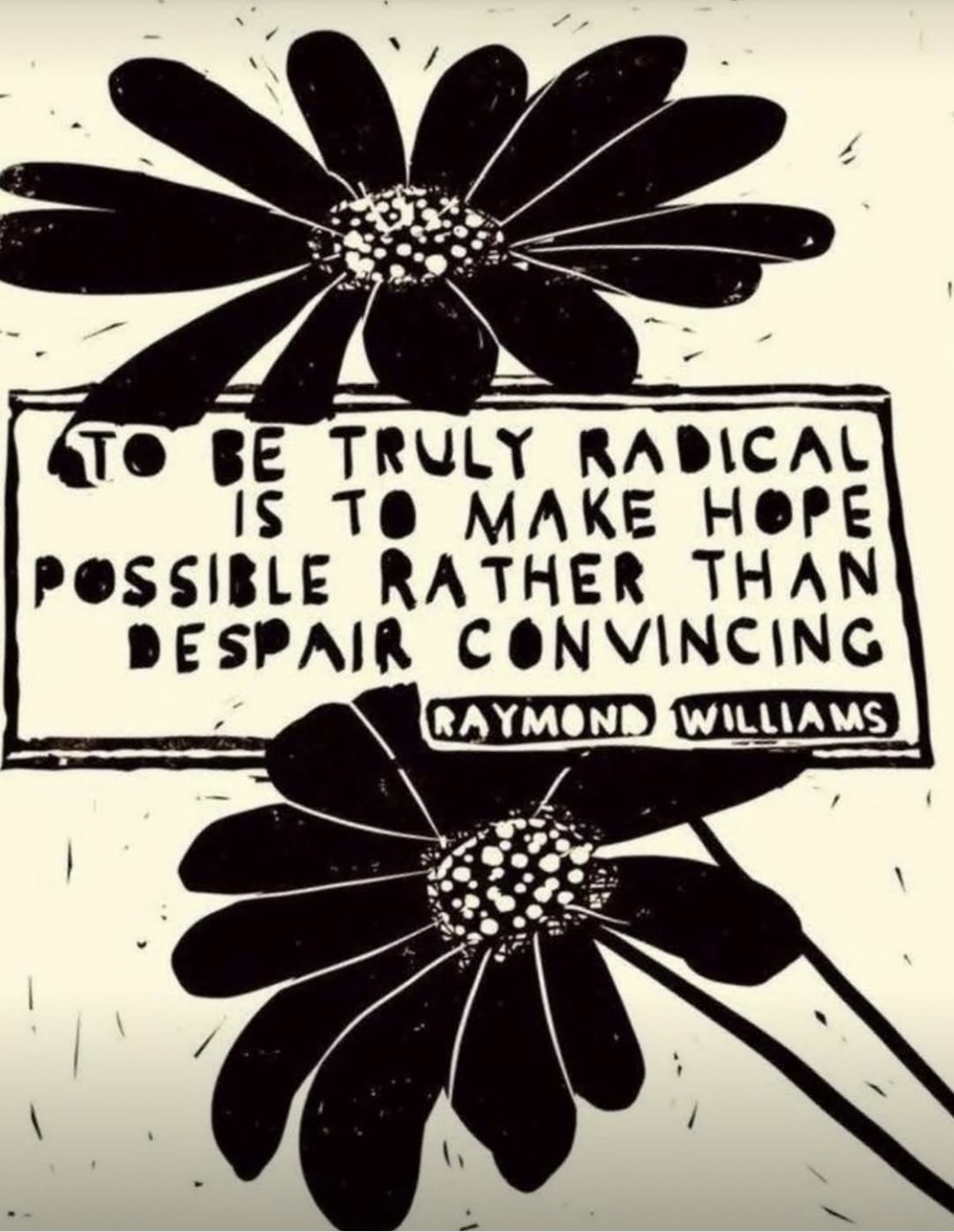
This course offers an introduction to the study of peace, justice, and human rights, surveying philosophies of rights in relation to justice; historic and contemporary approaches to (and reasons for) peace, war, and nonviolence; clashes between human rights and conflict resolution approaches; the role of human rights prior to, during, and after violent conflict; rights in relation to race, gender, class, sexuality, ability, health and the environment; African, Asian, and Indigenous approaches to rights or justice; whether rights are only for human beings or might also apply to non-human animals and/or the natural world; some limitations imposed by an exclusive focus on rights and/or law as avenues for social change; traditional conflict resolution; restorative and transformative approaches to conflict; and why the study of human rights is necessarily interdisciplinary.
This course aims to help you to develop:
•Knowledge of the various schools of thought and modes of practice of peace, justice, and human rights.
•Ability to read and evaluate arguments about peace, justice, and human rights, and to discuss ideas—your own and those of others—critically.
•Critical thinking about and analysis of approaches to peace, justice, and conflict.
•Confidence in your ability to understand philosophical and practical problems, and come up with creative solutions to these problems.
•Good writing and communication skills, through discussion of ideas, the practice of writing, and the practices of speaking and teaching.
•A basic understanding of the difference between written and oral presentation of ideas.
•A basic understanding of what interdisciplinary study entails.
- Profesor: Jill Stauffer
Categoría: Peace
- Profesor: Jill Stauffer
Categoría: Peace
- Profesor: Emily Drummond
- Profesor: Eric Hartman
- Profesor: John McKnight
Categoría: Peace
- Profesor: Emily Drummond
Categoría: Peace
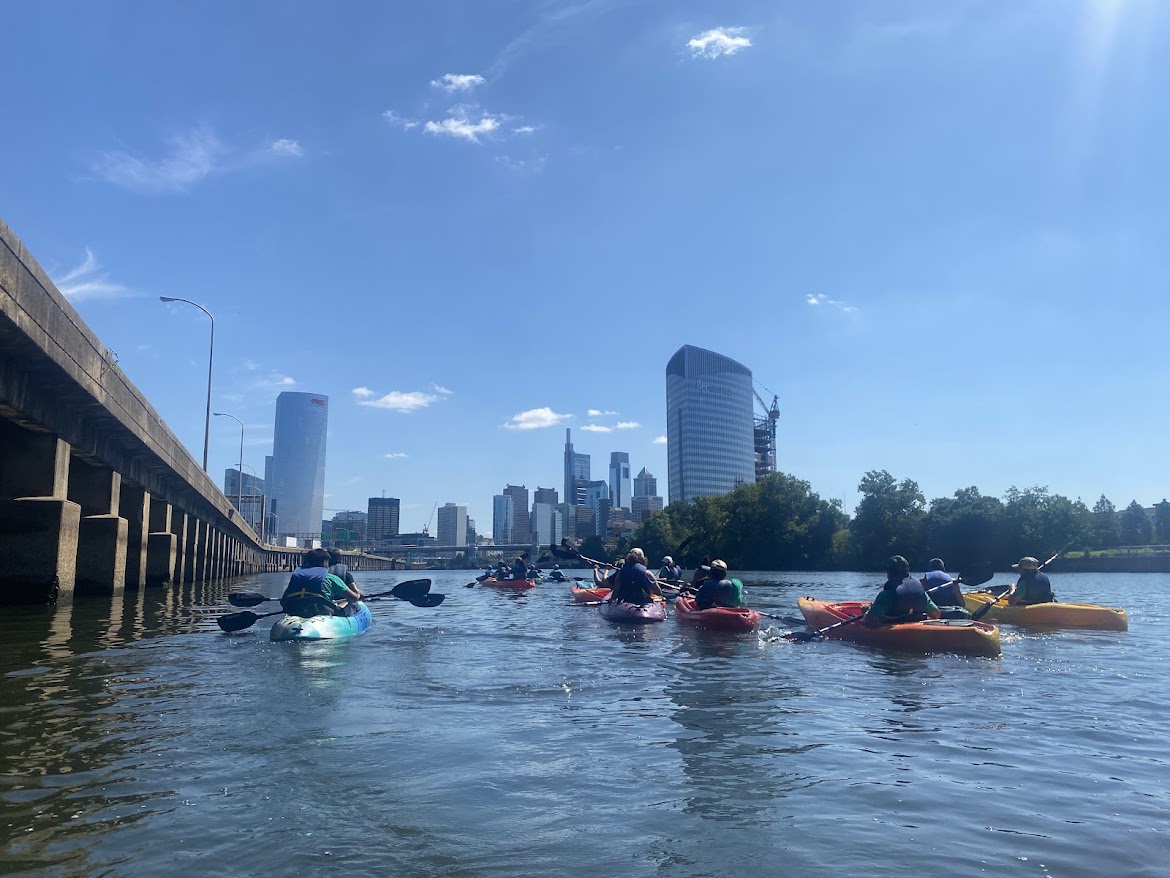
- Profesor: Emily Drummond
Categoría: Peace
- Profesor: Eric Hartman
Categoría: Peace
- Profesor: John McKnight
Categoría: Peace
- Profesor: Sabea Evans
Categoría: Peace
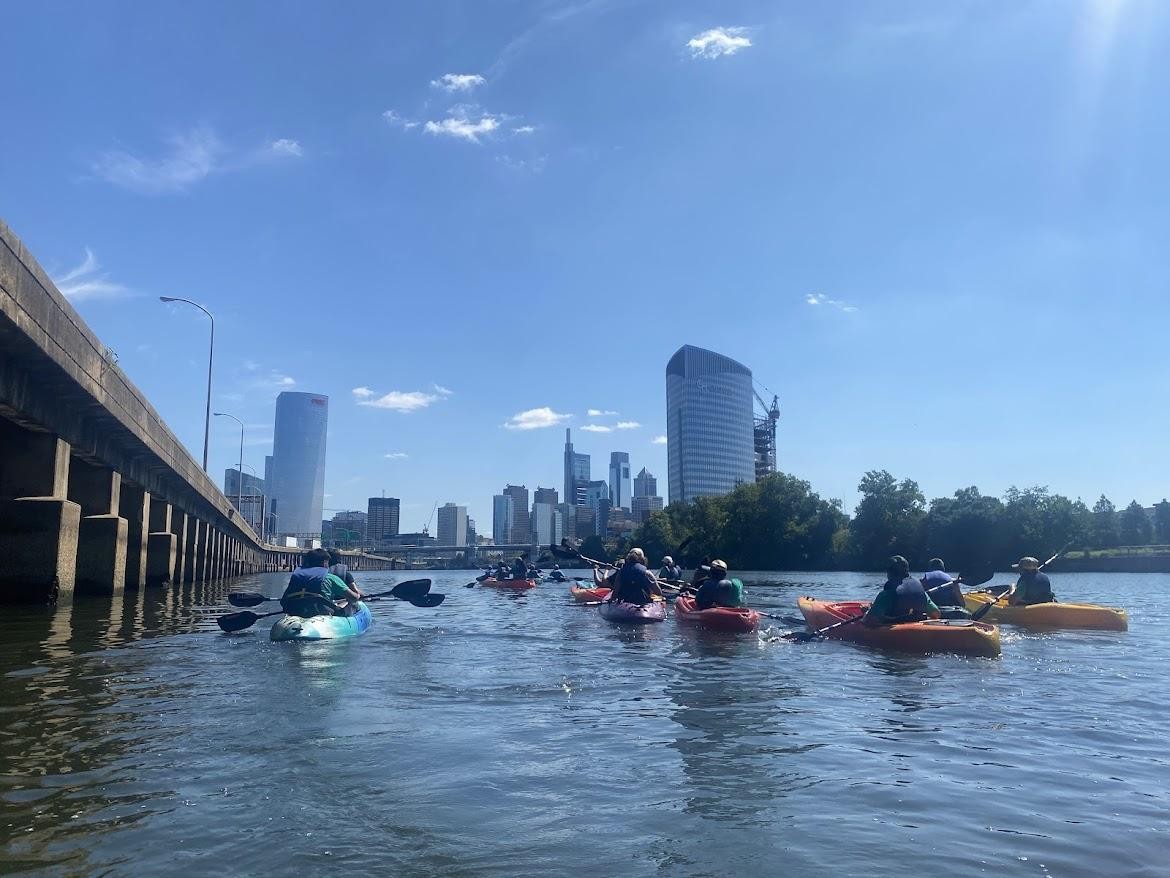
- Profesor: Janice Lion
Categoría: Peace
- Profesor: Prea Persaud Khanna
Categoría: Peace
- Profesor: Varun Khanna
- Profesor: Prea Persaud Khanna
Categoría: Peace
This course examines the relationship between urban space, conflict, and human rights. Drawing on a range of disciplines, including urban planning, architecture, geography, law, and human rights scholarship, students will investigate how the built environment has been used as an instrument of domination, segregation, and violence, and how it can also become a site of resistance, repair, and restorative justice.
The course proceeds thematically across five modules: (1) Spatial Equity and Conflict; (2) Infrastructural Racism and Segregation by Design; (3) Gentrification and Displacement; (4) Restorative Architecture and Reparations; and (5) Environmental Rights and Sustainable Design. Case studies range from post-colonial cities in Africa and the Middle East to racially segregated American cities. Throughout the course, students will engage with primary sources, policy documents, and contemporary journalism alongside academic scholarship.
A distinctive feature of this course is its engagement with AI tools as objects of critical study. Students will use and evaluate AI-generated content to develop skills in source criticism, research methodology, and understanding of how knowledge about cities and communities is produced and reproduced. Another feature of this course is its use of immersive learning. Students will participate in several site visits, including exploration of the college campus and hear from practitioners working on the ground in urban environments.
- Profesor: Tim Cunningham
Categoría: Peace
This course will explore legal theories that underpin various legal systems in settler colonial states. We will study settler legal forms and Indigenous legal forms alongside each other, and think about what gives law power, how that power stays in place, and what law is supposed to be and do for those who are guided by it. By putting Indigenous and settler legal ways on equal footing, we may open up our thinking to new ways of envisioning a way forward, out of and beyond the history of colonial domination. Readings will include classics of settler/western legal theory and of various Indigenous traditions. Assignments will include papers, presentations, research, and moot courts where we make legal arguments in more than one tradition, to get a sense of what is at stake in different approaches to adjudicating conflict and harm. The aim is to undergo what happens when we study and learn these different approaches of law together rather than isolating them from each other. What does it become possible to think, to imagine, to do, that was not thinkable or do-able before?
Learning objectives
Students completing this course will:
• have a broad grasp of the basics of western/settler legal theory and the legal traditions of some North American Indigenous groups;
• develop capacity to make written and oral legal-style arguments in multiple traditions;
• understand some basics about legal procedures in multiple traditions;
• think carefully about what law is, what power is, and why power differences exist;
• learn about histories of colonial dispossession and domination as well as Indigenous refusal and resistance;
• build aptitude for communicating and collaborating with peers—and audiences in the wider world—whose disciplinary language, values and methodological concerns differ;
• develop sensitivity to the different factors affecting reception of arguments about divisive or emergent issues.
- Profesor: Jill Stauffer
Categoría: Peace

This seminar examines the ways political ideals of order, possibility, and change are linked to visions of ultimate reality. Special attention will be paid to the meaning of human agency in relation to varying conceptions of nature—philosophical, religious, scientific—especially in light of the contemporary ecological crisis and the recent global resurgence of fascism. The course will focus on a specifically Western history of ideas, since such ideas remain deeply codified in the language of law, policy, public debate, journalism, and reflect deeply held (though often unexamined) positions about religion, selfhood, and reality. The presumption here is not that there is no “outside” of so-called Western thought (there is, and it matters tremendously), but rather that in order to dismantle structures of domination including racism, sexism, heteropatriarchy, ableism, and the justification of extractive dispositions to the planet, certain Western traditions must be understood and subjected to rigorous critique. This is not a substitute for, but a preparation for and a complement to the dreaming, feeling, and knowing of what we have also been and may yet become.
- Profesor: Joshua Ramey
Categoría: Peace
This is an interdisciplinary capstone course meant to consolidate student experience of a program that integrates scholarship, theory, policy and practice perspectives, library, field, and lab research. In addition to devoting close attention to reading and research on course themes, we will attend to the details and difficulties of writing and presenting one’s own work to diverse audiences. The course will provide opportunities for students working on theses or other projects within their majors to present work to an interdisciplinary audience of peers. Students will take part in teaching the course, and will also plan a conference-style event together, present work there in collaborative panels, and comment on peers’ work both formally and informally. Tools and knowledge gathered beginning with PEAC 101 and 201 and continuing through focused study will be revisited and recombined in search of innovative solutions to problems. Students will be encouraged to look critically at their own social justice philosophies and disciplinary methods, and reflect on how practice and theory are, at the same time, challenges to each other and yet not strictly separable. This is also a site at which collaborative work may help students begin to envision innovative new solutions to entrenched problems.
- Profesor: Jill Stauffer
Categoría: Peace

This six-week asynchronous online PE-credit course explores the global food system through its colonial origins, its modern structures of consolidation and power, and its far-reaching health, environmental, and human rights impacts. Students engage with 35 recorded lectures featuring speakers from around the world, offering diverse perspectives on how today’s food systems came to be and how they might be transformed toward greater justice and sustainability. Designed for compassionate learners, the course requires approximately two hours of work per week.
- Profesor: Noah Kogut Levin
- Profesor: Kelly Wilcox
Categoría: Physical Education
- Profesor: Ashok Gangadean
Categoría: Philosophy
- Profesor: Ashok Gangadean
Categoría: Philosophy
- Profesor: Olivia Sultanescu
Categoría: Philosophy
This course is an introduction to epistemology and metaphysics. Epistemology addresses questions about what we can know and about how we can know it. Metaphysics addresses questions about the nature of reality. The epistemological questions on which we will focus include the following. Can we know anything on the basis of our senses? Can we know anything independently of our senses? Is knowledge of the future possible? The metaphysical questions on which we will focus include the following. What is the nature of causation? Is it possible to conceive of the world in ways that are radically different from each other? And to what extent are metaphysical questions answerable in the first place? By addressing these issues, we will try to understand how minds relate to the external world and, more generally, how they fit into the broader scheme of things.
- Profesor: Olivia Sultanescu
Categoría: Philosophy
- Profesor: J. Reid Miller
Categoría: Philosophy
- Profesor: J. Reid Miller
Categoría: Philosophy
- Profesor: J. Reid Miller
Categoría: Philosophy
- Profesor: J. Reid Miller
Categoría: Philosophy
- Profesor: Qrescent Mali Mason
Categoría: Philosophy
- Profesor: Miranda Young
Categoría: Philosophy
“Of all human affairs, communication is the most wonderful”, wrote John Dewey. It is a genuine wonder, he thought, that we can reveal things to one another, examine natural events together, talk about things that do not exist, and transcend our local and temporal contexts. These feats (along with many others) are made possible by language, marks and sounds that carry meaning. What is language? What is the nature of linguistic meaning? And how do words hook up to reality in the first place?
- Profesor: Olivia Sultanescu
Categoría: Philosophy

Reasoning plays a central role in our theoretical inquiries and our practical decision making. But what does it mean to reason and moreover, to reason well? What makes an argument strong? What are the limits of logical reasoning? This course provides a historical and formally rigorous introduction to logic, understood as the study of reasoning, inferring, and argumentation. In particular, this class will focus on foundational texts by pioneers in logic such as Aristotle, Immanuel Kant, Bernard Bolzano, Richard Dedekind, Gottlob Frege, Bertrand Russell, Georg Cantor, Ludwig Wittgenstein, Alan Turing, and Ruth Barcan Marcus. From taking this course, students will appreciate how questions concerning the nature of reasoning cannot be separated from questions concerning the nature of language, truth, meaning, thought, and reality. Students will also appreciate the contemporary importance of logic in fields such as computer science, linguistics, and mathematics.
- Profesor: Paul Tran-Hoang
Categoría: Philosophy
- Profesor: Joel Yurdin
Categoría: Philosophy
What is psychoanalysis? What are its goals and its achievements, its problems and its guiding questions? How can we approach psychoanalytic practice philosophically? This course will be guided by theoretical explorations and group discussions on the grounding texts of psychoanalysis. We will approach psychoanalysis through conceptual analysis and philosophical inquiry, highlighting the existential and the theoretical problems raised by psychoanalytic practice.
Participating in the course discussions will help you gain, question, and renew insights into psychoanalysis understood as a critical tool and as a unique introspective experience. The guiding idea of the course is that the access to the philosophical reflection on psychoanalytic experience is open to any individual willing to question the history of their own desires, as well as the ideals, the fantasies and the ideologies guiding their culture(s).
Participating in the course discussions will help you gain, question, and renew insights into psychoanalysis understood as a critical tool and as a unique introspective experience. The guiding idea of the course is that the access to the philosophical reflection on psychoanalytic experience is open to any individual willing to question the history of their own desires, as well as the ideals, the fantasies and the ideologies guiding their culture(s).
- Profesor: Delia Popa
Categoría: Philosophy

bell hooks’ theory of the "oppositional gaze" attempts to wrestle with the connection between aesthetics and epistemology: how does what and how we know shape how we evaluate and relate to art? Through a survey of visual, literary, and performance arts primarily by Black and Latina women (e.g., Lorraine O’Grady, Mickalene Thomas, Christina Sharpe, Ana Victoria Jiménez) this course seeks to theorize the many dimensions of the oppositional gaze, with a focus on the ways these thinker-artists challenge, critique and disrupt various binaries that they identify with the history of western philosophy. In our exploration, we will consider feminist standpoint epistemologies, Black feminist poethics, and decolonial theory, amongst other frames.
- Profesor: Qrescent Mali Mason
Categoría: Philosophy
- Profesor: Miranda Young
Categoría: Philosophy

The term intersectionality originated in Kimberlé Crenshaw’s work in the legal field. Since that time, many disciplines have recognized the importance of the concept and sought to make use of the concept in their own fields. This course will attempt to determine how and to what extent intersectionality may fit into the discipline of philosophy. With a particular focus on the ethical dimensions of the concept, we will seek to determine the conceptual difficulties intersectionality brings to bear on philosophy. Likewise, we will ask the larger question: what does intersectionality bring to bear on the discipline of philosophy? And how are the answers to these questions linked to the fraught inclusion of Black feminisms, histories, and concepts into the discipline? As such, the course will focus on close readings of major treatments of what might generally be referred to as “intersectionality.” We will look at the theoretical foundations for intersectionality found in the history of Black feminist writing. After a deep reading of Kimberlé Crenshaw’s two foundational texts on intersectionality, we will then move on to reading and discussing takings-up and criticisms that highlight the tensions inherent in intersectional theorizing: Anna Carastathis’ Intersectionality: Origins, Contestations, Horizons, Vivian May’s Pursuing Intersectionality: Unsettling Dominant Imaginaries, Patricia Hill Collins and Sirma Bilge’s Intersectionality, and Jennifer Nash’s Black Feminism Reiminaged. In sum, the course hopes to answer the question: given intersectionality’s concerns with race, gender, class, sexuality, social location and ability, why is it important that philosophy respond to the challenges intersectionality has offered? In an attempt to address these questions, students in the course will conduct a project in conjunction with Haverford's archives of Africana philosophy that seeks to consider ways that the archives might become a site of intersectional praxis.
- Profesor: Qrescent Mali Mason
Categoría: Philosophy
Physics 101 is an introductory course exploring the central ideas of classical mechanics and thermodynamics with applications drawn principally from the life sciences, but also from astrophysics, forensic science, and everyday life. Students intending to major in natural sciences will find that the two semesters of Physics 101-102 provide a solid foundation in classical and modern physics. Potential math or chemistry majors should take either this or the Physics 105-106 sequence. Non-science majors also may find this course to be a valuable part of their liberal arts program. Physics majors are advised to take the 105-106 sequence, although you may also start the major in Physics 101 and 102 (or even switch to Physics 106 having taken Physics 101 first semester.)
- Profesor: Vianney Gimenez-Pinto
- Profesor: Andrea Lommen
- Profesor: Karen Masters
- Profesor: Vijay Singh
- Profesor: Paul Thorman
Categoría: Physics
Physics 105 is the first part of the two semester calculus-based introductory Physics series for students interested in Physical Sciences.
This course will cover topics in Newtonian mechanics (equations of motion, rotation and angular momentum, work-energy relations, gravity and orbits, static equilibrium). It will also discuss oscillations, waves and thermodynamics. As a calculus based course, concepts taught in MATH 101 will often be used and referenced.
By then end of the first year sequence (PHYS 105 and 106), we do hope and expect that you will possess enough tools, both theoretical and experimental to approach numerous everyday physics questions. From understanding the behaviors of atoms, molecules and materials to the design of an experimental apparatus, we believe that for those involved in research projects in physics, chemistry and related areas, many concepts that will be taught in this class will be useful in their respective projects.
To succeed in this course, anticipate dedicating a minimum of 6-10 hours per week of work outside of class, excluding lab sessions. Reading the textbook is crucial, but the key to mastering the material lies in actively solving physics problems, including the homework assignments.
- Profesor: Steve Ndengue
- Profesor: Walter Smith
- Profesor: Paul Thorman
Categoría: Physics
Physics 105 is the first part of the two semester calculus-based introductory Physics series for students with an interest in Physical Sciences.
This course will cover topics in Newtonian mechanics (equations of motion, rotation and angular momentum, work-energy relations, gravity and orbits, static equilibrium). It will also discuss oscillations, waves and thermodynamics. As a calculus based course, concepts taught in MATH H118/120 will often be referenced
This course will cover topics in Newtonian mechanics (equations of motion, rotation and angular momentum, work-energy relations, gravity and orbits, static equilibrium). It will also discuss oscillations, waves and thermodynamics. As a calculus based course, concepts taught in MATH H118/120 will often be referenced
- Profesor: Mack Atkinson
- Profesor: Karen Masters
- Profesor: Steve Ndengue
- Profesor: Walter Smith
- Profesor: Paul Thorman
Categoría: Physics
- Profesor: Vianney Gimenez-Pinto
- Profesor: Paul Thorman
Categoría: Physics
- Profesor: Suzanne Kane
- Profesor: Vijay Singh
- Profesor: Walter Smith
- Profesor: Paul Thorman
Categoría: Physics
- Profesor: Vijay Singh
- Profesor: Paul Thorman
Categoría: Physics
- Profesor: Ted Brzinski
- Profesor: Paul Thorman
Categoría: Physics
- Profesor: Walter Smith
Categoría: Physics
- Profesor: Walter Smith
Categoría: Physics

- Profesor: Andrea Lommen
- Profesor: Steve Ndengue
Categoría: Physics

The United Nations declared 2025 the International Year of Quantum Science and Technology in recognition of the centenary of the advent of quantum mechanics, marked amongst others by the seminal paper of Werner Heisenberg in Zeitschrift für Physik that translated to "On quantum-theoretical reinterpretation of kinematic and mechanical relationships". Quantum physics is one of the most intriguing topics that emerged in Physics in the early 20th century and gave rise to what is referred to modern physics. Being familiar with a continuous world, the ideas of quantum physics such as the quantization, the superposition, or even entanglement are all new and non necessarily intuitive concepts. Nevertheless, quantum physics de- scribes a world that is around us: atoms, molecules, materials and more obey the laws of quantum physics and lead to macroscopic values that we experience more frequently. What is then quantum mechanics? Some view quantum mechanics as a set of mathematical tools that are used to understand quantum physics.
In this course, we will present and discuss some fundamental topics of quantum mechanics starting from some initial ideas of modern physics with relativity and the breakdown of classical physics. We will look at the Schrödinger equation, one of the central equations of quantum mechanics, and its solution for several textbook cases, culminating with a presentation of the hydrogen atom. Along the way we will uncover many rules of this field and make use of your prior exposure to wave and optics, but also your knowledge of linear algebra and calculus to tackle problems.
In this course, we will present and discuss some fundamental topics of quantum mechanics starting from some initial ideas of modern physics with relativity and the breakdown of classical physics. We will look at the Schrödinger equation, one of the central equations of quantum mechanics, and its solution for several textbook cases, culminating with a presentation of the hydrogen atom. Along the way we will uncover many rules of this field and make use of your prior exposure to wave and optics, but also your knowledge of linear algebra and calculus to tackle problems.
- Profesor: Ted Brzinski
- Profesor: Steve Ndengue
Categoría: Physics
Introductory course on Quantum mechanics with some concepts of modern physics.
- Profesor: Andrea Lommen
- Profesor: Steve Ndengue
Categoría: Physics

Statistical Physics (sometimes Statistical Mechanics) is often not well understood as a topic to beginning physics students, but ends up containing many people’s favorite undergraduate physics content. It was mine! Statistical physics combines ideas from the fields of quantum mechanics, classical mechanics, probability theory, and relativity, to name a few. It connects macroscopic, bulk properties (like temperature) to properties on a microscopic scale (like particle velocities). It is subtle and complex, and it cannot be learned by simply doing problem sets. You will need to read (books and online) talk to your classmates and to me (and anyone else who may be interested). You will directly benefit from every minute spent synthesizing the material. The more connections you make, the more likely you will fall in love with statistical mechanics. Applications range from solid state physics, to astrophysics, to information theory, to engines, to non-linear dynamics, to thunder, biological systems, climate change, etc. etc.
- Profesor: Ted Brzinski
- Profesor: Karen Masters
Categoría: Physics
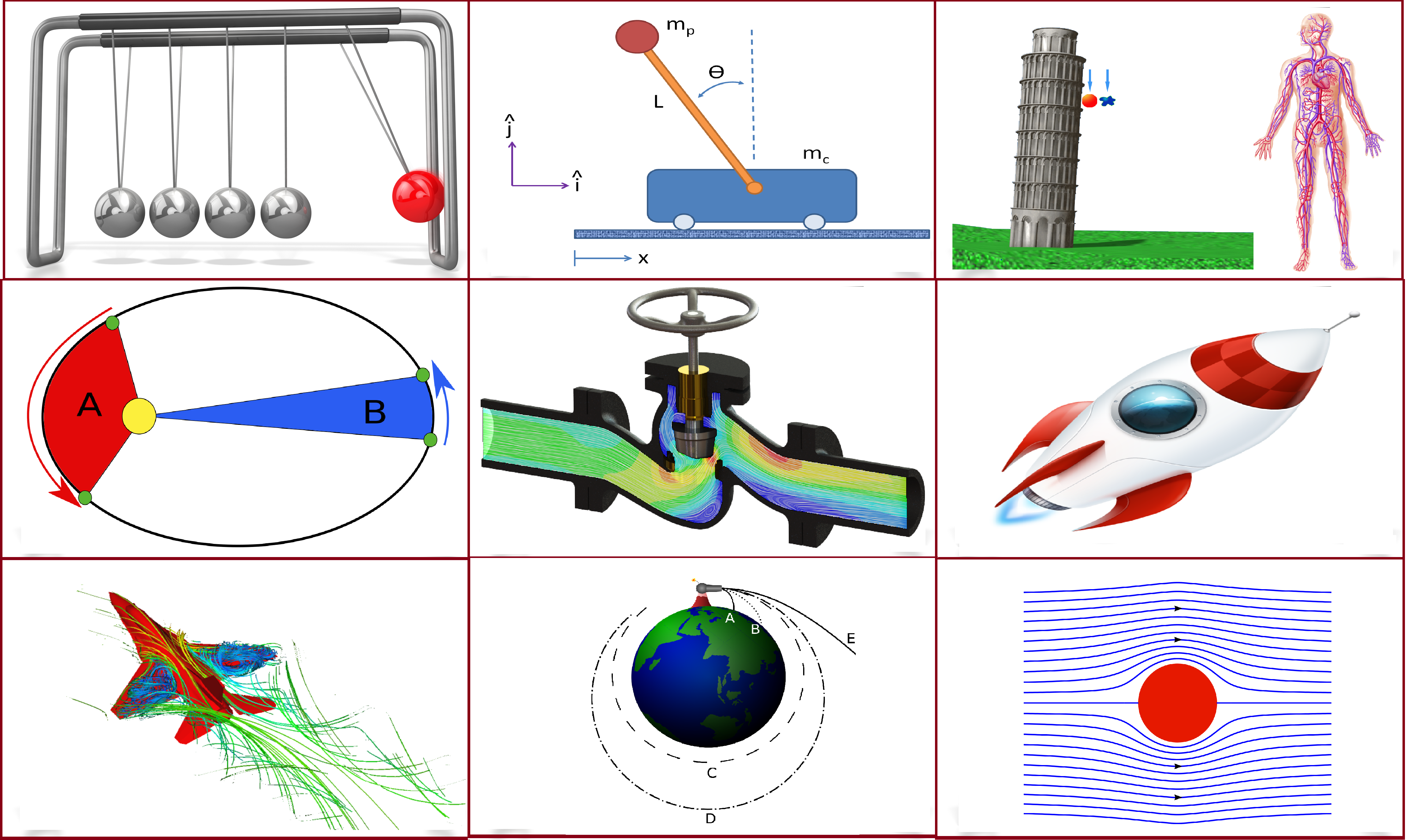
Classical mechanics of systems of particles, conservation laws, Lagrangian mechanics, motion in central potentials, and core elements of chaos/non-linear dynamics. Fluid mechanics, covering the assumptions of the fluid approximation, key conservation laws, laminar, creeping, turbulent flow, and special topics like convection, waves, vortices, rotating flows, instabilities, flight, and biological flows as time and interest permit.
- Profesor: Daniel Grin
Categoría: Miscellaneous
This course offers an introduction to the core theories, concepts, and ideas that animate scholarly study of comparative politics. We will explore how politics varies across and within countries and compare how institutions, attitudes, behaviors, and identities shape political processes and outcomes. Our focus will be on applying scholarly ideas to investigate real-world politics around the globe.
- Profesor: Joseph Cerrone
Categoría: Political Science
- Profesor: Craig Borowiak
Categoría: Political Science
Political psychology centers on an enduring question: How do citizens make political judgments, and what do those judgments mean for democratic life? This interdisciplinary subfield acknowledges that people do not approach politics as blank slates. Instead, citizens bring established social attachments and individual psychological dispositions to bear when making judgments about political candidates, parties, policies, and institutions.
This course introduces students to the field of political psychology by examining how psychological theories, concepts, and methods help us understand political judgment and behavior. Throughout the semester, we will consider questions that are central to the study of political psychology, including: how individuals form and organize their belief systems; why they resist information that challenges those beliefs; how social identities, stereotypes, and threat perception structure group evaluations; and how emotions motivate political participation and information-seeking.
This course introduces students to the field of political psychology by examining how psychological theories, concepts, and methods help us understand political judgment and behavior. Throughout the semester, we will consider questions that are central to the study of political psychology, including: how individuals form and organize their belief systems; why they resist information that challenges those beliefs; how social identities, stereotypes, and threat perception structure group evaluations; and how emotions motivate political participation and information-seeking.
- Profesor: Carlos Rueda-Cañón
Categoría: Political Science
- Profesor: Jeffrey Lamken
Categoría: Political Science
- Profesor: Jeffrey Lamken
Categoría: Political Science
- Profesor: Jeffrey Lamken
Categoría: Political Science
This course examines the nature of public opinion, with a particular focus on the United States. In an ideal world, citizens hold informed opinions about issues, candidates, and parties, and these opinions guide their decisions at the ballot box. In turn, when political elites fail to represent these beliefs, they are held accountable and face electoral consequences. As you have likely gathered from your own observations of politics, however, democracy rarely works so cleanly. In this course, we will examine why this is the case by considering several questions that animate scholarship on public opinion: How do citizens form and organize their political beliefs? How do we measure those beliefs? Are citizens generally informed about politics, and do they hold coherent opinions on the major issues of the day? If not, how do they make the complex choices required of democratic citizens?
The first half of the course focuses on how citizens form and organize their political opinions. We will examine scholarly debates about the nature of belief systems, the construction of mass opinion, and political knowledge. In light of generally low levels of “political sophistication” among the mass public, we will ask what other tools are available to citizens to make decisions that reflect their preferences, and whether these tools are sufficient for them to do so. We will also explore sources of structure in how people approach politics, including their experiences in youth and partisan allegiances (or lack thereof).
During the second half of the semester, we will turn to topics that can help us make sense of central challenges facing American democracy. For instance, we will chart how the American public grew so polarized and discuss the nature of contemporary polarization. We then consider racial animus as a central organizing force in the study of public opinion and review debates about how scholars have measured these attitudes. Finally, we will review conditions in which attitude change occurs through cues from the media, elites, and other citizens in ways that either enhance political conflict or (more rarely) promote compromise.
Alongside these substantive topics, we will also complete a semester-long Pilot Survey Project. Through this project, we will work on transforming research questions into theoretical arguments. Then, we will discuss how to translate abstract concepts into survey measures. Finally, we will revise these questionnaires collaboratively and administer small pilot surveys. The goal of this project is to experience the early phases of social science research and for you to build expertise on those topics that you find most intriguing!
- Profesor: Carlos Rueda-Cañón
Categoría: Political Science
Why do some states punch above their weight in international politics while others struggle to be heard? Who really shapes foreign policy? And why do states facing similar international pressures pursue such different strategies? In an uncertain world characterized by intensifying U.S.-China competition, rising levels of conflict, and the climate crisis, making sense of how foreign policy is made has never been more important. This course introduces students to key approaches to foreign policy analysis and compares how states define and pursue their national interests across a range of issue areas, such as national security policy and climate policy. Students engage with a diverse range of case studies across regions, including East Asia, the Middle East, Europe, Africa, and Latin America. These cases highlight different foreign policy logics, strategies, and constraints, and allow for systematic comparison across countries and contexts.
- Profesor: Kathrin Reed
Categoría: Political Science
- Profesor: Susanna Wing
Categoría: Political Science

This course examines the political economies of the largest number of countries in the world. They are often collectively referred to as the ‘Global South’, the ‘developing world’, or even ‘The Third World’. Located in Africa, Asia, Latin America, and the Middle East, these countries are generally considered as distinct from the wealthier and democratic countries that have historically dominated the global economy and politics. Although developing countries are playing an increasingly important role on the global stage, they are far from a uniform group of countries with shared interests and ideals. This group of countries contains a wide variety of demographic backgrounds and political systems – ranging from authoritarian to democratic in nature – and vast differences in wealth and human welfare. As a result, global agendas such as the United Nations’ Sustainable Development Goals (SDGs) are aimed at addressing the inequalities of development around the world.
We will take a global approach and discuss the diverse political and socio-economic trajectories of developing countries in recent decades. Why is development a political term? What are the similarities and differences between the countries labeled as ‘developing’? What role does the state play in fostering or hindering development? What are the benefits and drawbacks of foreign aid for developing countries? How do developing countries relate to each other and to the developed world? These are some of the major questions we will interrogate throughout the semester. Overall, this course combines foundational theories with empirical case studies. Students have the opportunity to delve more deeply into a country and topic of their interest and to hone their writing and presentation skills through a semester-long research project related to the SDGs.
We will take a global approach and discuss the diverse political and socio-economic trajectories of developing countries in recent decades. Why is development a political term? What are the similarities and differences between the countries labeled as ‘developing’? What role does the state play in fostering or hindering development? What are the benefits and drawbacks of foreign aid for developing countries? How do developing countries relate to each other and to the developed world? These are some of the major questions we will interrogate throughout the semester. Overall, this course combines foundational theories with empirical case studies. Students have the opportunity to delve more deeply into a country and topic of their interest and to hone their writing and presentation skills through a semester-long research project related to the SDGs.
- Profesor: Kathrin Reed
Categoría: Political Science
This course examines the European Union and its member states as a unique experiment in democratic governance, integration, and diversity. We will explore how Europe’s political systems evolved historically and are tested today by nationalism, populism, migration, democratic backsliding, and war. By the end of the semester, students will be able to situate contemporary European politics within broader debates about democracy, sovereignty, and global governance—while also reflecting on what Europe’s experience reveals about the future of democracy itself.
- Profesor: Joseph Cerrone
Categoría: Political Science
Are small and middle powers simply pawns in great power games? Southeast Asia represents the central stage of U.S.-China competition amid growing uncertainty over the future of multilateralism and the durability of regional peace. Tensions are escalating in the South China Sea and along the Thai-Cambodian border, with over half a million Cambodians displaced from the violence. How can Southeast Asian states ensure regional security and stability despite their material and strategic limitations?
This course provides an overview of the international relations of Southeast Asia, a highly diverse and fast-growing region. It examines the foreign policies and strategic orientations of Southeast Asian states and their efforts to assure an autonomous future and to shape the rules of the game in the region. Case studies include Indonesia’s leadership of the Association of Southeast Asian Nations, a regional organization of increasingly divided between the mainland and maritime states. An overarching theme is understanding how smaller states exert agency and manage relationships with power asymmetries, such as in the case of China’s Belt and Road Initiative.
The topics to be discussed include Southeast Asia’s sources of insecurity, the politics of regionalism, economic integration in border regions, conflict management and diplomacy, and the geopolitics of infrastructure competition in the Mekong region. Students have the opportunity to explore the Lowy Institute’s Asia Power Index to make sense of the capabilities of the region’s small and middle powers in class and to conduct a semester-long research project on a topic of their choosing.
- Profesor: Kathrin Reed
Categoría: Political Science
This course explores the domestic and international politics of the environment. The purpose of this course is to familiarize students with current environmental problems in relation to the efforts of local, regional, and international governments—as well as interest groups—to remedy them. We will study environmental problems locally, regionally and globally. Students will learn to identify the key policy actors, the key policy institutions, and their associated roles in crafting policy. Then, the course will delve into contemporary environmental issues—such as climate change, environmental issues in land, and ocean—across different parts of the world. Therein, students will learn to understand the severity of issues stemming from climate change and its effects on humans. Finally, this course will introduce politicizing and political division around the issues of global environmental politics. The goal of this course is to understand how politics shape environmental policies and how climate change and related environmental problems affect domestic and international political outcomes.
- Profesor: Jiwon Nam
Categoría: Political Science
- Profesor: Steve McGovern
Categoría: Political Science
- Profesor: Anita Isaacs
Categoría: Political Science
- Profesor: Anita Isaacs
Categoría: Political Science
- Profesor: Barak Mendelsohn
Categoría: Political Science

Introduction to Islam is a general survey of the religion of Islam, encompassing history, beliefs, sacred texts (Qur'ān and Ḥadīth) and their interpretation, religious law, Sufism, philosophy, art, and science. Particular attention is given to Muslim practice and to Islam as a total way of life. Salient topics include modernity and modernism; statism, nationalism and imperialism; as well as gender, sexuality, marriage, and the family.
- Profesor: Shahid Nigro
Categoría: Religion
The Hebrew Bible, also known as the Old Testament, is fundamental to both Judaism and Christianity. But as a literary, historical and theological text, the Hebrew Bible poses a challenge to modern readers. What is this book? Who wrote it? When? And why? What makes it sacred to some? What was its significance then? And now? How does one study the Bible from an academic point of view, when it is so laden with religious symbolism and meaning for so many people? Using the literary, historical, theological, interpretative and archaeological tools available we will attempt to answer these questions and more. This course will introduce the student to the fundamentals of academic bible studies. All students, of any background, are encouraged to participate. Sometimes, the less we know, the better we learn.
- Profesor: Naomi Koltun-Fromm
Categoría: Religion
Welcome to the Moodle site for Religion 122b, Introduction to the New Testament.
- Profesor: Anne McGuire
Categoría: Religion
This course offers an introduction to the academic study of the New Testament and early Christian literature. Topics include: the Jewish contexts of Jesus, the "Jesus movement," and the early “church” (ekklēsia or community); and the varieties of early Christian literature, theology, and ethics.
- Profesor: Anne McGuire
Categoría: Religion
- Profesor: Naomi Koltun-Fromm
Categoría: Religion
This course examines the representation of Women, Gender, and Sexuality in early Christian literature. In this course we'll employ a variety of methods (feminist, literary, historical, socio-cultural, theological) to explore the variety of early Christian views on women, gender, and sexuality. Our examination will include the representations of named and unnamed women who appear in early Christian literature. Readings will include a broad range of early Christian literature from the first through the fourth centuries CE, as well as recent scholarship.
- Profesor: Anne McGuire
Categoría: Religion
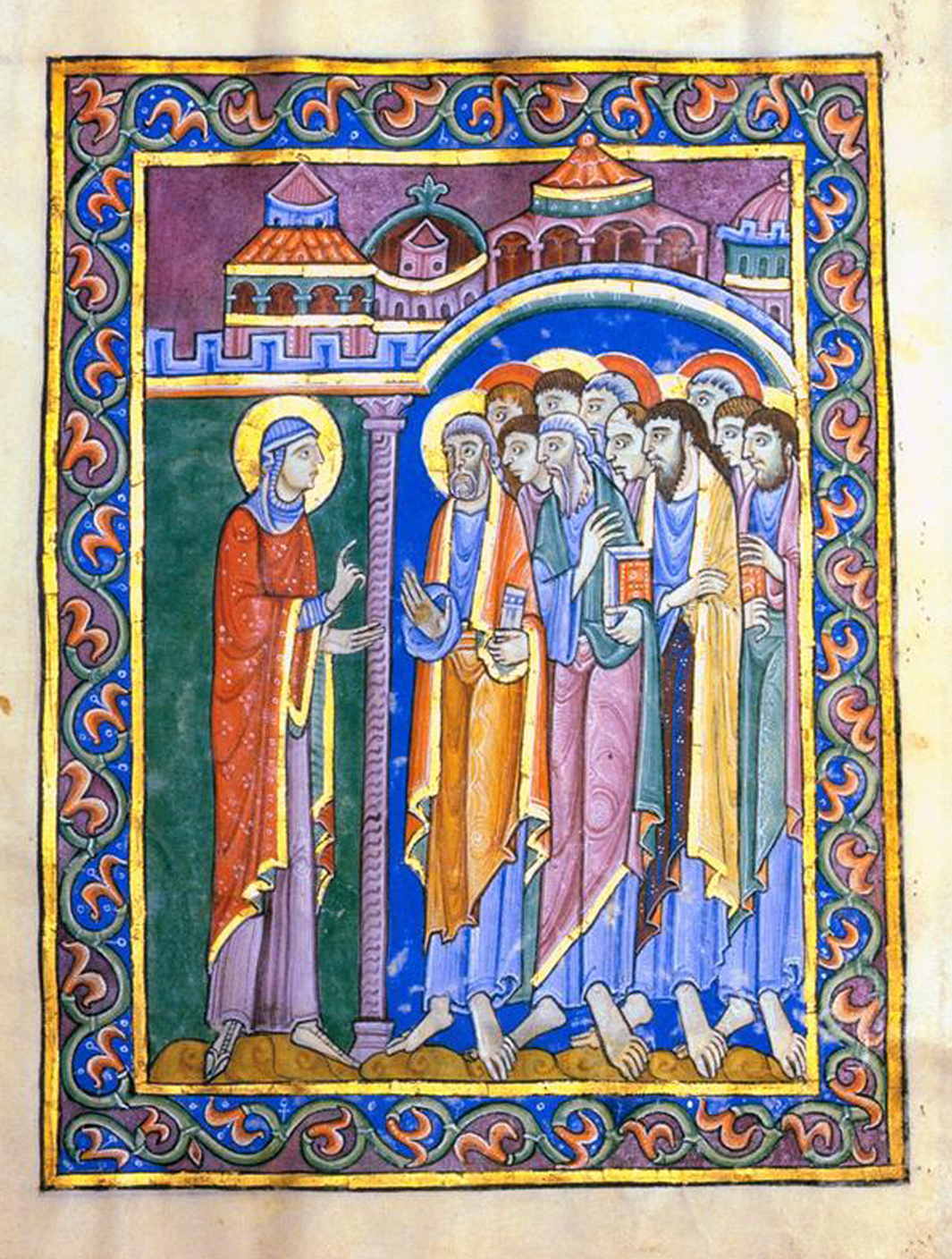
This course offers critical study of women, gender, and sexuality in the literature of the New Testament and early Christianity. We’ll employ a variety of methods (literary, historical, feminist, socio-cultural, theological) to investigate the representations of women and gender in a broad range of texts dating from the first through the fourth centuries CE. We’ll focus on the roles of women, their relation to notions of gender and sexuality, and the uses of gendered imagery in representations of divine and human characters. Among the female characters we’ll consider: Sophia, divine Wisdom; Eve the “mother of the living”; Mary the mother of Jesus; Mary Magdalene, Prisca, Junia, Phoebe and other disciples, apostles, prophets; Thecla, Perpetua, Felicitas, Macrina, Syncletica, Mary of Egypt, and other female holy women or saints.
- Profesor: Anne McGuire
Categoría: Religion
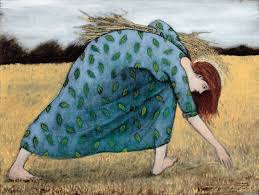
- Profesor: Molly Farneth
Categoría: Religion
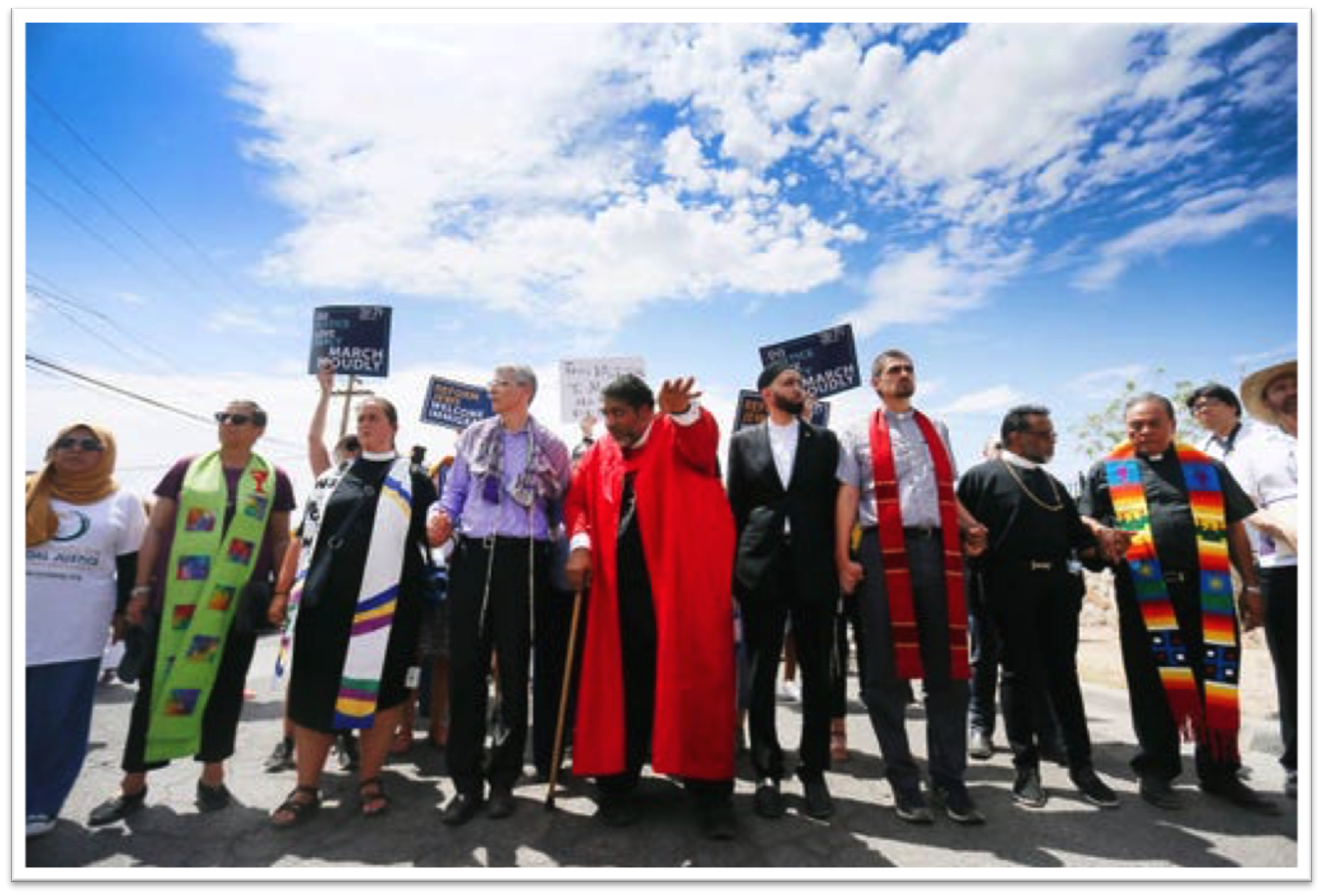
What is religious freedom? How have debates about the role of religion in public life shaped U.S. politics? And how have anxieties about race, gender, and sexuality determined the limits and possibilities of religious freedom? Grounding contemporary political debates in their historical context, we will analyze speeches, court cases, visual and popular culture, and political theory and philosophy to explore the complex relationship between religion and politics in the United States.
- Profesor: Molly Farneth
Categoría: Religion
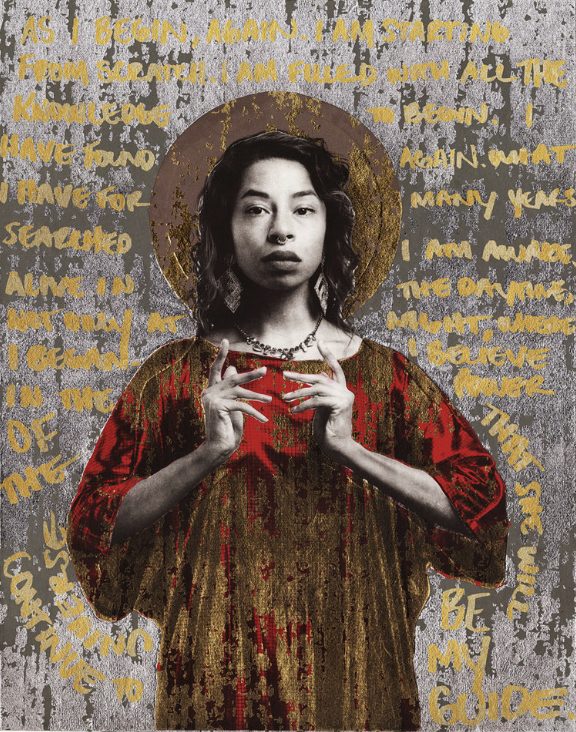
This course analyzes the dynamic relationship between queer theories and religious discourse. With an emphasis on LGBTQIA+ experiences, perspectives, and practices, we will use a theological and ethical lens across (a few) religions to explore concepts, sacred texts, and relational possibilities that constitute contemporary ideas about religion and queerness. To be sure, this is not a survey course, and we will not cover every tradition, or even attempt to do so. Instead, we will ask a small number of hard questions and pursue each one far enough to see where the real disagreements, points of connection, and spaces of nuance exist. Our main resource, Melissa Wilcox’s Queer Religiosities, will accompany us on the journey and provide a bit of breadth across traditions and regions while our discussions will aim for depth with what we encounter.
- Profesor: Thelathia "Nikki" Young
Categoría: Religion
Course Description: This seminar focuses on close study of the parables attributed to Jesus in the Synoptic Gospels (Mk, Mt, Lk) and the Gospel of Thomas. The goals of the course are to understand the adaptations, interpretations, and transformations of the parables from the oral tradition to the written gospels, to engage in close reading of the parables in their distinct literary contexts, and to become informed and critical readers of contemporary scholarship on the parables.
- Profesor: Anne McGuire
Categoría: Religion
Course Description
A critical study of prominent ethical and political themes in Augustine’s religious thought, e.g., the character of the good life; the meaning of and relations between love of God and love of neighbor; Christ and the moral life; the nature of freedom; the moral significance of the emotions; evil and sinfulness; idolatry’s reach; sexuality and its discontents; the purposes and limits of political society; the very idea of “religion/church and politics;” war and peace. Our seminar will emphasize close readings of On Christian Teaching, Confessions, and The City of God.
Course Objectives
1. To understand and critically analyze a variety of moral and political stances in Augustine’s Christian thought, and just so in their close connection with central theological themes such as Scriptural authority, creation, incarnation, Trinity, sin, redemption, “the last things,” and the “theological anthropology” (i.e., account of humanity as it is and ought to be) that the preceding themes configure.
2. To read texts carefully and critically, and write and speak clearly and thoughtfully about the issues we consider.
Texts for Purchase
Augustine, Confessions, trans. Henry Chadwick (Oxford, 2009)
Paperback (ISBN 978-0199537822)
Augustine, The City of God against the Pagans, ed. R.W. Dyson (Cambridge, 1998)
Paperback (ISBN 978-0521468435)
- Profesor: William Werpehowski
Categoría: Religion
This seminar will guide senior religion majors through the early stages of the thesis project, from generating ideas, to crafting a well-developed proposal, conducting research, and beginning the writing process. We will meet weekly to practice research and writing skills and to participate in writing workshops and peer review. Students are expected to work diligently on their thesis projects outside of class, at least 10 hours per week.
By the end of the semester, students will:
• Articulate a sharply defined thesis topic and a clear argument about that topic;
• Develop their independent research skills;
• Conduct focused research and begin analyzing and critically evaluating that research;
• Understand and practice the writing process as one of drafting, revising, and revising again.
- Profesor: Naomi Koltun-Fromm
Categoría: Religion

The goal of this course is to provide you with a foundation in classical social theory. (Next semester’s course, 155B, covers more contemporary theory.) We focus on theorists who were largely writing in the period between the revolts of 1848 and the beginning of the Cold War. This is a period that corresponds with the birth of sociology as a discipline, and so we will encounter writers who are attempting to formulate some of the key concepts that subsequent sociologists would take for granted. For example, before Marx, no one had used the words “capitalism” or “alienation” before, at least not in their modern sense. Likewise, before Weber, few had tried to conceptualize the nature of bureaucracies, and before Du Bois and de Beauvoir, few had attempted to reconcile race and gender with capitalism, respectively. Thus, this course will focus on five classical theorists whose ideas have greatly influenced how we study and understand society: Karl Marx, Emile Durkheim, Max Weber, W.E.B. Du Bois and Simone de Beauvoir. The course is devoted to understanding how each theorist understood the origin, structure and historical dynamics of modern societies. In addition to comparing their theories, we will apply them to current social issues.
- Profesor: Elise Herrala
Categoría: Sociology
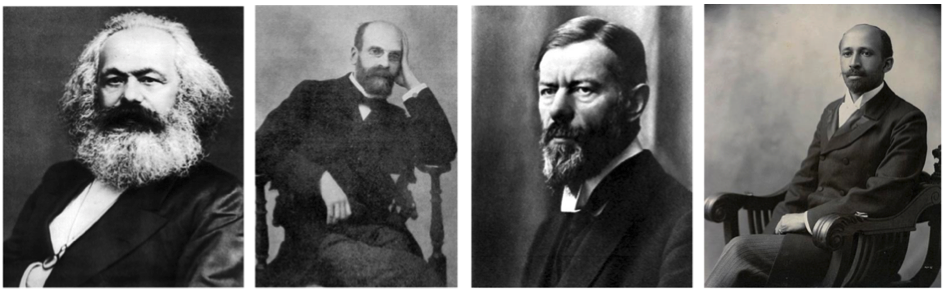
The goal of this course is to provide you with a foundation in classical social theory. (Next semester’s course, 155B, covers more contemporary theory.) We focus on theorists who were largely writing in the period between the revolts of 1848 and the beginning of the Cold War. This is a period that corresponds with the birth of sociology as a discipline, and so we will encounter writers who are attempting to formulate some of the key concepts that subsequent sociologists would take for granted. For example, before Marx, no one had used the words “capitalism” or “alienation” before, at least not in their modern sense. Likewise, before Weber, few had tried to conceptualize the nature of bureaucracies, and before Du Bois, few had attempted to reconcile race with capitalism. Thus, this course will focus on four classical theorists whose ideas have greatly influenced how we study and understand society: Karl Marx, Emile Durkheim, Max Weber, and W.E.B. Du Bois. The course is devoted to understanding how each theorist understood the origin, structure and historical dynamics of modern societies. In addition to comparing their theories, we will apply them to current social issues.
- Profesor: Elise Herrala
Categoría: Sociology
- Profesor: Mark Gould
Categoría: Sociology

General Description and Goals
This course is for students who have achieved a basic knowledge of Spanish but need to gain experience and confidence communicating in the language. Students will learn the basic intermediate level of the language that will permit them to communicate (with some difficulty) about topics related to their personal sphere and beyond. They will gain an insight into Hispanic cultures and come closer to a more critical and informed view of issues related to the Spanish-speaking countries. Ultimately, the course is an extended learning opportunity that seeks to enable cross-cultural understanding starting, but not stopping, beyond the classroom. Pre-requisites: Placement test, professor’s recommendation.
This course is for students who have achieved a basic knowledge of Spanish but need to gain experience and confidence communicating in the language. Students will learn the basic intermediate level of the language that will permit them to communicate (with some difficulty) about topics related to their personal sphere and beyond. They will gain an insight into Hispanic cultures and come closer to a more critical and informed view of issues related to the Spanish-speaking countries. Ultimately, the course is an extended learning opportunity that seeks to enable cross-cultural understanding starting, but not stopping, beyond the classroom. Pre-requisites: Placement test, professor’s recommendation.
- Profesor: Aurelia Unamuno
Categoría: Spanish
This course is for students who have achieved a basic knowledge of Spanish but need to gain experience and confidence communicating in the language. Students will learn the basic intermediate level of the language that will permit them to communicate (with some difficulty) about topics related to their personal sphere and beyond. They will gain an insight into Hispanic cultures and come closer to a more critical and informed view of issues related to the Spanish-speaking countries. Ultimately, the course is an extended learning opportunity that seeks to enable cross-cultural understanding starting, but not stopping, beyond the classroom. Pre-requisites: Placement test, professor’s recommendation.
By the end of the year students will:
- Acquire vocabulary beyond the basics, and be able to successfully manage a number of
- communicative tasks, such as describing yourself and others, narrating the past,
-expressing likes, dislikes, reactions and influence.
- Be able to understand and produce a variety of text types (oral and written).
- Have a grasp of contemporary issues of the Spanish-speaking world.
- Be able to follow the Intermediate courses SPAN101 and SPAN102.
- Profesor: Raquel Vieira Parrine Sant'Ana
Categoría: Spanish
In SPAN 100, communicative competence and general understanding and knowledge of Spanish are developed while reflecting critically on the world and, particularly, on the cultures Spanish embodies, as well as on ourselves. This is achieved through engagement with a wide variety of audiovisual, digital, and literary materials, as well as with cultural artifacts from Spanish-speaking communities across Latin America, Spain, and the United States. Offered: every fall semester. Pre-requisites: Placement test, professor’s recommendation.
- Profesor: Aurelia Unamuno
Categoría: Spanish
This course gives students the tools and confidence needed to appreciate, interact and empathize with people who speak Spanish in the US and abroad. It is intended for students who have already taken beginning courses and possess an intermediate knowledge of the Spanish language. This class focuses on language learning as well as learning about Spanish speaking communities in Latin America, the Caribbean, Spain, and the United States. The study of grammar, syntax, vocabulary, and cultural materials will happen alongside a continuous reflection on learning a language that is spoken by more than 50 million people in the U.S (~500 million speakers globally).
- Profesor: Luis Rodriguez-Rincon
Categoría: Spanish
This course provides students the tools and confidence needed to appreciate, interact and empathize with people who speak Spanish in the US and abroad. It is intended for students who have already taken beginning courses and possess an intermediate knowledge of the Spanish language. This class focuses on language learning as well as learning about Spanish speaking communities in Latin America, the Caribbean, Spain, and the United States. The study of grammar, syntax, vocabulary, and cultural materials will happen alongside a continuous reflection on learning a language that is spoken by more than 50 million people in the U.S (~500 million speakers globally). This class prepares students who want to continue improving their Spanish to take SPAN 102.
- Profesor: Luis Rodriguez-Rincon
Categoría: Spanish
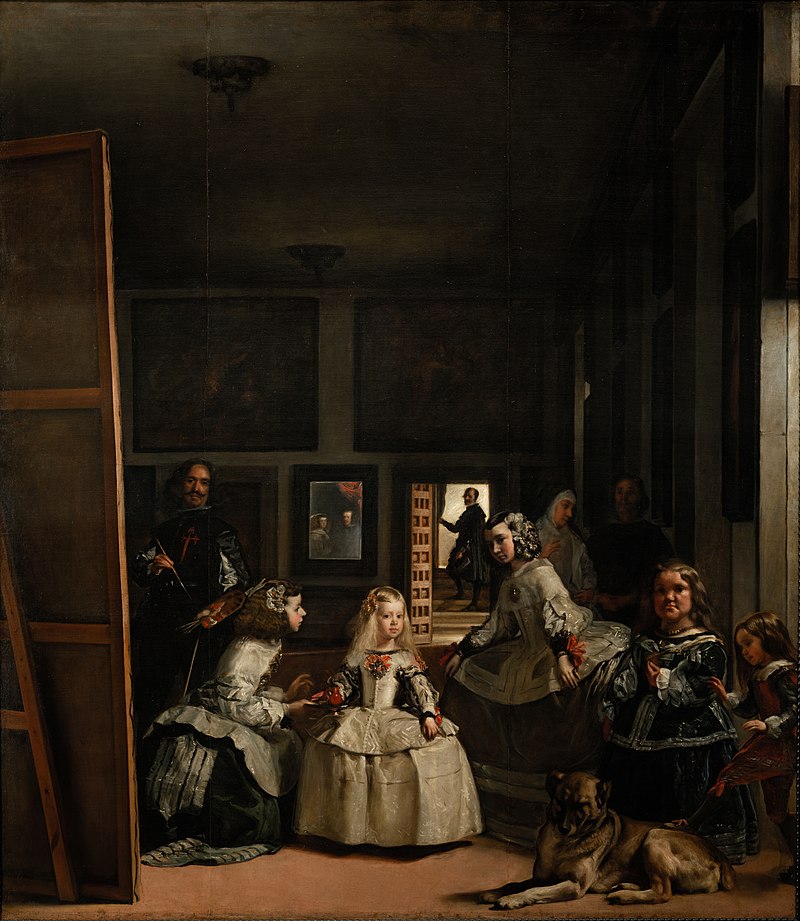
This course focuses on the development of narrative and expository writing and presentations abilities in Spanish through the study of different types of texts/cultural products (letters, reviews, short stories, films, and podcasts) and the practice of prewriting and writing skills in Spanish. The emphasis of the course is on writing as a process and as a form of critical inquiry. By the end of the semester, we expect that you will improve your ability to communicate in writing and orally in Spanish both clearly and effectively, so you will be able to either undertake more advanced courses in Spanish, or use these skills at a later point in your professional lives.
- Profesor: Luis Rodriguez-Rincon
Categoría: Spanish
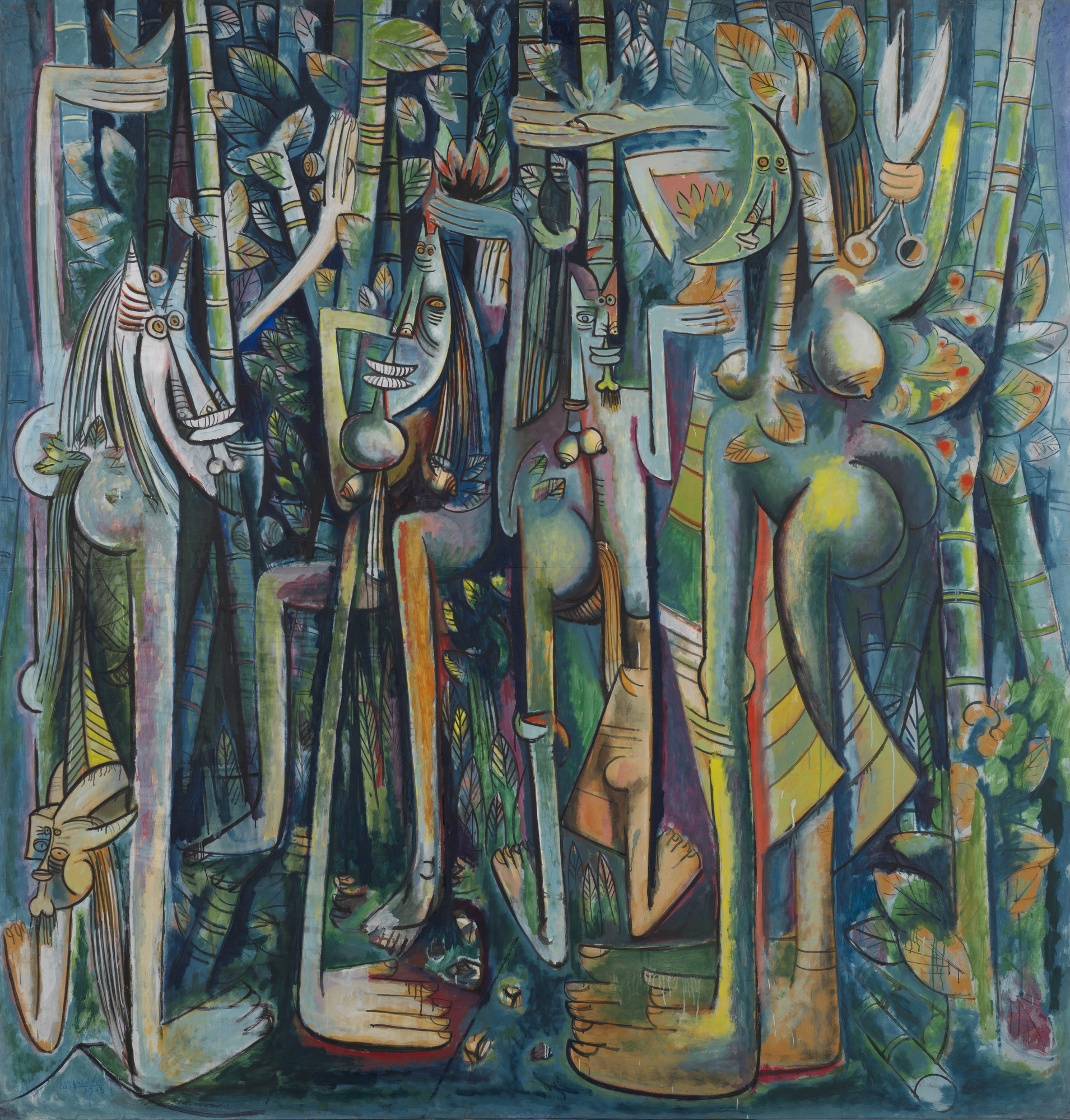
This course focuses on the development of narrative and expository writing and presentations abilities in Spanish through the study of different types of texts/cultural products (letters, review, short stories, films and podcasts) and the practice of prewriting and writing skills in Spanish. The emphasis of the course is on writing as a process and as a form of critical inquiry. By the end of the semester, we expect that you will improve your ability to communicate in writing and orally in Spanish both clearly and effectively, so you will be able to either undertake more advanced courses in Spanish, or use these skills at a later point in your professional lives.
- Profesor: Luis Rodriguez-Rincon
Categoría: Spanish

- Profesor: Ana López-Sánchez
Categoría: Spanish
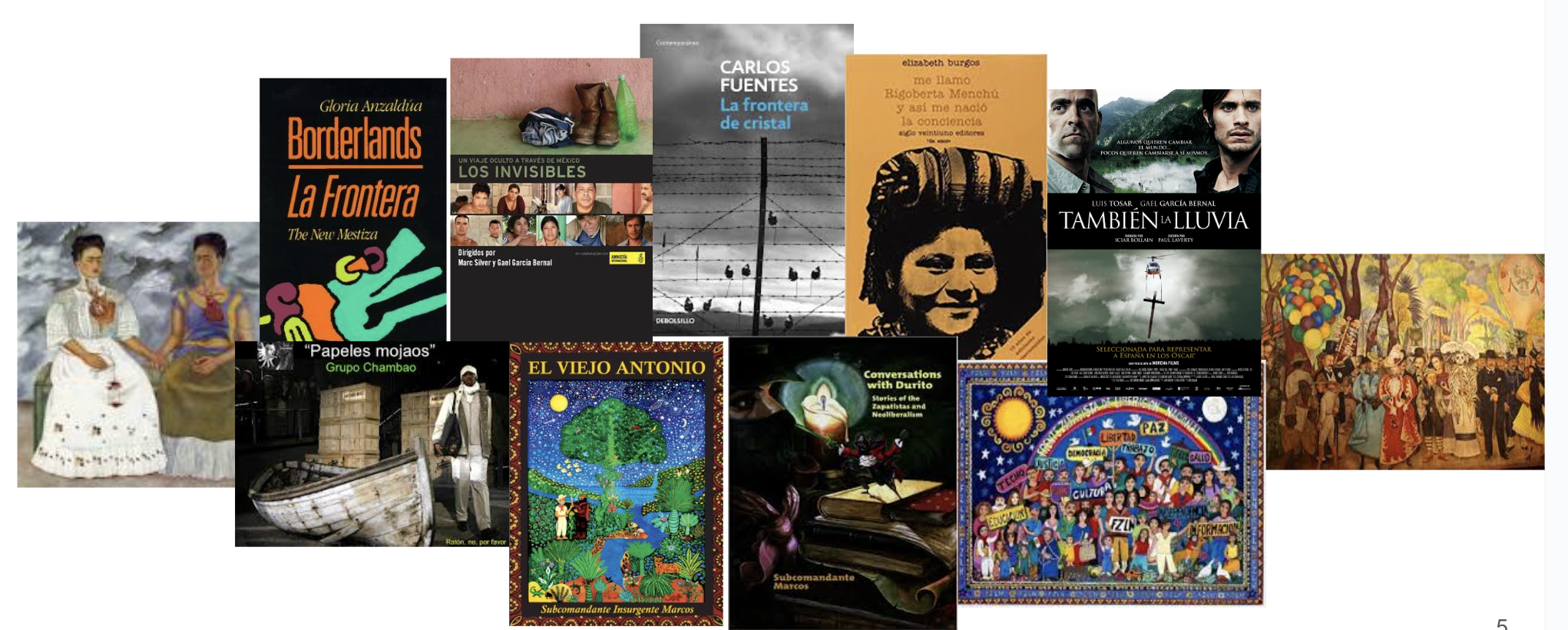
This course explores (in three main units, each divided into two) the topics of personal and national identity, borders and migrations, and forms of oppression and resistance (in particular in indigenous communities in Latin America). It does this by looking at different written genres (literary and non-literary, including poems, short stories, newspaper articles, academic essays), and visual and multimodal genres –– (shorts, movies, documentaries, paintings). By the end of the semester, students will have gained a good grasp of the historical and current understanding of the topics as constructed through the analyzed texts; will have learned to better 'read' and 'view' texts critically; and will have strengthened their (argumentative) writing-- in Spanish, but also in general.
Class meets 3 times a week: On T, Th, and one more day for 'taller de escritura' (writing workshop). (DAY OF THE WEEK TBD)
Class meets 3 times a week: On T, Th, and one more day for 'taller de escritura' (writing workshop). (DAY OF THE WEEK TBD)
- Profesor: Ana López-Sánchez
Categoría: Spanish
- Profesor: Ariana Huberman
Categoría: Spanish

“Y’all better quiet down,” Sylvia Rivera, a pioneering figure of the Stonewall movement, exhorted a crowd at the Christopher Street Liberation Day Rally in Washington Square in 1973. Her powerful intervention as a transgender activist highlighted the critical intersection of trans identity, homelessness, and police brutality, setting a foundation for understanding queer Latinx lives in the U.S. and queer lives more broadly. In this course, students will explore a diverse selection of films that depict and engage with the aesthetical, intellectual, and political contributions of Latin American and U.S. Latinx queer communities. By analyzing feature films, students will develop critical skills in film analysis while examining the narratives of LGBTQ+ individuals. The course will emphasize themes of sexual dissent, resistance, and authenticity, fostering an appreciation for the cultural impact of these stories in shaping social discourse. Taught in Spanish.
- Profesor: Raquel Vieira Parrine Sant'Ana
Categoría: Spanish

This course explores Latin American literary texts and films, produced after the 70's, that address political issues related to marginal subjects that were not previously visible in literary texts. This course will show students new approaches and criticism in contemporary cultural and political history of Latin America. The course is organized around several different agencies such as Indigeneity, ethnic politics and Indigenous movements, postcoloniality, subalternity, sexual diversity, migration and the border, drug trafficking, and gender violence. Prerequisite: 102, 201 (preferred), placement at 200 level or the consent of the professor.
- Profesor: Aurelia Unamuno
Categoría: Spanish
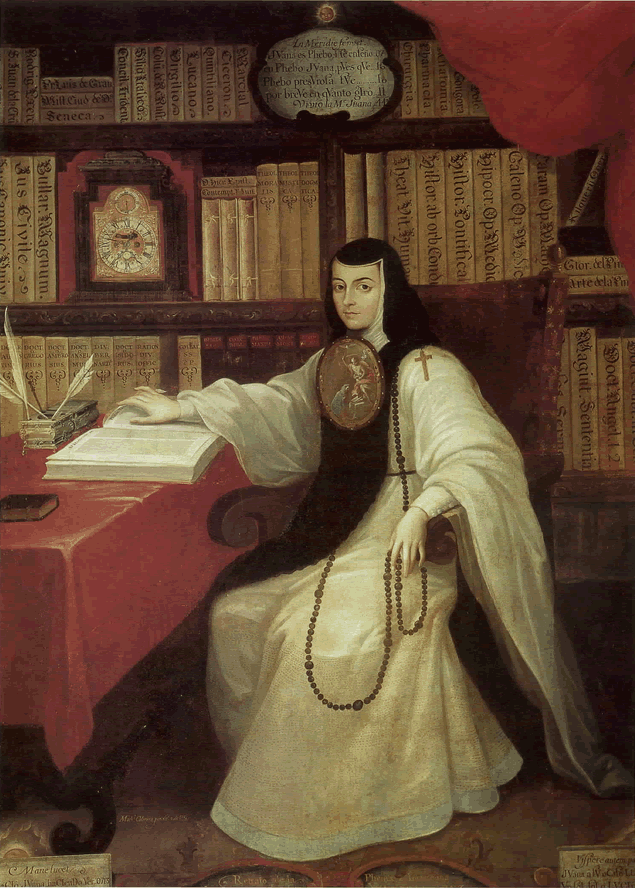
This course surveys over a thousand years of literary, cultural, and political history in the Iberian Peninsula. In the context of world history, course readings will span from the 5th century CE to 1700. While a focus of the course will be on Castilian (i.e. Spanish) writers, the Arabic and Hebrew writers that called the Iberian Peninsula home from 711CE to the sixteenth century as well as Gallego-Portuguese writers will also be discussed. These non-Castilian voices represent a linguistic, cultural, and religious diversity at odds with the commonplace notion of Spain as an exclusively Spanish-speaking, Catholic monarchy. The Castilian language and its literature originated at the shifting political and cultural frontiers between Christianity, Islam, and Judaism with Arabic and Hebrew being comparable to Latin in their contribution to the cultural history of the Iberian Peninsula. That is why this course will also serve as an introduction to comparative literature understood as the practice of reading and discussing literary texts outside of the confines of a nationalist tradition.
- Profesor: Luis Rodriguez-Rincon
Categoría: Spanish
Este curso explora las experiencias diaspóricas, transculturales y translingüísticas de las comunidades latinas en Estados Unidos, tanto a través de su representación en textos literarios (tales poesía, cuentos y autobiografías) y medios audiovisuales (cine y televisión), como a través de las experiencias vividas y expresadas por los miembros de la organización comunitaria CCATE (Centro de Cultura Arte Trabajo y Educación) de Norristown, Pensilvania, y por los estudiantes participantes . El objetivo último del curso es la creación de narrativas digitales personales, que permitan la afirmación de las identidades culturales y lingüísticas de los participantes y la visibilización de historias que a menudo son excluidas en las narrativas mediáticas dominantes.
- Profesor: Ana López-Sánchez
Categoría: Spanish

Since its publication in 1605, readers have been enchanted by Miguel de Cervantes’s novel about a knight and his faithful squire and their quest to turn fiction into reality. The adventures of Don Quijote and Sancho Panza force readers to probe the fraught and circular relationship between life and art. How do we know when something is true? How do we negotiate conflicting versions of the truth? What happens when fictions, dreams, or outright lies becomes confused with the truth? What role does art play in catalyzing a desire to transform the world? Can this novel from the early modern period help us to better understand issues relating to gender, religion, and social class in their historical contexts? In addition to these questions, Don Quijote also has a distinctive place in literary history as the first “modern” European novel and thus helps answer questions regarding the precise nature of this narrative genre and its relation to poetry, drama, as well as short narratives. For the novel Don Quijote is many things, but it is first a foremost a story about telling stories and the power of stories to shape our perception of self and by extension our world.
This is a bilingual course with lectures in both Spanish and English and featuring small group discussions in both languages as well as Spanglish. Students will learn about the political, cultural, and artistic history of Early Modern Spain through a sustained engagement with Cervantes’s novel and the art and criticism it has inspired. This is also a course for Spanish-language learners. Students who aim to improve their language skills must come prepared to take risks, make mistakes, and learn from the experience of expressing their opinions in class. Over the semester, students will also gain familiarity with modern criticism and theory relating to Cervantes and develop their own creative and scholarly interventions on the topic.
This is a bilingual course with lectures in both Spanish and English and featuring small group discussions in both languages as well as Spanglish. Students will learn about the political, cultural, and artistic history of Early Modern Spain through a sustained engagement with Cervantes’s novel and the art and criticism it has inspired. This is also a course for Spanish-language learners. Students who aim to improve their language skills must come prepared to take risks, make mistakes, and learn from the experience of expressing their opinions in class. Over the semester, students will also gain familiarity with modern criticism and theory relating to Cervantes and develop their own creative and scholarly interventions on the topic.
- Profesor: Luis Rodriguez-Rincon
Categoría: Spanish
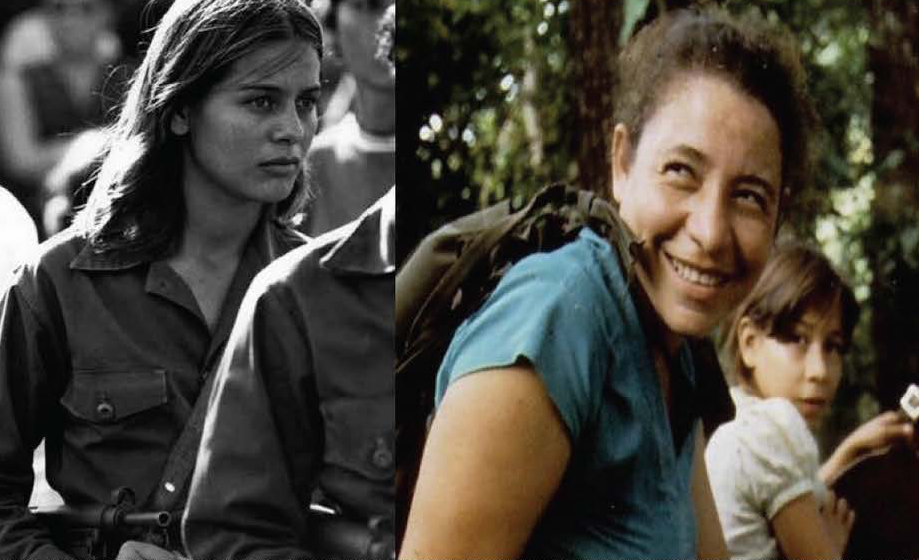
This course explores connections between the socialist armed struggles in the 1970s, women’s rights and feminist movements in Latin America. Through comparative study of literary texts, testimonials and documentary films, the course addresses theoretical issues such as the relevance and limitations of Marxism and feminism, global feminism, hegemony and feminisms produced in the so-called periphery. The course provides a general background of different models of the armed struggle in the Southern Cone, Perú, Central America and Mexico, focusing on women’s narratives, memory and the construction of meaning of the past. Delivered in Spanish.
Prerequisite: SPAN 200, 300 preferred, or the consent of the professor.
- Profesor: Aurelia Unamuno
Categoría: Spanish
Miguel de Cervantes was a groundbreaking poet, playwright and short story writer in his lifetime. Yet, most readers only know his famous novel, Don Quijote – in bits and pieces, if at all – and generally ignore his wider corpus of published works. This course aims to foster a fuller picture of Cervantes’s lifetime of literary experimentation by focusing specifically on his lesser-read works. Course readings and discussions will assess the writer’s corpus diachronically as it developed over time in order to better gauge the author’s intellectual development and its relation to his slippery critical perspective on early-modern Spanish society. At a time in which Hapsburg Spain waged religious war on multiple fronts, Cervantes articulated throughout his corpus a more inclusive, if not progressive, understandings of what Spain could and should be. How does a literary writer give literary form to the desire for freedom and self-determination in a time of political and inquisitorial censorship? Of particular interest will be the author’s changing representation of women, Turks, moors and other cultural minorities in the Iberian Peninsula and the role of literary fiction in defining the identitarian parameters of the nation.
- Profesor: Luis Rodriguez-Rincon
Categoría: Spanish

- Profesor: Raquel Vieira Parrine Sant'Ana
Categoría: Spanish
Humans are animals and yet most people today, like in the past, consider animals to be something other than humans. But what exactly is the difference? This course sets out to understand from a specifically Iberian perspective how humans have historically defined themselves in relation to animals, how animals in turn have been variously defined by humans, and how those definitions have changed over time. We will discuss these questions and assess various answers derived from close readings of visual and literary culture from Iberia. This course will also survey key approaches in contemporary Animal Studies and assess their utility for literary and cultural studies of the past and present. Readings and discussion will be primarily in Spanish with some theoretical and comparative reading in English.
- Profesor: Luis Rodriguez-Rincon
Categoría: Spanish
Humans are animals and yet most people consider animals to be something other than humans. This course sets out to understand from a specifically Iberian perspective how humans have come to define themselves in relation to animals and vice versa how animals have come to be defined in relation to humans. Animals have been ubiquitous to all aspects of human life in the Iberian Peninsula throughout its history. Without animals, human society and history in the Iberian Peninsula as we know it would be impossible. Some of the earliest evidence of human settlement in the Iberian Peninsula are cave paintings done over 30,000 years ago that depict a plethora of animals that cohabitated with early humans. Likewise, animals are found across the poetry and art of classical, medieval, and early modern Spain. While there is much to be said about animals in contemporary Spain, let alone Latin America, this course will take a historical perspective on understanding animals as living and literary beings with a special focus on the medieval and early modern periods and their classical antecedents. This course will also survey key theories and trends in contemporary Animal Studies which will help us to better assess literary and visual material on animals from the past. As a whole, this course proposes a revaluation of the literary techniques of personification with the belief that anthropomorphism and humanimals, the fictional product of humans seeing themselves through the reflective lens of animals, has a productive role to play in an age of human-induced mass extinction. Readings and discussion will be primarily in Spanish with some theoretical and comparative reading in English.
- Profesor: Luis Rodriguez-Rincon
Categoría: Spanish
This course is for seniors in the Spanish Department who are majoring and embarking on writing their capstone thesis projects. The process of writing a capstone thesis extends over your entire senior year, but this syllabus is specific to the fall semester senior seminar only. This seminar will help you identify a research question, complete preliminary research on this topic, present a prospectus and write an initial sample of your senior thesis in Spanish. You will work primarily with the faculty member running the senior seminar in the fall as well as your cohort, but you will also meet with potential thesis advisors in our department or other departments, as well as meet with specialists from the Library and the Writing Center, who will all help you refine your research questions and develop research strategies for the spring.
- Profesor: Luis Rodriguez-Rincon
Categoría: Spanish
Equip senior leaders and decision-makers with advanced tools and concepts in data-driven decision-making, strategic planning, and effective communication to lead the College towards achieving its long-term goals.
- Profesor: Kevin Hanegan
- Profesor: Kevin Iglesias
Categoría: Miscellaneous

Making films is a process of endless progression – from attending to the idea you feel most compelled to communicate, to visualizing a plan for this concept, to executing your vision amid the twists and turns of production, then staying open to unexpected insights in the editing process. In this workshop-style course you will learn and practice this process of (re)visioning, as we cover the technical and conceptual basics of digital film production. We will focus on how best to tell a story visually, collaborate, give and receive feedback, and make creative decisions. The semester will be structured in such a way that you will develop one central idea or preoccupation (or even an image) through a series of exercises and (4) projects that add more tools to your creative toolkit. By the end of the semester you will understand the elements of cinematography, location sound, production design, performance, and editing. More importantly, you will begin to form and understand your own voice as an image-maker.
- Profesor: John Muse
- Profesor: Swetha Regunathan
Categoría: Visual Studies

"As a film-maker and a poet, I feel it’s my duty to be an eye and an antenna to what’s happening around me." – Jonas Mekas
Filmmaking is a practice of paying attention. It is a process of exchange with the world: of observing, processing, questioning, and transforming what we encounter into sounds, images, and stories that expressively communicate experience. This course explores filmmaking as a creative practice and critical way of seeing.
Through hands-on exercises, screenings, readings, and discussions, participants will be introduced to the essential stages of filmmaking, including pre-production, production, and post-production. They will acquire practical skills in cinematography, sound recording, lighting, editing, and visual storytelling while developing the ability to work independently or collaboratively on a film crew. Workshops and creative projects encourage experimentation and creative risk-taking as a means for discovering one’s unique vision & voice.
Drawing from contemporary cinema and the work of artist-filmmakers, the course introduces a diverse range of conceptual & formal approaches to moving-image practice within the visual arts. Class projects, screenings, readings, and discussions explore a variety of cultural media vernaculars, encouraging participants to consider how filmmaking can reflect, challenge and reshape our understanding of the world.
Through this multi-modal approach, participants will become proficient in the technical and conceptual basics of digital filmmaking. By the end of the semester, students will have developed a foundation for creating thoughtful, engaging cinematic works that reflect their own, subjective perspectives.
- Profesor: Ava Grudko
- Profesor: Rebecca Shapass
Categoría: Visual Studies

This course investigates the history, methodology, and ethical implications of Human- Centered Design (HCD). A cross-disciplinary methodology HCD grounded in fine arts, cognitive psychology, and systems engineering. It provides a creative, structured framework for solving complex problems by centering the lived experiences of people.
This course envisions design as an engine for social and systemic change. Situated within Visual Studies, we treat the "user experience" as a site of visual and sensory analysis. We create a structure for understanding usability design and research, while critically exploring Design Justice.
We will ask: Who is included in our "human-centered" focus? Who is marginalized by our "solutions"? Students will develop professional skills in visual research, synthesis, rapid prototyping, and strategic roadmapping. The semester culminates in capstone projects and presentations that address a real-world social, environmental, or economic challenge within the Haverford/Bi-Co community or the greater Philadelphia area.
This course envisions design as an engine for social and systemic change. Situated within Visual Studies, we treat the "user experience" as a site of visual and sensory analysis. We create a structure for understanding usability design and research, while critically exploring Design Justice.
We will ask: Who is included in our "human-centered" focus? Who is marginalized by our "solutions"? Students will develop professional skills in visual research, synthesis, rapid prototyping, and strategic roadmapping. The semester culminates in capstone projects and presentations that address a real-world social, environmental, or economic challenge within the Haverford/Bi-Co community or the greater Philadelphia area.
- Profesor: Ronah Harris
Categoría: Visual Studies

Course Description:
This course will introduce students to the interdisciplinary field of Visual Studies. This field not only concerns itself with traditional visual media and artifacts such as those already taken seriously by art historians and film theorists, i.e., painting, sculpture, photography, film, video, etc. Visual Studies also seeks to examine vision, visual experience, and images of all kinds, their systems of transmission, their points of consumption, and the very limits of visuality itself. These limits require an investigation of “blindness” as both metaphor and physical disability, the presumptions that privilege some senses over others (and bother counting them at all), and the troubled relationship between seeing and feeling. Drawing from the humanities, social sciences, and natural sciences, we will build a working definition of visuality while attending to its own instability in the 21st century.
This course will introduce students to the interdisciplinary field of Visual Studies. This field not only concerns itself with traditional visual media and artifacts such as those already taken seriously by art historians and film theorists, i.e., painting, sculpture, photography, film, video, etc. Visual Studies also seeks to examine vision, visual experience, and images of all kinds, their systems of transmission, their points of consumption, and the very limits of visuality itself. These limits require an investigation of “blindness” as both metaphor and physical disability, the presumptions that privilege some senses over others (and bother counting them at all), and the troubled relationship between seeing and feeling. Drawing from the humanities, social sciences, and natural sciences, we will build a working definition of visuality while attending to its own instability in the 21st century.
- Profesor: Swetha Regunathan
Categoría: Visual Studies
Realtime Interfaces for Creative Expression (RICE) is a 200-level course for artists, performers, and computer science students with an interest in developing novel interactive software applications for the creation of digital art, responsive environments, and new media performance.
Students will use the graphical programming environment Max to dynamically control, process, and generate digital audio and video content. Assignments will touch upon a number of related disciplines including interactive computer music, algorithmic and generative art systems, and audio/video synthesis.
Students will use the graphical programming environment Max to dynamically control, process, and generate digital audio and video content. Assignments will touch upon a number of related disciplines including interactive computer music, algorithmic and generative art systems, and audio/video synthesis.
- Profesor: Matthew O'Hare
Categoría: Visual Studies
Realtime Interfaces for Creative Expression (RICE) is a 200-level course for artists, performers, and computer science students with an interest in developing novel interactive software applications for the creation of digital art, responsive environments, and new media performance.
- Profesor: Matthew O'Hare
Categoría: Visual Studies
- Profesor: Eva Wu
Categoría: Visual Studies

This is an introductory cross-listed (Visual Studies/Anthropology) hybrid production and theory course designed for students with an interest in film, feminist and decolonial methods, video production, and visual anthropology. Classes will combine elements of a workshop (sharing and providing feedback on filmmaking work in progress) and seminar (discussing weekly themes). Students will view films on their own and post weekly responses to films and readings.
Together, we will grapple with the entanglements between ethnographic film/documentary and colonial structures of power—particularly the ways that the field has and continues to represent the visual “other.” We will bring a decolonizing lens to explore—through texts and films—major modalities in the field including observational filmmaking, cinéma vérité, autoethnographic film, sensory ethnography, and more. Due to the required readings, films and intensive film production components, this course will require a substantial time commitment. A large part of the course will be structured around the production of a short film (approx. 5 min) drawing on one or more of the modalities explored in the course.
Together, we will grapple with the entanglements between ethnographic film/documentary and colonial structures of power—particularly the ways that the field has and continues to represent the visual “other.” We will bring a decolonizing lens to explore—through texts and films—major modalities in the field including observational filmmaking, cinéma vérité, autoethnographic film, sensory ethnography, and more. Due to the required readings, films and intensive film production components, this course will require a substantial time commitment. A large part of the course will be structured around the production of a short film (approx. 5 min) drawing on one or more of the modalities explored in the course.
- Profesor: Emily Hong
Categoría: Visual Studies
This is an introductory cross-listed (Visual Studies/Anthropology) hybrid production and theory course designed for students with an interest in film, feminist and decolonial methods, video production, and visual anthropology. Classes will combine elements of a workshop (sharing and providing feedback on filmmaking work in progress) and seminar (discussing weekly themes). Students will view films on their own and post weekly responses to films and readings.
Together, we will grapple with the entanglements between ethnographic film/documentary and colonial structures of power—particularly the ways that the field has and continues to represent the visual “other.” We will bring a decolonizing lens to explore—through texts and films—major modalities in the field including observational filmmaking, cinéma vérité, autoethnographic film, sensory ethnography, and more. Due to the required readings, films and intensive film production components, this course will require a substantial time commitment. A large part of the course will be structured around the production of a short film (approx. 5 min) drawing on one or more of the modalities explored in the course.
Together, we will grapple with the entanglements between ethnographic film/documentary and colonial structures of power—particularly the ways that the field has and continues to represent the visual “other.” We will bring a decolonizing lens to explore—through texts and films—major modalities in the field including observational filmmaking, cinéma vérité, autoethnographic film, sensory ethnography, and more. Due to the required readings, films and intensive film production components, this course will require a substantial time commitment. A large part of the course will be structured around the production of a short film (approx. 5 min) drawing on one or more of the modalities explored in the course.
- Profesor: Emily Hong
Categoría: Visual Studies
This is an introductory cross-listed (Visual Studies/Anthropology) hybrid production and theory course designed for students with an interest in film, feminist and decolonial methods, video production, and visual anthropology. Classes will combine elements of a studio (sharing and critiquing filmmaking work in progress) and seminar (discussing weekly themes). Students will view films on their own and post weekly responses to films and readings.
Together, we will grapple with the entanglements between ethnographic film/documentary and colonial structures of power—particularly the ways that the field has and continues to represent the visual “other.” We will bring a decolonizing lens to explore—through texts and films—major modalities in the field including observational filmmaking, cinéma vérité, ethno-fiction, sensory ethnography, indigenous media, and more. Due to the required readings, films and intensive film production components, this course will require a substantial time commitment. A large part of the course will be structured around the production of a short film (approx. 5 min) drawing on one or more of the modalities explored in the course.
Together, we will grapple with the entanglements between ethnographic film/documentary and colonial structures of power—particularly the ways that the field has and continues to represent the visual “other.” We will bring a decolonizing lens to explore—through texts and films—major modalities in the field including observational filmmaking, cinéma vérité, ethno-fiction, sensory ethnography, indigenous media, and more. Due to the required readings, films and intensive film production components, this course will require a substantial time commitment. A large part of the course will be structured around the production of a short film (approx. 5 min) drawing on one or more of the modalities explored in the course.
- Profesor: Sophie Schrago
Categoría: Visual Studies
- Profesor: Lunise Cerin
Categoría: Visual Studies

Documenting and archiving are epistemological practices: ways of seeing, organizing, presenting, and shaping reality.
This studio course explores the archive as a site of artistic inquiry. Moving from early cinema cameras to machine vision technologies, we consider how visual media preserves history and transmits information while simultaneously operating within systems of surveillance, extraction, and control.
Through readings, screenings, lectures, discussions, and hands-on creative projects, participants examine how archives, images, and data produce knowledge, shape memory, and inform visual culture. Topics covered include: documentary methodologies, archival practice, the datafiction of image production, machine vision, AI, and the shifting boundaries between art, research, and information.
Learning Objectives:
● Participants practice slow looking and critical consumption by responding to readings, films, and artworks in written and oral forms.
● Participants are versed in the evolution of documentary practice.
● Participants engage critically with the construction of truth and history. They question how institutional and personal archives are created, presented, and shared.
● Participants question contemporary means of creating and consuming documents in the context of surveillance, AI, and machine learning.
● Participants create artwork inspired by & implementing the theoretical frameworks presented and discussed.
- Profesor: Rebecca Shapass
Categoría: Visual Studies
Course Description:
Ever since the dawn of a so-called “golden age of television” roughly a quarter-century ago, episodic storytelling has exploded in prestige and cultural standing. In fact many critics, scholars, and filmmakers would agree that TV (network, cable, streaming, etc.) has come to rival, if not surpass, cinema when it comes to formal and stylistic innovation. But what is it about episodic form that allows for stylistic departures and emotional impact? How does episodic writing both borrow and diverge from screenwriting principles more broadly? And how can we determine if an idea has “legs”? In the series world, stories are built in the “writers’ room,” where writers come together to create a successful show. In this course students will study the craft of episodic screenwriting by simulating the collaborative spirit of the writers’ room. As they learn screenplay structure and form, visual storytelling techniques, dialogue, character development, and story arc, all students will write one episode for a class series and participate in a final community table read event.
Objectives:
1. Learn the fundamentals of screenwriting form and structure, and episodic writing in particular, as distinct from other modes of writing.
2. Learn how to tell a story visually, through the use of stage direction, dialogue, character development, and story arc.
3. Learn how to give and receive substantive peer feedback.
4. Create (1) episodic script (20-25 pp) as part of a class series and (2) series bibles in groups.
- Profesor: Swetha Regunathan
Categoría: Visual Studies
- Profesor: Swetha Regunathan
Categoría: Visual Studies
Course Description:
The Capstone Seminar brings together the threads of the interdisciplinary minor, integrating visual studies scholarship, critical making, and public engagement. It provides a space for students to draw on the skills and perspectives they’ve developed across different majors while pursuing shared questions in visual culture. The course combines scholarship and creative practice, moving from conception to exhibition. Each year the Capstone takes on a different theme, shaped by the instructor.
This year we will engage with nostalgia as a system of ideas and as visual practice. Nostalgia was first described by Swiss doctor Johannes Hofer in the late 17th century, as a distinct feeling of homesickness [from the Greek nostos (homecoming) + algos (pain)]. In contemporary life, nostalgia functions in much more capacious (and perhaps interrelated ways): as a source of pleasure, object of derision, marketing tool, political dog whistle, aesthetic lens, and so on and so forth. But why does this phenomenon hold such power over us? Is retro merely imitation? How does nostalgia distort historical memory, and how does it endlessly (re)imagine the future? In particular, how have filmmakers and visual artists invoked, translated, or remixed “the past” to craft new ways of seeing, knowing, and feeling? Over the course of the semester students will a) read key theoretical texts and encounter film, media, and art that centers nostalgic experience; b) create a sequence of mini-projects culminating in a final short film or video essay for public screening.
Objectives:
1. Form a deep, theoretical understanding of the role of nostalgia and collective memory in contemporary visual culture.
2. Be able to put various works of theory and criticism in conversation with film and media.
3. Maintain a creative portfolio of mini-projects that directly engages with course readings, viewings, and class discussions.
4. Create a final piece that represents both your thinking over the course of the semester and your evolution as a Visual Studies minor.
- Profesor: Swetha Regunathan
Categoría: Visual Studies
- Profesor: Nimisha Ladva
Categoría: Writing Program

In this course, we will examine mythological literature from across the globe, with an emphasis on narratives of creation, destruction, and emergence. We will encounter well-treated myths such as those of Greek, Norse, and Judaic origin, as well as less oft-discussed myths from African, Japanese, and Native American origin, among others. We will take a comparative approach to these narratives, employing close reading to identify and examine themes such as symbolism, cultural knowledge, gender commentary, and environmentalism. Our critical lens for these examinations will derive from myth-theorists such as Joseph Campbell, Northrop Frye, and William G. Doty. These investigations will lead us to examine larger questions about the origins and functions of mythology.
- Profesor: Adam DePaul
Categoría: Writing Program
- Profesor: Nimisha Ladva
Categoría: Writing Program
- Profesor: Katheryn Hofmann
Categoría: Writing Program
- Profesor: Katheryn Hofmann
Categoría: Writing Program

Does it ever feel like TikTok knows you better than you know yourself? Today, digital platforms have the uncanny ability to connect with and influence our innermost states of mind; computers finish our sentences for us and anticipate the fluctuations in our moods. But long before Instagram’s “For You” page, older media and art forms—like poetry and personal letters—gave us the power to transmit our thoughts and carry the voices of others around with us. This course will examine the themes of intimacy and proximity in relation to technology. As we learn to pay attention, write, think, and speak like scholars, we will explore the idea of intimacy—what it is, how it’s experienced, and how it’s crafted through language, media, and design. How does writing create a sense of personal connection? What does it mean to feel addressed, known, and understood by a book, a person, or a piece of software? As this is a writing-intensive course, your main goal will be to practice and improve your writing by responding to poems, films, stories, and essays that engage these questions.
- Profesor: James Draney
Categoría: Writing Program

Does it ever feel like TikTok knows you better than you know yourself? Today, digital platforms have the uncanny ability to connect with and influence our innermost states of mind; computers finish our sentences for us and anticipate the fluctuations in our moods. But long before Instagram’s “For You” page, older media and art forms—like poetry and personal letters—gave us the power to transmit our thoughts and carry the voices of others around with us. This course will examine the themes of intimacy and proximity in relation to technology. As we learn to pay attention, write, think, and speak like scholars, we will explore the idea of intimacy—what it is, how it’s experienced, and how it’s crafted through language, media, and design. How does writing create a sense of personal connection? What does it mean to feel addressed, known, and understood by a book, a person, or a piece of software? As this is a writing-intensive course, your main goal will be to practice and improve your writing by responding to poems, films, stories, and essays that engage these questions.
- Profesor: James Draney
Categoría: Writing Program
- Profesor: Kristin Lindgren
Categoría: Writing Program

WRPRH119A001-002: Brown v. Board at 70: Unfulfilled Promises & Unfinished Activisms for Education Equity
Instructor: Christopher R. Rogers, Ph.D
Class meetings: x001 - T/Th 11:30am - 12:55pm | x002 - T/Th 02:30pm - 03:55pm
Location: Gest Hall 103
Office hours: T/ Th 01:00pm - 02:15pm / OR by appointment (in person/virtual)
The landmark victory of Brown v. Board (1954) was popularly understood to symbolize the ability of all students, particularly Black students, to have access to high-quality schooling and shatter the grip of segregation in our schools and public institutions. Seventy years after Brown, public schools across the country are still deeply segregated and unequal. As R. L’Heureux Lewis-McCoy recently offered, “The segregation that was meant to be uprooted with the Brown decision not only persisted, but it has grown, and today, we stand at a critical juncture—the promise of education as opportunity that has existed for more than 100 years is on the verge of being no more.” In this writing seminar, we will explore 19th, 20th, and 21st century perspectives emerging from Black-led education organizing in the wake of the 70th Anniversary of the Brown v. Board decision to inform how we understand the purpose of education in our own lives and as a social anchor. Through three acts, we will consider: (1) Black education antecedents and experiments that took place through Reconstruction up until the dawn of Brown v. Board; (2) a multidimensional exploration of Brown v. Board I (1954) and II (1955) decisions; and (3) contemporary realities of U.S. public education for Black communities, including ongoing grassroots experiments and interventions needed to bring about an inclusive, equitable, and relevant education. Course readings will include anchor texts for each act, combined with supplemental articles, essays, and multimedia artifacts. Assignments will involve essays that build on personal experiences in education toward defining dimensions of equity and concluding with arguments for how a proposed intervention could expand equity and inclusiveness in U.S. schools. [Counts towards the concentration in African and Africana Studies.]
- Profesor: Christopher R. Rogers
Categoría: Writing Program
- Profesor: Christopher R. Rogers
Categoría: Writing Program
- Profesor: Carol Schilling
Categoría: Writing Program
- Profesor: Carol Schilling
Categoría: Writing Program
- Profesor: Carol Schilling
Categoría: Writing Program
- Profesor: Carol Schilling
Categoría: Writing Program
- Profesor: Marigold Stratford
Categoría: Writing Program
- Profesor: Marigold Stratford
Categoría: Writing Program
- Profesor: La-Toya Scott
Categoría: Writing Program
- Profesor: La-Toya Scott
Categoría: Writing Program

- Profesor: Christopher R. Rogers
Categoría: Writing Program
- Profesor: Christopher R. Rogers
Categoría: Writing Program

WRPR 1XXB001-02: B-Sides + Blues Visions: Reviewing Black Popular Culture for Social Transformation
Instructor: Christopher R. Rogers, Ph.D
Class meetings: Section 01: TTh 11:30am-12:55pm | Section 02: TTh 02:30pm-03:55pm
Location:
Student hours: T/ Th 01:00pm - 02:15pm / OR by appointment (in person/virtual)
In a classic essay interrogating cultural organizing in the 21st Century, journalist Jeff Chang (2010) establishes:
“Culture is the space in our national consciousness filled by music, books, sports, movies, theater, visual arts, and media. It is the realm of ideas, images, and stories -- the narrative in which we are immersed every day. It is where people make sense of the world, where ideas are introduced, values are inculcated, and emotions are attached to concrete change. Cultural change is often the dress rehearsal for political change. Or put in another way, political change is the final manifestation of cultural shifts that have already occurred.”
His words spoke to the critical and historical role of cultural production (especially hip-hop) for leveraging grassroots movements for progressive social change. In this writing seminar, we will investigate the relationship between cultural production arising from Black communities and its resonance within their visions/actions for social transformation. Through three acts, we will consider: (1) the multiplicity of the role of popular culture in our lives beyond its value as a commodity; (2) a survey of historical 20th Century examples upon which popular music arising from Black communities served to amplify visions of social transformation; and (3) review and speculate upon the possibilities of contemporary popular culture artifacts to inspire present-day mobilizing for progressive social change. Course readings will include anchor texts combined with supplemental articles, essays, and multimedia artifacts. Assignments will involve essays that build on formative personal experiences with popular culture toward articulating historical arguments for the social afterlife of a popular culture artifact. The final assignment concludes with seminar participants establishing a contemporary argument for the utility of a self-selected popular culture artifact to support a current mobilization for justice-oriented outcomes.
- Profesor: Christopher R. Rogers
Categoría: Writing Program

How do we learn to write in college? What changes about the activity of writing as we move across different academic contexts? And how should we understand the value of academic writing processes in a moment when generative AI can produce fluent prose but cannot replace the quintessentially human activities that writing makes possible?
- Profesor: Crystal Fodrey
Categoría: Writing Program

- Profesor: Jessica Libow
Categoría: Writing Program
This course teaches students to read and write essays that participate in the intellectual communities at Haverford College and beyond. Rather than approaching writing as an innate talent, the course treats writing as a learned, revisable practice and as a way of thinking that is developed through drafting, feedback, and radical revision. Students will practice transferable writing skill sets such as close reading, identifying interpretive problems, gathering evidence, developing reader-based prose, and revising structure and argument.
Over the last few decades, “medical humanities” and “health humanities” initiatives have been established at health professional schools across the country. In these programs, students study art, literature, history, and philosophy in the hopes that these endeavors will help them become better healthcare providers. But what exactly are “the humanities”? How do they differ from and relate to “the arts” or “humanity” itself? And how does a humanistic education benefit both healthcare providers and their patients? In this writing seminar, we will explore how humanistic inquiry contributes to knowledge about health and healthcare. Throughout the semester, we will focus on how we might leverage tools from the humanities to promote health equity and create more just systems of care.
Over the last few decades, “medical humanities” and “health humanities” initiatives have been established at health professional schools across the country. In these programs, students study art, literature, history, and philosophy in the hopes that these endeavors will help them become better healthcare providers. But what exactly are “the humanities”? How do they differ from and relate to “the arts” or “humanity” itself? And how does a humanistic education benefit both healthcare providers and their patients? In this writing seminar, we will explore how humanistic inquiry contributes to knowledge about health and healthcare. Throughout the semester, we will focus on how we might leverage tools from the humanities to promote health equity and create more just systems of care.
- Profesor: Jessica Libow
- Profesor: Angelica Modabber
Categoría: Writing Program
- Profesor: Jessica Libow
Categoría: Writing Program

The black character dies first. The (weak) woman is saved by a heroic man. The disabled or disfigured person is presumed to be "scary." In this course, we will unravel the various tropes that haunt the horror genre, exploring how horror film and fiction reflect the values, mores and fears of a collective unconscious, with special emphasis on the ways in which racial stereotyping and gender violence are often deployed as horror tropes. We will look closely at portrayals of violence, shock, resistance and power, thinking through how race and gender play central roles in the production of fear, terror, monstrosity and the grotesque in popular media-- as well as efforts to subvert the genre.
- Profesor: Connie McNair
Categoría: Writing Program
- Profesor: Matthew O'Hare
Categoría: Writing Program
- Profesor: Connie McNair
Categoría: Writing Program

Indigenous stories are all too often excluded from the common curriculum. This course will examine important literary themes through the cultural stories of the Lenape Native Americans—the indigenous people of eastern PA, southern NY, NJ, and northern DE. Students will experience Lenape stories through oral and written traditions, including cosmological and etiological myths, trickster tales, stories addressing settler contact and colonization, and wisdom anecdotes from Lenape elders. Through these stories, we will examine themes of myth theory, culture transmission, contact zones, adaptation & translation theory, colonization, oral vs. written tradition, and selection bias in “canonical” curriculum.
- Profesor: Adam DePaul
Categoría: Writing Program

Close your eyes and think of artificial intelligence. What do you see? Maybe a world-destroying robot, hellbent on extinguishing humanity? A hyper-intelligent personal assistant? An intimate companion who always has your back? Or do you picture the banal office software that helps you compose e-mails, write and research essays, vibe-check texts, or generate slop memes for the group chat?
This course will examine how our cultural imagination of artificial beings and superintelligent computers shapes—and is shaped by—the actual emerging technologies that we call “artificial intelligence,” from chatbots, image generators, to the machine-learning systems that curate our feeds and, occasionally, drive our cars. What even is “artificial intelligence” in the first place? Do Large Language Models, like ChatGPT, represent the apotheosis of reason and intelligence? Or is what we call “AI” more like an archive of culture—something less glamorous yet (perhaps) more interesting?
To help us ask these questions we will analyze narrative fiction, scholarly research essays, poems, films, and philosophical polemics. Using this material as a springboard, students will develop their critical perspectives through writing, considering how literature, art, and marketing influence our understanding of this technology. Along the way we will speculate on what AI means for us writers in a world in which to work often means to write. At the outset we will assume that writing is a form of thinking, and that writing well requires time, patience, curiosity, and determination.
- Profesor: James Draney
Categoría: Writing Program

Close your eyes and think of artificial intelligence. What do you see? Maybe an army of world-destroying robots, an evil supercomputer, a hyper-intelligent personal assistant, or even a romantic partner? Or, perhaps, your mind pictures the banal office software that helps you compose e-mails, proofread drafts, and debug code? This course will examine how our cultural imagination of artificial beings and superintelligent computers shapes—and is shaped by—the actual emerging technologies that we call “artificial intelligence,” from chatbots, to machine learning algorithms, to Large Language Models. Along the way, we will ask whether today’s artificial intelligence marks a quantum leap in human evolution, merely updates longstanding word-processing tools, or instead represents something altogether new, strange, and surprising. To investigate these issues, we will analyze narrative fiction, nonfiction essays, and films that depict AI or artificial beings in various forms. Using this material as a springboard, students will then develop their own critical perspectives through writing, considering how literature, art, and marketing influence our understanding of this technology.
- Profesor: James Draney
Categoría: Writing Program

What does it mean to be in-between? This course explores the concept of “borderlands” – not just as geographical spaces, but as sites of cultural, linguistic, and intellectual negotiation. Through reading, discussion, and writing, students investigate how writers and thinkers navigate multiple identities and disciplines, and in turn, develop their own academic voices.
We begin by considering texts that explore the connection between language and identity. Students write personal essays reflecting on their own experiences with language – whether through translation, code-switching, or linguistic hybridity – while practicing narrative structure and revision. Next, we examine how writers use formal strategies to construct and reflect cultural hybridity. Reading stories, poems and short novels that challenge disciplinary, generic and cultural conventions, students write a short, analytical essay discussing what happens when boundaries are crossed. In the final unit, students draw from a selection of sources to conduct a research project on a chosen ‘borderland,’ a topic that explores the complexities of cultural, linguistic, or disciplinary in-betweenness. Students learn how to construct well-supported arguments, integrate secondary sources, and refine their work through revision.
This is a Writing Center-supported seminar, meaning that students will receive individualized support from the instructor and will work closely with experienced Writing Center tutors who have been assigned to the course.
- Profesor: Indie Halstead
Categoría: Writing Program
What does it mean to be in-between? This course explores the concept of “borderlands” – not just as geographical spaces, but as sites of cultural, linguistic, and intellectual negotiation. Through reading, discussion, and writing, students investigate how writers and thinkers navigate multiple identities and disciplines, and in turn, develop their own academic voices.
We begin by considering texts that explore the connection between language and identity. Students write personal essays reflecting on their own experiences with language – whether through translation, code-switching, or linguistic hybridity – while practicing narrative structure and revision. Next, we examine how writers use formal strategies to construct and reflect cultural hybridity. Reading stories, poems and short novels that challenge disciplinary, generic and cultural conventions, students write a short, analytical essay discussing what happens when boundaries are crossed. In the final unit, students draw from a selection of sources to conduct a research project on a chosen ‘borderland,’ a topic that explores the complexities of cultural, linguistic, or disciplinary in-betweenness. Students learn how to construct well-supported arguments, integrate secondary sources, and refine their work through revision.
This is a Writing Center-supported seminar, meaning that students will receive individualized support from the instructor and will work closely with experienced Writing Center tutors who have been assigned to the course.
We begin by considering texts that explore the connection between language and identity. Students write personal essays reflecting on their own experiences with language – whether through translation, code-switching, or linguistic hybridity – while practicing narrative structure and revision. Next, we examine how writers use formal strategies to construct and reflect cultural hybridity. Reading stories, poems and short novels that challenge disciplinary, generic and cultural conventions, students write a short, analytical essay discussing what happens when boundaries are crossed. In the final unit, students draw from a selection of sources to conduct a research project on a chosen ‘borderland,’ a topic that explores the complexities of cultural, linguistic, or disciplinary in-betweenness. Students learn how to construct well-supported arguments, integrate secondary sources, and refine their work through revision.
This is a Writing Center-supported seminar, meaning that students will receive individualized support from the instructor and will work closely with experienced Writing Center tutors who have been assigned to the course.
- Profesor: Indie Halstead
Categoría: Writing Program
Course Description and Objectives
This course explores the rhetorical and literary dimensions of storytelling, asking how migration narratives shape personal identity, cultural memory, and public discourse. Drawing from a diverse selection of world literature, we will examine how writers and artists across cultures and genres use storytelling to navigate borders—geographical, political, and personal—and to make sense of the self in relation to larger global contexts.
Students will develop their writing through a variety of genres—including literary and visual analysis, personal narratives, autoethnographic essays, and multimodal remix projects—each beginning from lived experience and expanding toward broader social, cultural, and political questions. Through collaboration with Writing Center tutors, students will engage in guided conferences and peer feedback sessions to support revision and reflection.
This is a Writing Center-supported seminar, meaning that students will receive individualized support from the instructor and will work closely with experienced Writing Center tutors assigned to the course.
By the end of this course, students will be able to:
- Analyze how storytelling functions as a tool for constructing and communicating identity across borders.
- Recognize and reflect on the relationship between narrative form and meaning in a range of global texts.
- Apply concepts from world literature to their own writing practice.
- Craft compelling personal narratives that connect individual experience to larger cultural and political contexts.
- Engage in revision as a deliberate and creative part of the writing process.
- Develop and refine storytelling techniques to narrate their own lives with clarity, purpose, and voice.
Course Readings
- Exit West – Mohsin Hamid (2017)
- Illegal Traveller: An Auto-Ethnography of Borders – Shahram Khosravi (2010)
- Escaping Wars and Waves: Encounters with Syrian Refugees – Olivier Kugler (2018)
- All other supplemental readings are posted on Moodle.
- Profesor: Eman Al-Drous
Categoría: Writing Program
This course explores the rhetorical and literary dimensions of storytelling, asking how migration narratives shape personal identity, cultural memory, and public discourse. Drawing from a diverse selection of world literature, we will examine how writers and artists across cultures and genres use storytelling to navigate borders—geographical, political, and personal—and to make sense of the self in relation to larger global contexts.
Students will develop their writing through a variety of genres—including literary and visual analysis, personal narratives, autoethnographic essays, and multimodal remix projects—each beginning from lived experience and expanding toward broader social, cultural, and political questions. Through collaboration with Writing Center tutors, students will engage in guided conferences and peer feedback sessions to support revision and reflection.
This is a Writing Center-supported seminar, meaning that students will receive individualized support from the instructor and will work closely with experienced Writing Center tutors assigned to the course.
By the end of this course, students will be able to:
- Analyze how storytelling functions as a tool for constructing and communicating identity across borders.
- Recognize and reflect on the relationship between narrative form and meaning in a range of global texts.
- Apply concepts from world literature to their own writing practice.
- Craft compelling personal narratives that connect individual experience to larger cultural and political contexts.
- Engage in revision as a deliberate and creative part of the writing process.
- Develop and refine storytelling techniques to narrate their own lives with clarity, purpose, and voice.
Course Readings
- Exit West – Mohsin Hamid (2017)
- Illegal Traveller: An Auto-Ethnography of Borders – Shahram Khosravi (2010)
- Escaping Wars and Waves: Encounters with Syrian Refugees – Olivier Kugler (2018)
- Any other supplemental readings are posted on Moodle.
- Profesor: Eman Al-Drous
Categoría: Writing Program
- Profesor: Joshua Kopin
Categoría: Writing Program
- Profesor: Danielle Allor
Categoría: Writing Program
- Profesor: B Bastie
Categoría: Writing Program
- Profesor: Danielle Allor
Categoría: Writing Program
- Profesor: B Bastie
Categoría: Writing Program
- Profesor: Kimberly Benston
Categoría: Writing Program
- Profesor: Alexander Millen
Categoría: Writing Program
- Profesor: Joshua Kopin
Categoría: Writing Program
- Profesor: Joshua Kopin
Categoría: Writing Program
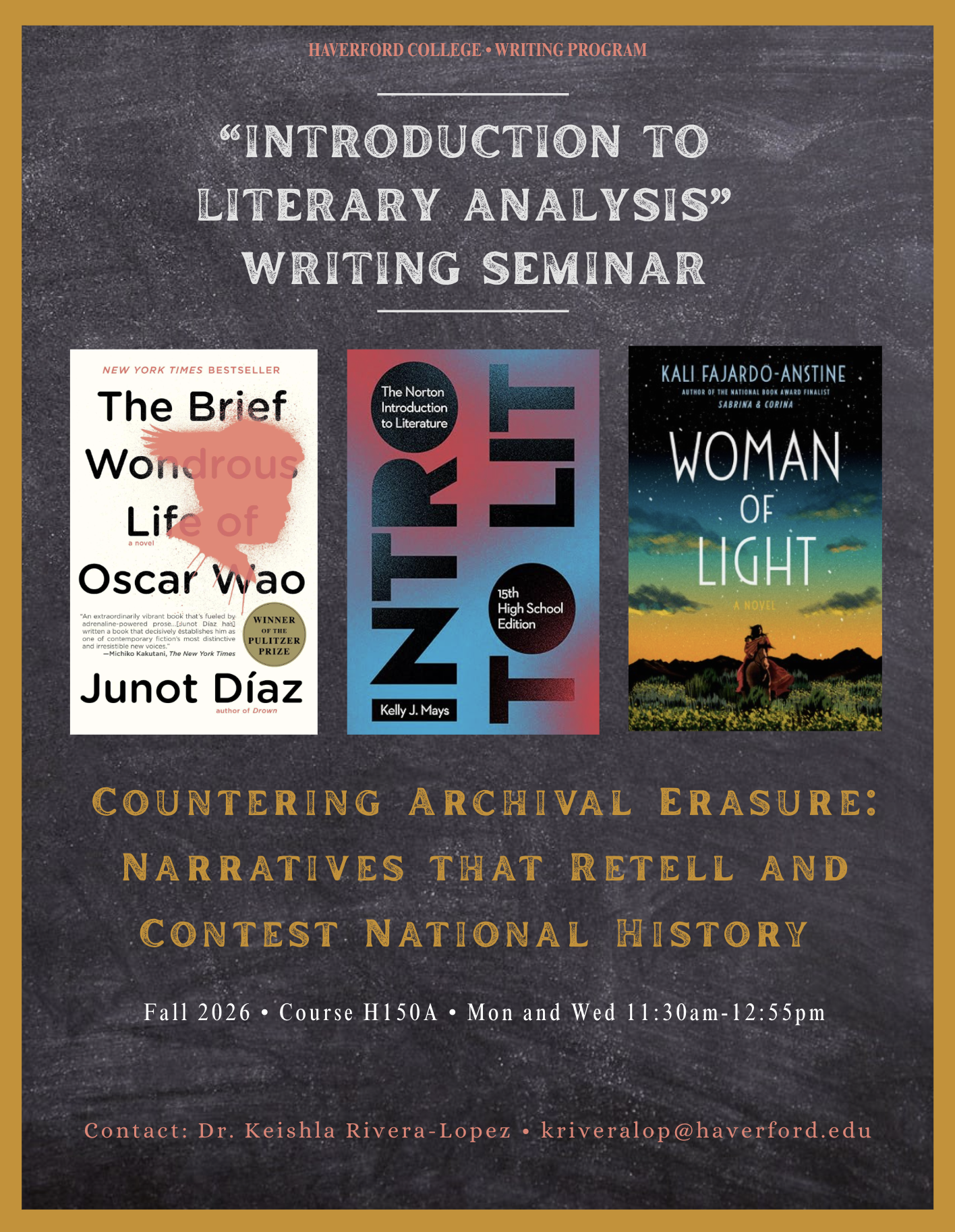
Course Description: In 2018, Black Panther captivated cinemas worldwide and informed conversations about power, history, recovery, and storytelling. In the epic museum heist scene, the antagonist, Killmonger, steals (back) African artifacts at what is presumed to be the British Museum. Before doing so, Killmonger also corrects the museum director who wrongfully describes their origin and purpose, and thus the story behind the artifacts for all patrons. Through this scene and character, the film writers challenge reparations in the present and the idea of the truth, as the proverbial notion that victors write the stories is true. We expect museums, and institutions alike, to provide their visitors, and larger audiences, with the accounts, records, and stories of prominent events that took place in the past and present. How do we remember history? Where are the places we go to seek answers about events that took place before us? Who is narrating the past for us in the present? In this literary analysis course, we will be considering how archival erasures, silences, and misrepresentation are an invitation for us to investigate and rewrite in ways that are focused on revealing truths and recovery. Students will engage with the archive, as theory and noun, to think about recovering stories from the past that may have been occluded, erased, or ignored in literature that engages with national memory. In their course essays, students will investigate how a text of their choice examines a particular topic, era, or event and engages in recovery work as a form of repair through (re)narration and representation. Students will leave the course being able to analyze various genres of literature that engage with writing about the past as it informs the present.
- Profesor: Keishla Rivera-López
Categoría: Writing Program
- Profesor: Joshua Kopin
Categoría: Writing Program
- Profesor: Keishla Rivera-López
Categoría: Writing Program
- Profesor: B Bastie
Categoría: Writing Program
- Profesor: Hannah Schultz
Categoría: Writing Program
Beginning with one of the great epics of the Western Tradition and culminating with a post-apocalyptic novel, this course explores how literary texts depict, theorize, and otherwise meditate on questions of location, identity, and community. Through a wide range of readings that include Odysseus’s treacherous homecoming, the dramatic appeal of disguise and deception in Shakespearean tragedy, the nostalgic recollection of England’s green and pleasant lands, racial passing in 1920s Harlem, a bottled-up English butler, and an alternate history of the contemporary US, we will investigate how literary texts construct the spaces, styles, and plots essential for the making of shared meanings. By what imaginative means do writers help us think about race, class, and gender? How do texts conceal and reveal social logics of belonging and exclusion? Tracking a course through epic poetry, drama, lyric poetry, memoir, and novels, we will combine close stylistic analysis with historical and theoretical accounts. This course introduces students to a range of writing styles and forms (and collaborative work) necessary for flourishing within the English major.
- Profesor: Alexander Millen
Categoría: Writing Program
- Profesor: Jeremy Gallion
Categoría: Writing Program
- Profesor: Ryan Warwick
Categoría: Writing Program
- Profesor: Ryan Warwick
Categoría: Writing Program
- Profesor: Ryan Warwick
Categoría: Writing Program
- Profesor: Ryan Warwick
Categoría: Writing Program

- Profesor: Bethany Swann
Categoría: Writing Program

- Profesor: Bethany Swann
Categoría: Writing Program

- Profesor: Bethany Swann
Categoría: Writing Program

- Profesor: Bethany Swann
Categoría: Writing Program
- Profesor: Theresa Tensuan
Categoría: Writing Program
Overview of the course: Throughout this semester we will read works ranging from memoirs to graphic narratives to lyric collections to a spy novel that illuminate and illustrate the complex individual, familial, communal, and national histories that have conjured “Asian American” as a social formation, a political formulation, and a site of creative play and imagination. This course fulfills Haverford’s writing seminar requirement and offers an introduction to the Tri-Co Asian American Studies program. Bold faced texts are available via the bookstore system (as well as independent stores such as Powells); all other texts will be archived on Moodle.
• We will be reading two memoirs - The Woman Warrior, Maxine Hong Kingston’s “memoir of a girlhood among ghosts,” and Citizen 13660, Miné Okubo’s graphic account of her family’s forced relocation and incarceration following Executive Order 9066 during WWII – to consider the impact of cultural expectations, national policies and international relations on individuals’ trajectories, familial formations, and the destruction/(re)constitution of communities.
• In our reading of two collections of poetry - Eric Tran’s The Gutter Spread Guide to Prayer and Rick Barot’s Galleons – we will be focusing on the ways in which poetic forms offer can give shape to inchoate feelings and explore how language can reshape our understanding of the world.
• Throughout the term, we will be reading essays from Meena Avashia’s Another Appalachia: Coming up Queer and Indian in a Mountain Place as well as stories by Jamil Jan Kochai and Viet Nguyen that engage in practices of worldbuilding and offer examples of code shifting and code breaking, alongside essays by Julia Alvarez, Marilyn Hacker, Cathy Park Hong, George Orwell, and Michelle Zauner that illuminate the different ways in which forms of representation arise out of a matrix of interpersonal cultural, and generational dynamics.
• We will close with Chang-rae Lee’s Native Speaker, a novel that thematizes assimilation as spycraft, identity as performance, and politics as the ground of competing cultures.
• Thanks to the generosity of the Tri-Co in Philly program, we will be making a field trip to Philadelphia's Chinatown led by Asian Americans United (AAU) to take part in a walking tour that situates the history of the neighborhood through to current grass-roots organizing efforts in relation to gentrification and immigration, followed by lunch in Chinatown. The working date for the field trip is Saturday, February 14; we will firm up details in the first two weeks of class.
• We will be hosting visits from poet Iain Haley Pollock ’00 and Afghan journalist Fahim Abed and will be learning from their writing practices and professional trajectories
- Profesor: Theresa Tensuan
Categoría: Writing Program
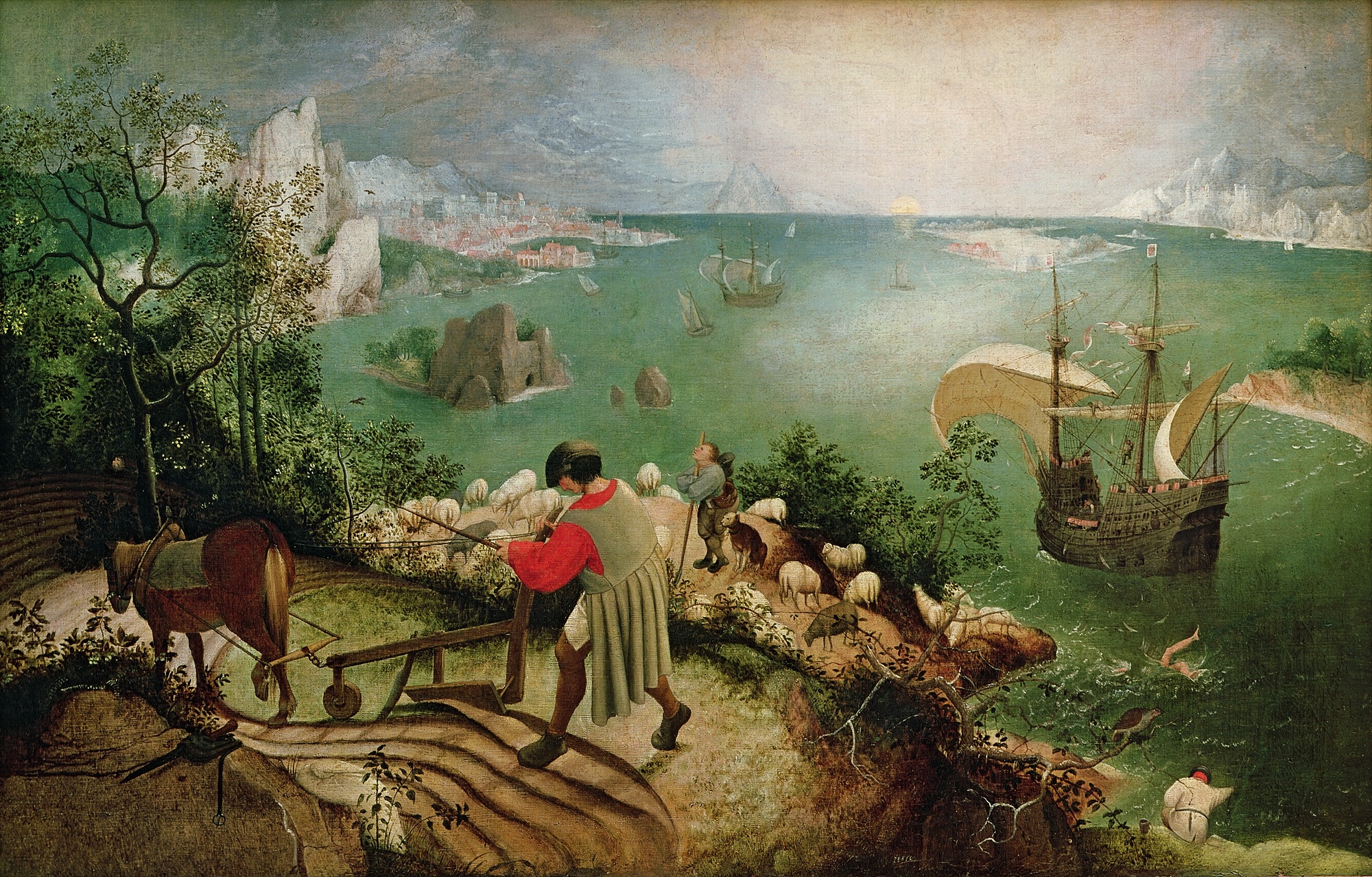
- Profesor: Indie Halstead
Categoría: Writing Program
- Profesor: Eman Al-Drous
Categoría: Writing Program
- Profesor: Eman Al-Drous
Categoría: Writing Program
- Profesor: Joshua Kopin
Categoría: Writing Program

- Profesor: Bethany Swann
Categoría: Writing Program

- Profesor: Bethany Swann
Categoría: Writing Program
- Profesor: Terrance Wiley
Categoría: Writing Program

Computing the Self: The Art and Philosophy of Digital Culture
James Draney
What does it feel like to live in data? To be tagged, tracked, followed, favorited, or rated? How has the datafication of everyday life shaped your social life, or altered the way you relate to yourself and others? Students in this class will ask what it means to see and be seen as a data object. To do so, you will analyze a variety of novels, stories, works of philosophy, psychology, and social science that have dramatized the questions posed above. The class will focus on several twenty-first-century novels and essays, with occasional forays back into the early twentieth century. You will pay special attention to the ways writers and artists use aesthetic and essayistic forms to think through, and intervene in, everyday life. Along the way, you will learn to write about the strangeness of your own computational encounters.
- Profesor: James Draney
Categoría: Writing Program

This will be our landing page this year for team info and updates! Please keep an eye out for new info!
- Coach: William Bryant
- Coach: Annick Lamar
- Coach: Justyce Pollitt
Categoría: Miscellaneous