Categoria: Miscellaneous
Haverford Moodle
Risultati della ricerca: 388
- Docente: Kevin Quin
Categoria: Africana Studies
- Docente: Kevin Quin
Categoria: Africana Studies
- Docente: Zeynep Sertbulut
Categoria: Anthropology
- Docente: Zolani Ngwane
Categoria: Anthropology
And most of all beware, even in thought, of assuming the sterile attitude of the spectator, for life is not a spectacle, a sea of grief is not a proscenium, a man who wails is not a dancing bear . . .
–Aimé Césaire
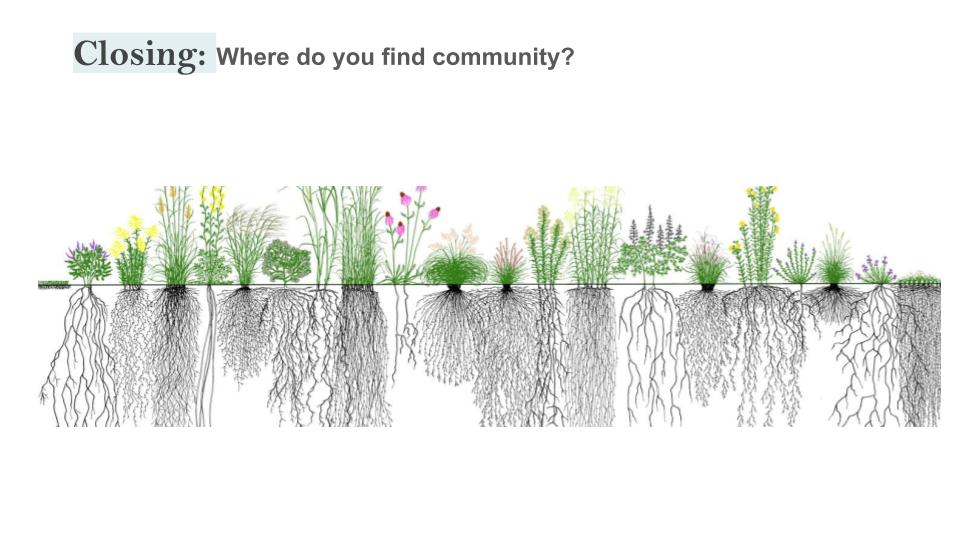
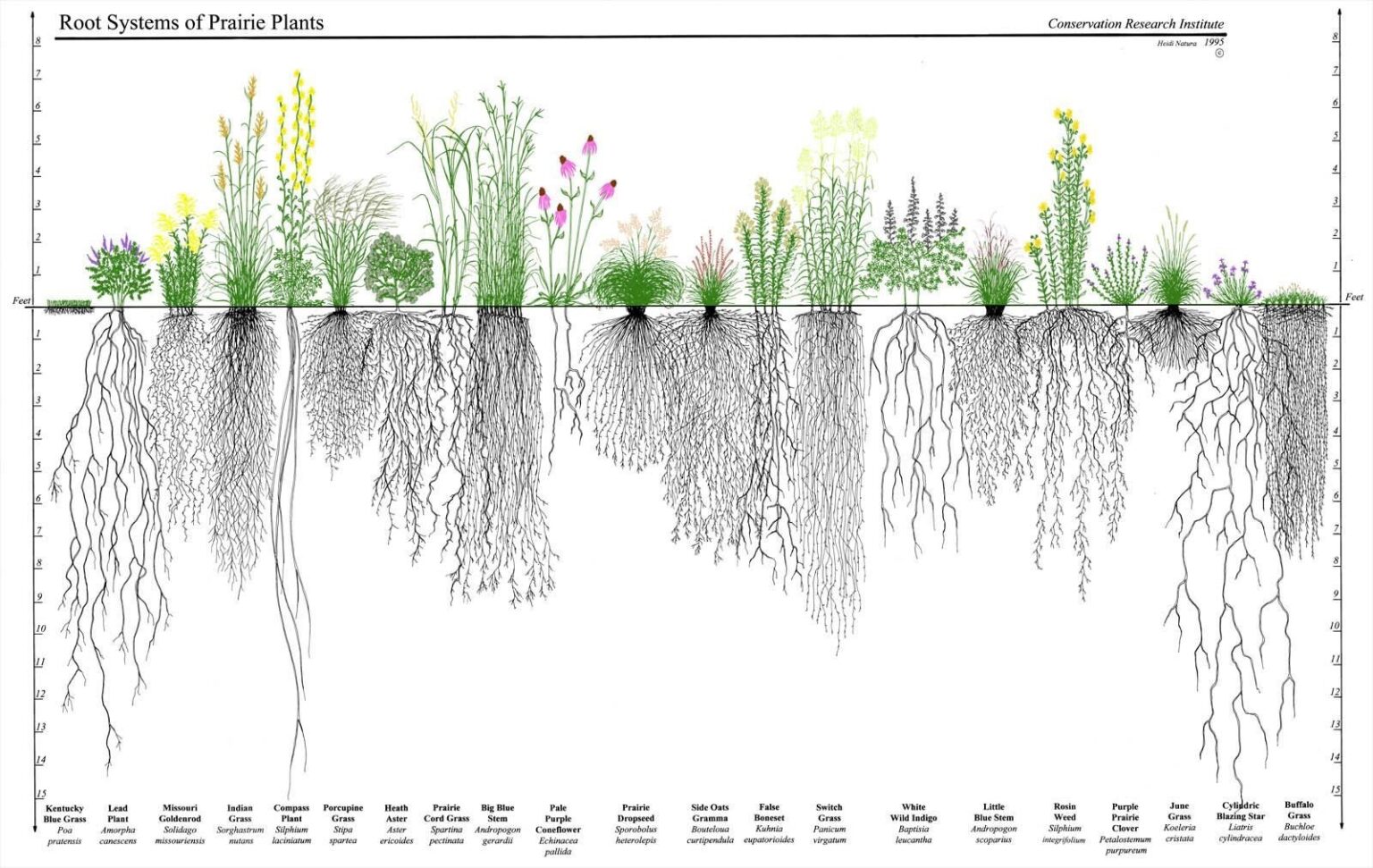
How do we turn our collective full-bodied intelligence towards collaboration, if that is the way we will survive?
–adrienne maree brown
The State is a condition, a certain relationship between human beings, a mode of behavior; we destroy it by contracting other relationships, by behaving differently toward one another....
–Gustav Landauer
There are no dangerous thoughts–thinking itself is dangerous.
–Hannah Arendt
I do think that if I had to choose one word to which hope can be tied, it is hospitality… practice of hospitality recovering threshold, table, patience, listening, and from there generating seedbeds for virtue and friendship on the one hand. On the other hand, radiating out for possible community, for rebirth of community.
–Ivan Illicch
A problem calls for a solution; the only question is whether one can be found and made to work, and once this is done, the problem is solved. A predicament, by contrast, has no solution. Faced with a predicament, people come up with responses. Those responses may succeed, they may fail, or they may fall somewhere in between, but none of them ‘solves’ the predicament, in the sense that none of them makes it go away.
– John Michael Greer
This course will introduce students to the field of environmental anthropology which focuses on the interrelationship between human cultures and natural environments. In particular we will attend to the challenge of anthropological confrontations with the climate crisis related cascading crises, including inequality and white supremacy. Environmental anthropology studies the various ways in which our biological survival and our social structures are influenced by environmental factors around us, while at the same time analyzing how our actions shape these environmental factors in turn. We will look towards anthropology (and related disciplines) for intellectual, imaginative and action-oriented resources for addressing what may be the most critical issue of our time—climate change–and how it intersects with inequality and intensifying authoritarianism. We will approach these issues through experiential methods and collaborative work.
Broadly there are three segments to this course--the self, ecologies, and collaborations (though not in a linear way). Underlying each of them is a search for ways to live differently with and resist authoritarianism, racial capitalism, and the intensifying climate crisis. While these topics may not always be explicitly present in our readings, they are built into the architecture of the course and should be kept in mind throughout it.
I take seriously the notion that our time together is valuable, that we are in an urgent situation that in many ways the institutions we inhabit (Haverford included) have yet to awaken to our predicament. I also believe that anthropological thinking offers some possibilities for imagining and enacting alternatives. From studies of environmental racism and environmental justice, to indigenous movements and speculative design tools, the anthropological approach is often improvisational, lending itself to experiences that allow for novel juxtapositions, and listening to essential quieter voices that often go unnoticed, viewing the world in imaginative ways, and offering possibilities for new configurations. We engage all of our senses and collaborative capacities in this course. Please come ready to experiment...
- Docente: Joshua Moses
Categoria: Anthropology
- Docente: Zainab Saleh
Categoria: Anthropology
- Docente: Michael D'Arcy
Categoria: Anthropology
- Docente: Zolani Ngwane
Categoria: Anthropology
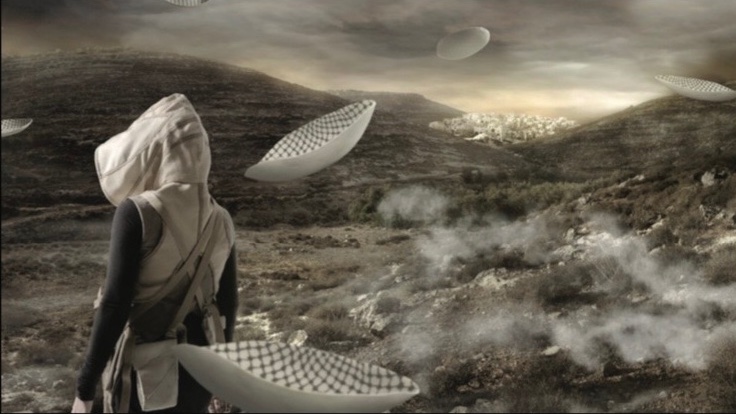
This advanced seminar is an anthropological exploration of empire both as an analytic category and a historical phenomenon. In this course, we will first discuss anthropology’s historical entanglements with empire as the discipline that studies the non-European Others. Then we will read from anthropologists who have criticized this epistemological legacy and incorporated the study of imperialism, empire and imperial formations in their research agenda since the second half of the twentieth century. By looking at cases from the Caribbean, Africa, America, and the Middle East, this course explores key concepts and major debates such as race, genocide, settler colonialism, security, militarism, diaspora, material culture and museums. Students will emerge from this course with an in-depth understanding of anthropological approaches to empire, methodologies ranging from archival research to ethnography, and the analytical limits and possibilities of empire in making sense of our contemporary world.
- Docente: Ezgi Guner
Categoria: Anthropology
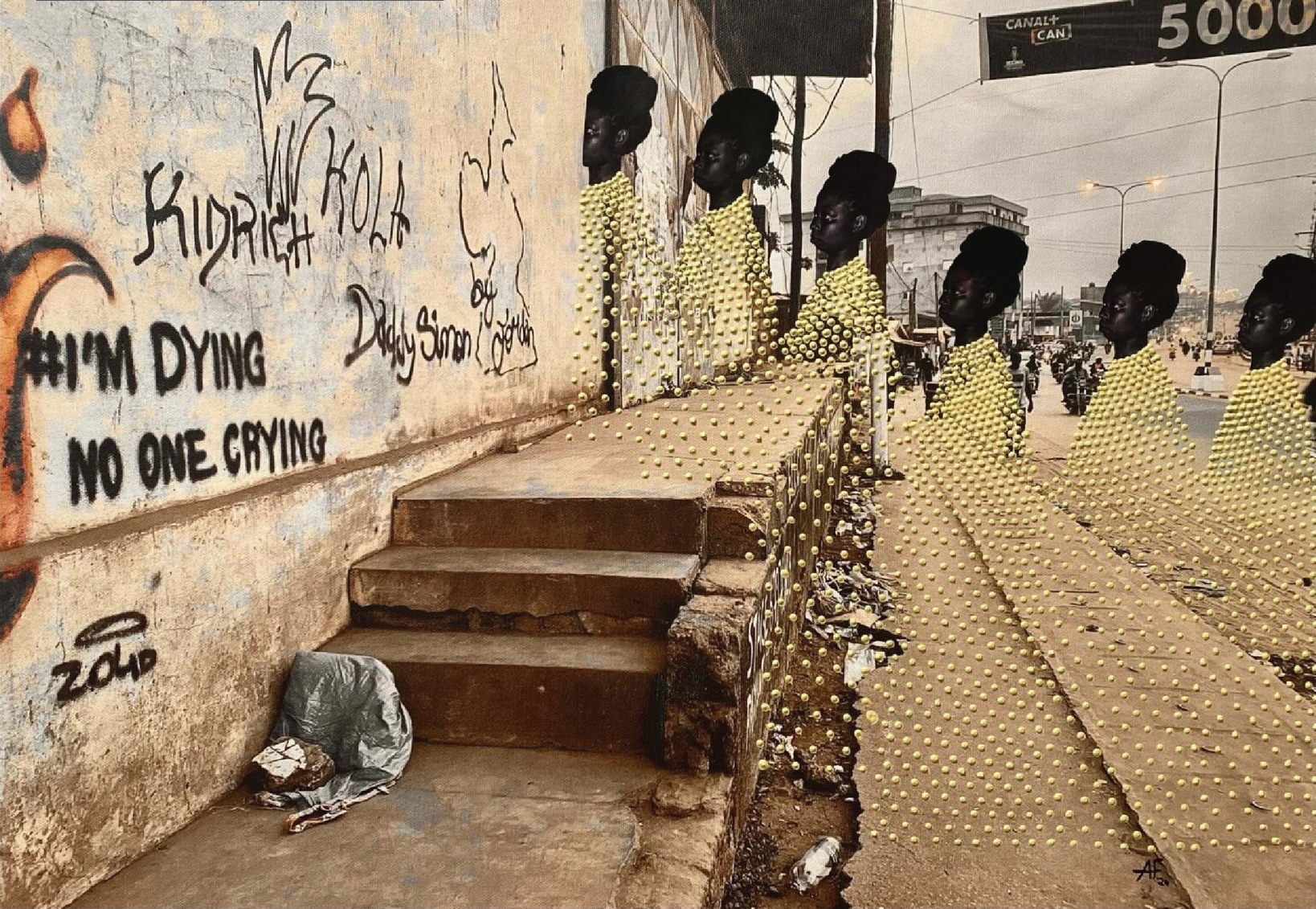
This interdisciplinary seminar explores Africa’s global connections and diasporic formations through ethnographic case studies. Moving beyond narratives that position Africa as peripheral or passive in global processes, the course places African people, histories, and cultural practices at the center of global inquiry. Drawing from richly textured ethnographic accounts, we will examine how African communities engage with, shape, and challenge global structures of power—including capitalism, religion, media, migration, and humanitarianism.
At the same time, we turn a critical eye to the methodologies and politics of ethnographic writing itself. Whose stories are told, how are they framed, and to what ends? Students will engage deeply with questions of representation, voice, and the ethics of knowledge production in African and diasporic contexts. Together, we will rethink what it means to study “Africa” and “the diaspora” as lived, contested, and globalized experiences. The course combines critical reading, discussion, writing, and independent research, culminating in a final ethnographic or analytical project.
At the same time, we turn a critical eye to the methodologies and politics of ethnographic writing itself. Whose stories are told, how are they framed, and to what ends? Students will engage deeply with questions of representation, voice, and the ethics of knowledge production in African and diasporic contexts. Together, we will rethink what it means to study “Africa” and “the diaspora” as lived, contested, and globalized experiences. The course combines critical reading, discussion, writing, and independent research, culminating in a final ethnographic or analytical project.
- Docente: Ezgi Guner
- Docente: Zolani Ngwane
Categoria: Anthropology
- Docente: Zolani Ngwane
Categoria: Anthropology
- Docente: Emily Hong
Categoria: Anthropology
- Docente: Emily Hong
Categoria: Anthropology
This course of Intensive First Year Arabic is designed for students with no previous knowledge, or very limited knowledge, of the Arabic language. Through the communicative approach and audio/visual materials, students learn the sounds, writing system, and basic grammar of Modern Standard Arabic, the form of literary Arabic shared by all Arab countries. Emphasis is placed on the simultaneous development of all the four skills necessary for acquiring any language (listening, speaking, reading and writing). Various aspects of modern Arabic culture and society will provide contexts for the language learning process.
There are no prerequisites for First Year Arabic, and the course assumes no prior knowledge of Arabic. Students who are native or heritage speakers of Arabic or have studied Arabic prior to enrolling in the course have to take the placement exam to assess if they can test out of this course, and into a higher level.
There are no prerequisites for First Year Arabic, and the course assumes no prior knowledge of Arabic. Students who are native or heritage speakers of Arabic or have studied Arabic prior to enrolling in the course have to take the placement exam to assess if they can test out of this course, and into a higher level.
- Docente: Manar Darwish
Categoria: Arabic
This course of Intensive First Year Arabic is designed for students with no previous knowledge, or very limited knowledge, of the Arabic language. Through the communicative approach and audio/visual materials, students learn the sounds, writing system, and basic grammar of Modern Standard Arabic, the form of literary Arabic shared by all Arab countries. Emphasis is placed on the simultaneous development of all the four skills necessary for acquiring any language (listening, speaking, reading and writing). Various aspects of modern Arabic culture and society will provide contexts for the language learning process.
There are no prerequisites for First Year Arabic, and the course assumes no prior knowledge of Arabic. Students who are native or heritage speakers of Arabic or have studied Arabic prior to enrolling in the course have to take the placement exam to assess if they can test out of this course, and into a higher level.
There are no prerequisites for First Year Arabic, and the course assumes no prior knowledge of Arabic. Students who are native or heritage speakers of Arabic or have studied Arabic prior to enrolling in the course have to take the placement exam to assess if they can test out of this course, and into a higher level.
- Docente: Manar Darwish
- Docente: Amira Ghazy
Categoria: Arabic
This course of Intensive First Year Arabic is designed for students with no previous knowledge, or very limited knowledge, of the Arabic language. Through the communicative approach and audio/visual materials, students learn the sounds, writing system, and basic grammar of Modern Standard Arabic, the form of literary Arabic shared by all Arab countries. Emphasis is placed on the simultaneous development of all the five skills necessary for acquiring any language: listening, speaking, reading, writing and intercultural competency. Exploring various aspects of modern Arabic culture and society will provide contexts for the language learning process.
The two required textbooks have audio and video components available through the textbooks’ website: Lingco which will help you develop your listening and pronunciation skills, and will immensely help you in your studies and with your homework. Closely studying the content of the audio and video material and trying to reproduce them will help you acquire more vocabulary and expression.
The two required textbooks have audio and video components available through the textbooks’ website: Lingco which will help you develop your listening and pronunciation skills, and will immensely help you in your studies and with your homework. Closely studying the content of the audio and video material and trying to reproduce them will help you acquire more vocabulary and expression.
- Docente: Manar Darwish
- Docente: Radwa El Barouni
Categoria: Arabic

This course of Intensive First Year Arabic is designed for students who have already completed Intensive first semester First Year Arabic, or its equivalent. We will continue learning, through the communicative method and audio/visual material to listen to, speak, read and write Modern Standard Arabic, the form of Arabic shared by educated people of the Arabic Speaking World. Classroom time is mainly devoted to activating the material students already prepared through conversation, discussions, short writing activities and grammar drills. The class will be regularly introduced to authentic cultural materials derived from a variety of the living contexts of the more than 300 million Arabic-speaking people. The aim is to advance students to a higher level of the language and proficiency.
Our main textbook has audio/video components made available on the publisher’s website: Lingco (Please get access if you have not already done that in the Fall.) There are many activities that will help you continue to develop your listening and pronunciation skills, and will immensely help you in your studies. Closely studying the content of the audio/video material and trying to reproduce them will help you acquire more vocabulary and express yourself more eloquently.
No language can be studied in a vacuum and has to be tied to the culture that utilizes it. Arabic is spoken in over twenty African and Asian countries. The written language is standardized, mainly because of the Qur’ân, the spoken dialects vary from one country to another and even from one region to another within the same country. In addition to MSA, you can become familiar with one or another of two major dialects if you so wish; later, you can select other dialects to suit your needs, especially as you travel overseas.
- Docente: Manar Darwish
- Docente: Amira Ghazy
Categoria: Arabic
This is a reading course in classical Arabic texts. Because there is a vast array of literature to choose from ranging from the religious to the secular from the 8th century on, and it is all extraordinarily interesting, we will choose selections from books with the interest of the enrolled students in in mind. We will also use supplemental sources for comparison as time allows.
The first book we will start with is written by ‘Abd al-Laṭīf al-Baghdādī (1162-1231). It consists of two parts, the first a kind of anthropology of Egypt, including many archaeological references and descriptions (59 pages) and the second a very short annalistic chronicle of the years 1200-1202 in Egypt. This whole book was written in 1204. The author, who was an Iraqi physician from al-Mawṣil (Mosul) was an employee of the ‘Abbāsid caliphal government in Iraq, sojourned in Egypt for a number of years.
A second book that is worth exploring together, and is an earlier work, consists of two short travel reports by Abū Zayd al-Sīrāfī (fl. c. 915-6) and Aḥmad Ibn Faḍlān. The work by al-Sīrāfī itself consists of two parts, the first by an earlier anonymous author writing in 851-2 (22 pages) and the second by al-Sīrāfī, probably written around or after 915 (34 pages). The topic is travel by sea to India, Southeast Asia, and China, giving an account of ninth and tenth century conditions as well as the extent of Middle Eastern knowledge or those areas and their peoples at the time of writing. The second work (35 pages) by Aḥmad Ibn Faḍlān (fl. 921-2) consists of a description of an embassy of 921-2 from the ‘Abbāsid caliph in Baghdad to the Volga Bulgars, whose capital was located in what is now Tatarstan, Russia, about 60 miles south of Kazan. All that is known of this author’s life is what can be deduced from his writing. Ibn Faḍlān’s book is considered one of the most important early sources for the early history of Russia, as well as for diplomacy in the ‘Abbāsid caliphate.
In addition, we will be using An Introduction to Modern Arabic by Farhat J. Ziadeh and R Bayly Winder as it introduces grammar in an easy to follow manner for students of all backgrounds. Students at the Advanced/ Superior Level will find it a refreshing review and will provide an insight into the structure of the language from a different perspective.
- Docente: Manar Darwish
Categoria: Arabic