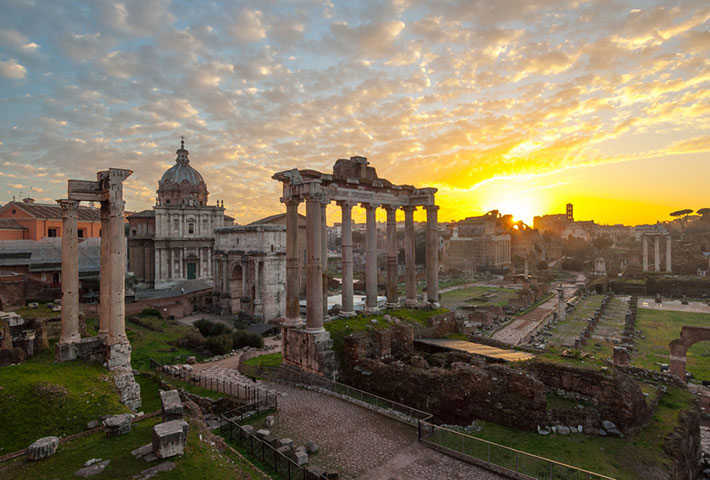
The object of this course is no less than you to learn what it is like to be an ancient Roman—and why that still matters in 21st century. To do so we will investigate what made the Romans revolutionary in their time and of lasting influence thereafter. This course is a rara avis (a rare bird). It is not only a history course—although we will encounter 1,000 years of Roman history, some of it in delicious detail. Still less is this only a literature course or an art history course—although we will be reading some of the greatest literature ever written and studying the sculptural and architectural monuments that gave shape to the European tradition, mediating the Greek achievement to what became known (for good and ill) as the West. Think of this instead as a moral orientation to the Romans and their republic. What do we mean by “moral” or “republic,” or for that matter “Roman”? Fourteen weeks from now you will know!
- Docente: Bret Mulligan
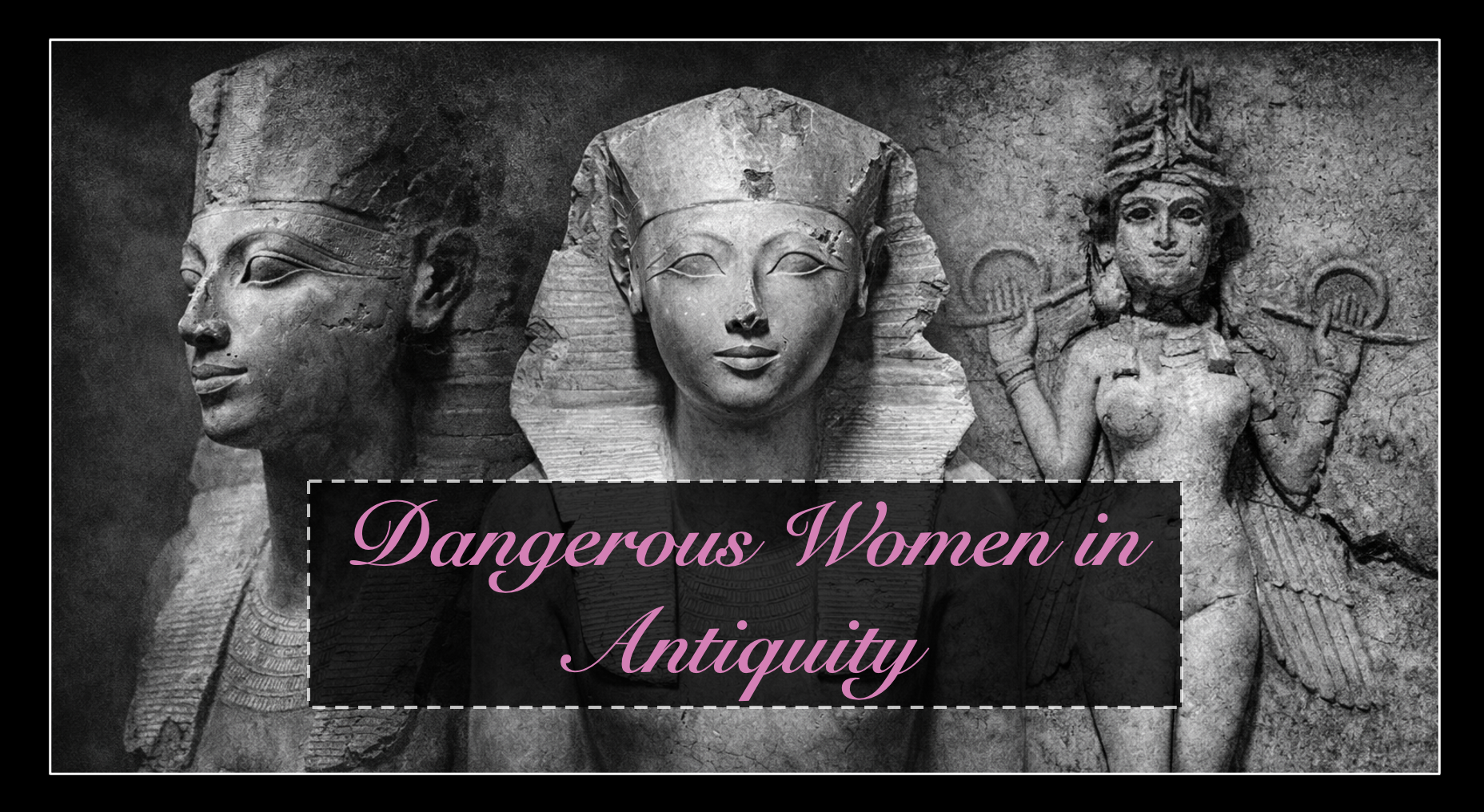
From goddesses who upend cosmic order to queens who reshape empires, “dangerous women” haunt the ancient imagination. Their stories register deep cultural anxieties about power, who may wield it, how it is legitimized, and what happens when women occupy positions of authority that challenge social, political, or cosmic hierarchies. Across the ancient Mediterranean and Near Eastern worlds, powerful women were alternately revered, instrumentalized, feared, and condemned, especially when their authority intersected with sexuality, foreignness, violence, or religious transgression.
This course analyzes how ancient societies constructed female power as “dangerous,” from mythic figures such as Ishtar and Sekhmet to historical rulers including Queen Puabi, Hatshepsut, Nefertiti, Cleopatra, and Zenobia, in order to negotiate authority within systems of kinship, kingship, empire, and gender. Through literary, historical, artistic, and archaeological sources, students will analyze how representations of “dangerous women” functioned within social boundaries, justify political control, or articulate alternative models of power. By tracing how these figures were remembered, erased, or transformed over time, the course reveals how gendered narratives of danger illuminate the political and social structures of antiquity, and why they continue to shape modern debates about authority, legitimacy, and power.
This course analyzes how ancient societies constructed female power as “dangerous,” from mythic figures such as Ishtar and Sekhmet to historical rulers including Queen Puabi, Hatshepsut, Nefertiti, Cleopatra, and Zenobia, in order to negotiate authority within systems of kinship, kingship, empire, and gender. Through literary, historical, artistic, and archaeological sources, students will analyze how representations of “dangerous women” functioned within social boundaries, justify political control, or articulate alternative models of power. By tracing how these figures were remembered, erased, or transformed over time, the course reveals how gendered narratives of danger illuminate the political and social structures of antiquity, and why they continue to shape modern debates about authority, legitimacy, and power.
- Docente: Nisha Kumar