类别: Philosophy
Haverford Moodle
搜索结果: 388
- 教师: YoungMiranda
类别: Philosophy
“Of all human affairs, communication is the most wonderful”, wrote John Dewey. It is a genuine wonder, he thought, that we can reveal things to one another, examine natural events together, talk about things that do not exist, and transcend our local and temporal contexts. These feats (along with many others) are made possible by language, marks and sounds that carry meaning. What is language? What is the nature of linguistic meaning? And how do words hook up to reality in the first place?
- 教师: SultanescuOlivia
类别: Philosophy
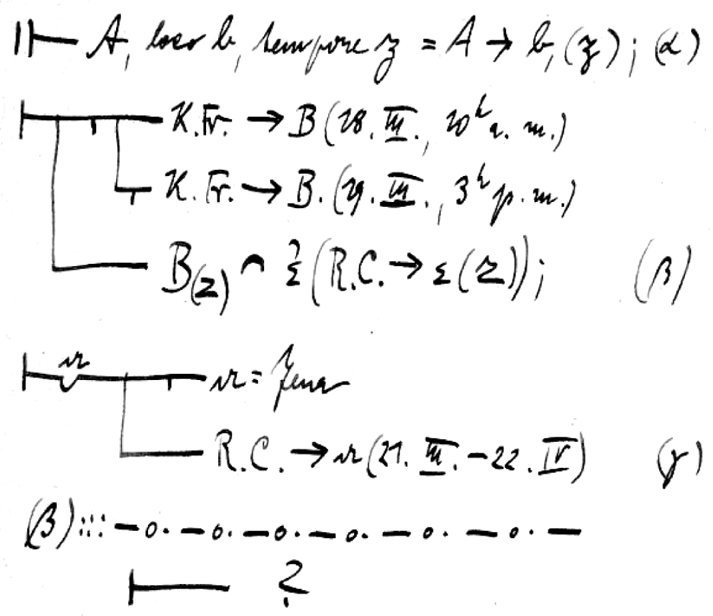
Reasoning plays a central role in our theoretical inquiries and our practical decision making. But what does it mean to reason and moreover, to reason well? What makes an argument strong? What are the limits of logical reasoning? This course provides a historical and formally rigorous introduction to logic, understood as the study of reasoning, inferring, and argumentation. In particular, this class will focus on foundational texts by pioneers in logic such as Aristotle, Immanuel Kant, Bernard Bolzano, Richard Dedekind, Gottlob Frege, Bertrand Russell, Georg Cantor, Ludwig Wittgenstein, Alan Turing, and Ruth Barcan Marcus. From taking this course, students will appreciate how questions concerning the nature of reasoning cannot be separated from questions concerning the nature of language, truth, meaning, thought, and reality. Students will also appreciate the contemporary importance of logic in fields such as computer science, linguistics, and mathematics.
- 教师: Tran-HoangPaul
类别: Philosophy
What is psychoanalysis? What are its goals and its achievements, its problems and its guiding questions? How can we approach psychoanalytic practice philosophically? This course will be guided by theoretical explorations and group discussions on the grounding texts of psychoanalysis. We will approach psychoanalysis through conceptual analysis and philosophical inquiry, highlighting the existential and the theoretical problems raised by psychoanalytic practice.
Participating in the course discussions will help you gain, question, and renew insights into psychoanalysis understood as a critical tool and as a unique introspective experience. The guiding idea of the course is that the access to the philosophical reflection on psychoanalytic experience is open to any individual willing to question the history of their own desires, as well as the ideals, the fantasies and the ideologies guiding their culture(s).
Participating in the course discussions will help you gain, question, and renew insights into psychoanalysis understood as a critical tool and as a unique introspective experience. The guiding idea of the course is that the access to the philosophical reflection on psychoanalytic experience is open to any individual willing to question the history of their own desires, as well as the ideals, the fantasies and the ideologies guiding their culture(s).
- 教师: PopaDelia
类别: Philosophy
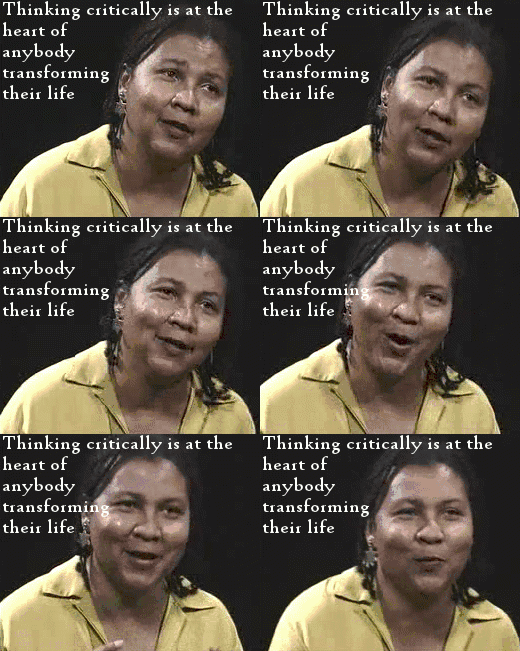
bell hooks’ theory of the "oppositional gaze" attempts to wrestle with the connection between aesthetics and epistemology: how does what and how we know shape how we evaluate and relate to art? Through a survey of visual, literary, and performance arts primarily by Black and Latina women (e.g., Lorraine O’Grady, Mickalene Thomas, Christina Sharpe, Ana Victoria Jiménez) this course seeks to theorize the many dimensions of the oppositional gaze, with a focus on the ways these thinker-artists challenge, critique and disrupt various binaries that they identify with the history of western philosophy. In our exploration, we will consider feminist standpoint epistemologies, Black feminist poethics, and decolonial theory, amongst other frames.
类别: Philosophy

The term intersectionality originated in Kimberlé Crenshaw’s work in the legal field. Since that time, many disciplines have recognized the importance of the concept and sought to make use of the concept in their own fields. This course will attempt to determine how and to what extent intersectionality may fit into the discipline of philosophy. With a particular focus on the ethical dimensions of the concept, we will seek to determine the conceptual difficulties intersectionality brings to bear on philosophy. Likewise, we will ask the larger question: what does intersectionality bring to bear on the discipline of philosophy? And how are the answers to these questions linked to the fraught inclusion of Black feminisms, histories, and concepts into the discipline? As such, the course will focus on close readings of major treatments of what might generally be referred to as “intersectionality.” We will look at the theoretical foundations for intersectionality found in the history of Black feminist writing. After a deep reading of Kimberlé Crenshaw’s two foundational texts on intersectionality, we will then move on to reading and discussing takings-up and criticisms that highlight the tensions inherent in intersectional theorizing: Anna Carastathis’ Intersectionality: Origins, Contestations, Horizons, Vivian May’s Pursuing Intersectionality: Unsettling Dominant Imaginaries, Patricia Hill Collins and Sirma Bilge’s Intersectionality, and Jennifer Nash’s Black Feminism Reiminaged. In sum, the course hopes to answer the question: given intersectionality’s concerns with race, gender, class, sexuality, social location and ability, why is it important that philosophy respond to the challenges intersectionality has offered? In an attempt to address these questions, students in the course will conduct a project in conjunction with Haverford's archives of Africana philosophy that seeks to consider ways that the archives might become a site of intersectional praxis.
类别: Philosophy
Physics 101 is an introductory course exploring the central ideas of classical mechanics and thermodynamics with applications drawn principally from the life sciences, but also from astrophysics, forensic science, and everyday life. Students intending to major in natural sciences will find that the two semesters of Physics 101-102 provide a solid foundation in classical and modern physics. Potential math or chemistry majors should take either this or the Physics 105-106 sequence. Non-science majors also may find this course to be a valuable part of their liberal arts program. Physics majors are advised to take the 105-106 sequence, although you may also start the major in Physics 101 and 102 (or even switch to Physics 106 having taken Physics 101 first semester.)
- 教师: Gimenez-PintoVianney
- 教师: LommenAndrea
- 教师: MastersKaren
- 教师: SinghVijay
- 教师: ThormanPaul
类别: Physics
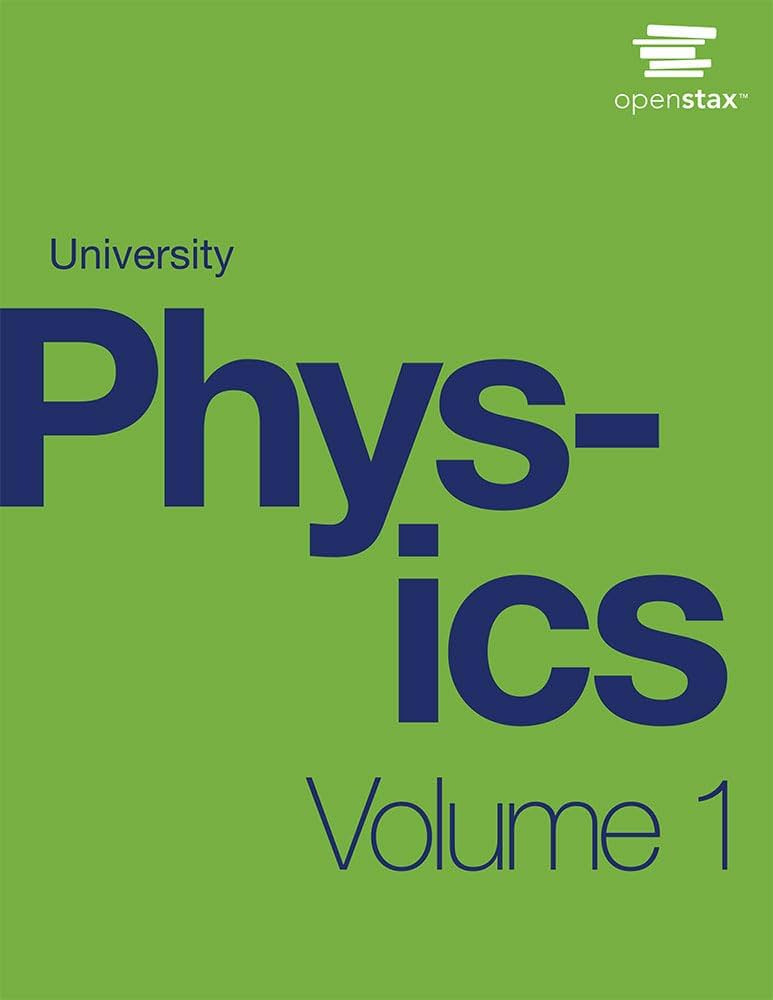
Physics 105 is the first part of the two semester calculus-based introductory Physics series for students interested in Physical Sciences.
This course will cover topics in Newtonian mechanics (equations of motion, rotation and angular momentum, work-energy relations, gravity and orbits, static equilibrium). It will also discuss oscillations, waves and thermodynamics. As a calculus based course, concepts taught in MATH 101 will often be used and referenced.
By then end of the first year sequence (PHYS 105 and 106), we do hope and expect that you will possess enough tools, both theoretical and experimental to approach numerous everyday physics questions. From understanding the behaviors of atoms, molecules and materials to the design of an experimental apparatus, we believe that for those involved in research projects in physics, chemistry and related areas, many concepts that will be taught in this class will be useful in their respective projects.
To succeed in this course, anticipate dedicating a minimum of 6-10 hours per week of work outside of class, excluding lab sessions. Reading the textbook is crucial, but the key to mastering the material lies in actively solving physics problems, including the homework assignments.
- 教师: NdengueSteve
- 教师: SmithWalter
- 教师: ThormanPaul
类别: Physics
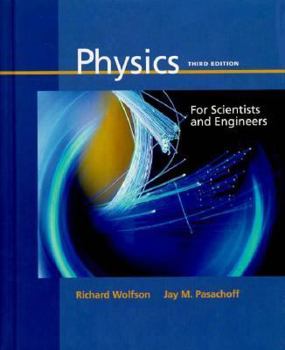
Physics 105 is the first part of the two semester calculus-based introductory Physics series for students with an interest in Physical Sciences.
This course will cover topics in Newtonian mechanics (equations of motion, rotation and angular momentum, work-energy relations, gravity and orbits, static equilibrium). It will also discuss oscillations, waves and thermodynamics. As a calculus based course, concepts taught in MATH H118/120 will often be referenced
This course will cover topics in Newtonian mechanics (equations of motion, rotation and angular momentum, work-energy relations, gravity and orbits, static equilibrium). It will also discuss oscillations, waves and thermodynamics. As a calculus based course, concepts taught in MATH H118/120 will often be referenced
- 教师: AtkinsonMack
- 教师: MastersKaren
- 教师: NdengueSteve
- 教师: SmithWalter
- 教师: ThormanPaul
类别: Physics
- 教师: Gimenez-PintoVianney
- 教师: ThormanPaul
类别: Physics
- 教师: KaneSuzanne
- 教师: SinghVijay
- 教师: SmithWalter
- 教师: ThormanPaul
类别: Physics
- 教师: SinghVijay
- 教师: ThormanPaul
类别: Physics
- 教师: BrzinskiTed
- 教师: ThormanPaul
类别: Physics

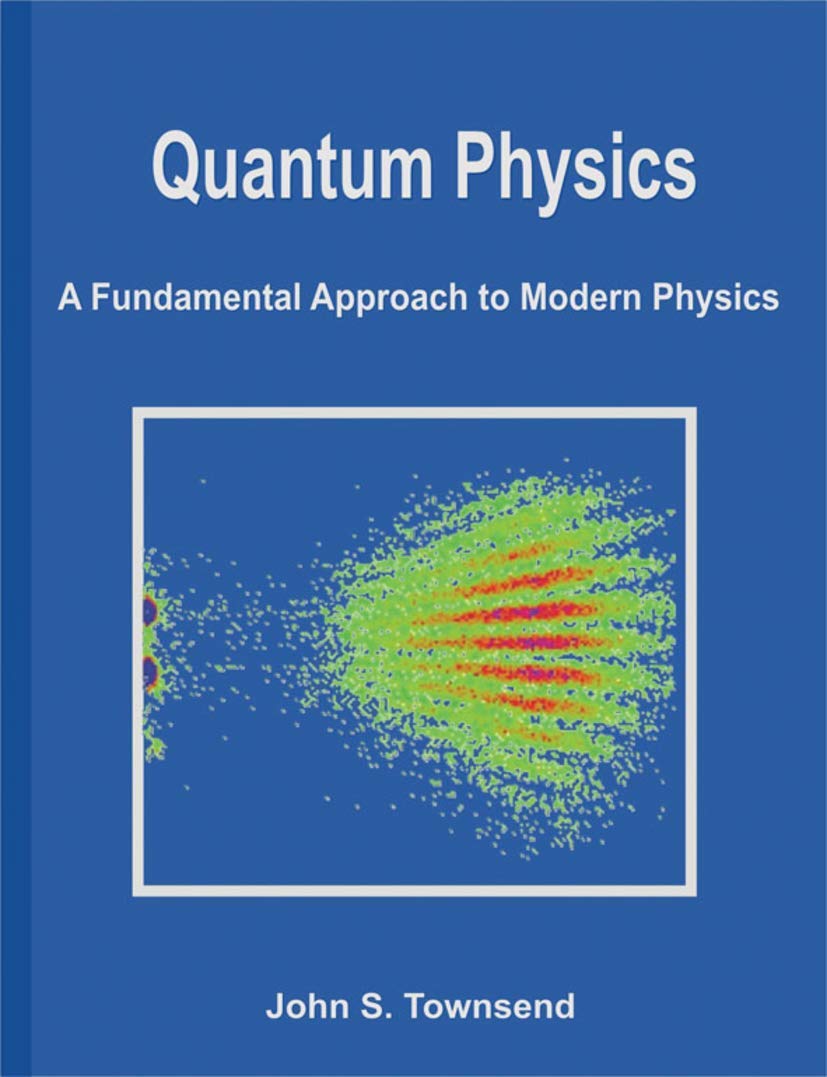
The United Nations declared 2025 the International Year of Quantum Science and Technology in recognition of the centenary of the advent of quantum mechanics, marked amongst others by the seminal paper of Werner Heisenberg in Zeitschrift für Physik that translated to "On quantum-theoretical reinterpretation of kinematic and mechanical relationships". Quantum physics is one of the most intriguing topics that emerged in Physics in the early 20th century and gave rise to what is referred to modern physics. Being familiar with a continuous world, the ideas of quantum physics such as the quantization, the superposition, or even entanglement are all new and non necessarily intuitive concepts. Nevertheless, quantum physics de- scribes a world that is around us: atoms, molecules, materials and more obey the laws of quantum physics and lead to macroscopic values that we experience more frequently. What is then quantum mechanics? Some view quantum mechanics as a set of mathematical tools that are used to understand quantum physics.
In this course, we will present and discuss some fundamental topics of quantum mechanics starting from some initial ideas of modern physics with relativity and the breakdown of classical physics. We will look at the Schrödinger equation, one of the central equations of quantum mechanics, and its solution for several textbook cases, culminating with a presentation of the hydrogen atom. Along the way we will uncover many rules of this field and make use of your prior exposure to wave and optics, but also your knowledge of linear algebra and calculus to tackle problems.
In this course, we will present and discuss some fundamental topics of quantum mechanics starting from some initial ideas of modern physics with relativity and the breakdown of classical physics. We will look at the Schrödinger equation, one of the central equations of quantum mechanics, and its solution for several textbook cases, culminating with a presentation of the hydrogen atom. Along the way we will uncover many rules of this field and make use of your prior exposure to wave and optics, but also your knowledge of linear algebra and calculus to tackle problems.
- 教师: BrzinskiTed
- 教师: NdengueSteve
类别: Physics