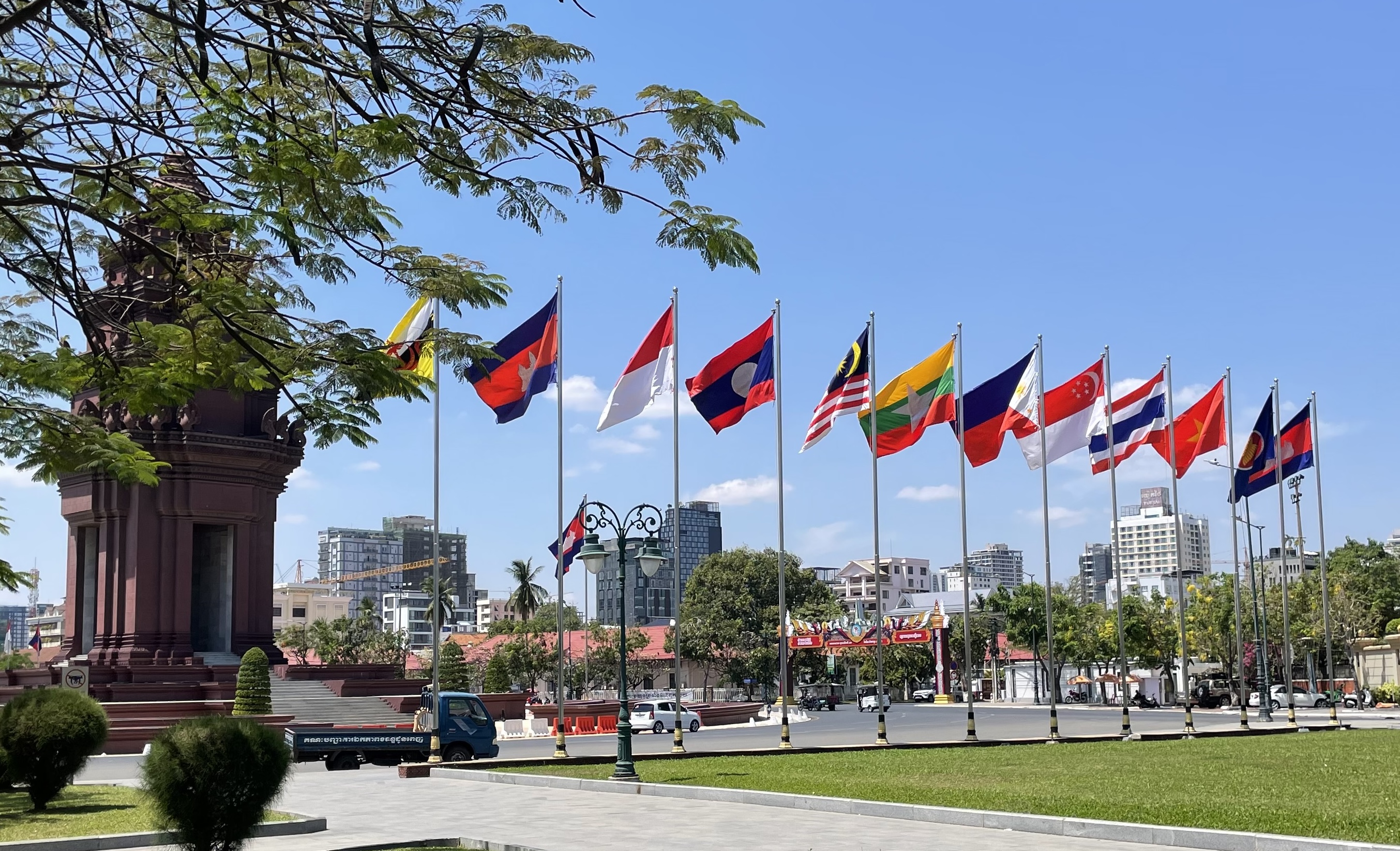
Are small and middle powers simply pawns in great power games? Southeast Asia represents the central stage of U.S.-China competition amid growing uncertainty over the future of multilateralism and the durability of regional peace. Tensions are escalating in the South China Sea and along the Thai-Cambodian border, with over half a million Cambodians displaced from the violence. How can Southeast Asian states ensure regional security and stability despite their material and strategic limitations?
This course provides an overview of the international relations of Southeast Asia, a highly diverse and fast-growing region. It examines the foreign policies and strategic orientations of Southeast Asian states and their efforts to assure an autonomous future and to shape the rules of the game in the region. Case studies include Indonesia’s leadership of the Association of Southeast Asian Nations, a regional organization of increasingly divided between the mainland and maritime states. An overarching theme is understanding how smaller states exert agency and manage relationships with power asymmetries, such as in the case of China’s Belt and Road Initiative.
The topics to be discussed include Southeast Asia’s sources of insecurity, the politics of regionalism, economic integration in border regions, conflict management and diplomacy, and the geopolitics of infrastructure competition in the Mekong region. Students have the opportunity to explore the Lowy Institute’s Asia Power Index to make sense of the capabilities of the region’s small and middle powers in class and to conduct a semester-long research project on a topic of their choosing.
- Trainer/in: Kathrin Reed