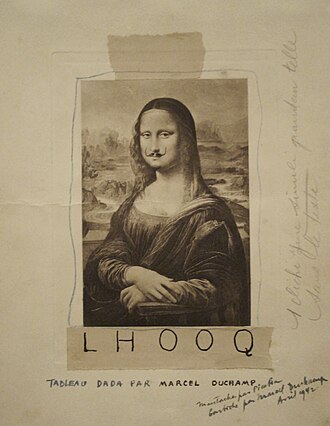
This course approaches the study of literature (and cultural expression more broadly) through the arts of borrowing, sampling, copying, recycling, and remixing. We’ll ask: how did “originality” become the standard of literary value? How has this standard operated as a powerful form of cultural distinction? And how have literary, sonic, and visual remixes worked to rewrite this standard? As we explore these questions, we’ll encounter theories of authorship, intellectual property, and plagiarism—ideas shaped and reshaped by social and technological transformation. Approaching the remix as a creative/critical practice rather than a fixed genre, we’ll learn how literary genres themselves develop through borrowing and experimentation, and we’ll analyze related practices of allusion, adaptation, collage, intertextuality, parody, satire, and sampling. Together we’ll read texts that foreground modes of cultural theft, refuse originality and authenticity as such, and mobilize the remix as an important source of knowledge production. As these texts help to demonstrate, the remix offers alternative ways of imagining cultural value, remaps matrices of community and identification, and produces new (or newly reconfigured) modes of pleasure and possibility.
Throughout, we’ll be especially concerned with how our cultural understanding of intellectual property has been shaped by legacies of theft and commodity exchange rooted in racial capitalism. We’ll explore how nineteenth-century African American writers theorized intellectual property in the context of the slave trade and the forced circulation of persons-as-property; examine various twentieth- and twenty-first-century avant-garde, experimental, and postmodern texts and artworks as they challenge and/or reinforce the historical occlusion of women, queer people, and people of color from these categories; and consider cultural capital as it accrues (and gets transformed) in and out of the academy.
Finally, this course will ask you to analyze your own role as an author, and to actively and energetically theorize your reading and writing practices. We’ll explore how citation serves as a form of intellectual community building–a substrate of ethical and scholarly relation–and experiment with capacious modes of marking how the voices of others live in and animate our scholarly writing. We’ll aim to inhabit the anarchic spirit of the remix in our discussions, and learn to craft arguments while discovering how the remix operates as its own kind of argument against cultural hierarchy.
Throughout, we’ll be especially concerned with how our cultural understanding of intellectual property has been shaped by legacies of theft and commodity exchange rooted in racial capitalism. We’ll explore how nineteenth-century African American writers theorized intellectual property in the context of the slave trade and the forced circulation of persons-as-property; examine various twentieth- and twenty-first-century avant-garde, experimental, and postmodern texts and artworks as they challenge and/or reinforce the historical occlusion of women, queer people, and people of color from these categories; and consider cultural capital as it accrues (and gets transformed) in and out of the academy.
Finally, this course will ask you to analyze your own role as an author, and to actively and energetically theorize your reading and writing practices. We’ll explore how citation serves as a form of intellectual community building–a substrate of ethical and scholarly relation–and experiment with capacious modes of marking how the voices of others live in and animate our scholarly writing. We’ll aim to inhabit the anarchic spirit of the remix in our discussions, and learn to craft arguments while discovering how the remix operates as its own kind of argument against cultural hierarchy.
- Profesor: Lindsay Reckson