- Teacher: Mack Atkinson
- Teacher: Steve Ndengue
- Teacher: Vijay Singh
- Teacher: Walter Smith
- Teacher: Paul Thorman
- Teacher: Daniel Grin
- Teacher: Suzanne Lindell
- Teacher: Andrea Lommen
Physics 105 is the first part of the two semester calculus-based introductory Physics series for students interested in Physical Sciences.
This course will cover topics in Newtonian mechanics (equations of motion, rotation and angular momentum, work-energy relations, gravity and orbits, static equilibrium). It will also discuss oscillations, waves and thermodynamics. As a calculus based course, concepts taught in MATH 101 will often be used and referenced.
By then end of the first year sequence (PHYS 105 and 106), we do hope and expect that you will possess enough tools, both theoretical and experimental to approach numerous everyday physics questions. From understanding the behaviors of atoms, molecules and materials to the design of an experimental apparatus, we believe that for those involved in research projects in physics, chemistry and related areas, many concepts that will be taught in this class will be useful in their respective projects.
To succeed in this course, anticipate dedicating a minimum of 6-10 hours per week of work outside of class, excluding lab sessions. Reading the textbook is crucial, but the key to mastering the material lies in actively solving physics problems, including the homework assignments.
- Teacher: Steve Ndengue
- Teacher: Walter Smith
- Teacher: Paul Thorman
- Teacher: Steve Ndengue
- Teacher: Walter Smith
- Teacher: Paul Thorman
- Teacher: Suzanne Kane
- Teacher: Vijay Singh
- Teacher: Walter Smith
- Teacher: Paul Thorman
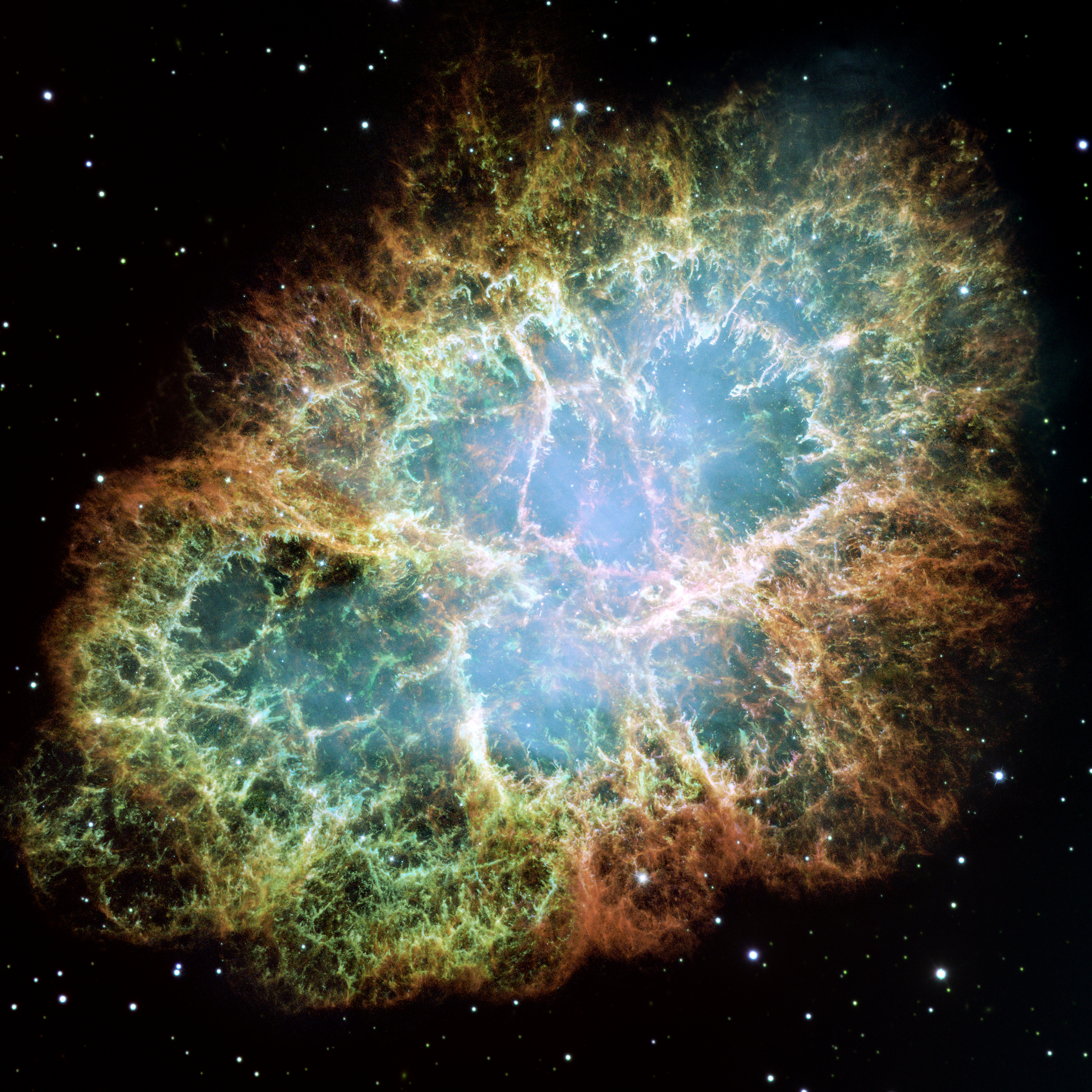
Statistical Physics (sometimes Statistical Mechanics) is often not well understood as a topic to beginning physics students, but ends up containing many people’s favorite undergraduate physics content. It was mine! Statistical physics combines ideas from the fields of quantum mechanics, classical mechanics, probability theory, and relativity, to name a few. It connects macroscopic, bulk properties (like temperature) to properties on a microscopic scale (like particle velocities). It is subtle and complex, and it cannot be learned by simply doing problem sets. You will need to read (books and online) talk to your classmates and to me (and anyone else who may be interested). You will directly benefit from every minute spent synthesizing the material. The more connections you make, the more likely you will fall in love with statistical mechanics. Applications range from solid state physics, to astrophysics, to information theory, to engines, to non-linear dynamics, to thunder, biological systems, climate change, etc. etc.
- Teacher: Ted Brzinski
- Teacher: Karen Masters