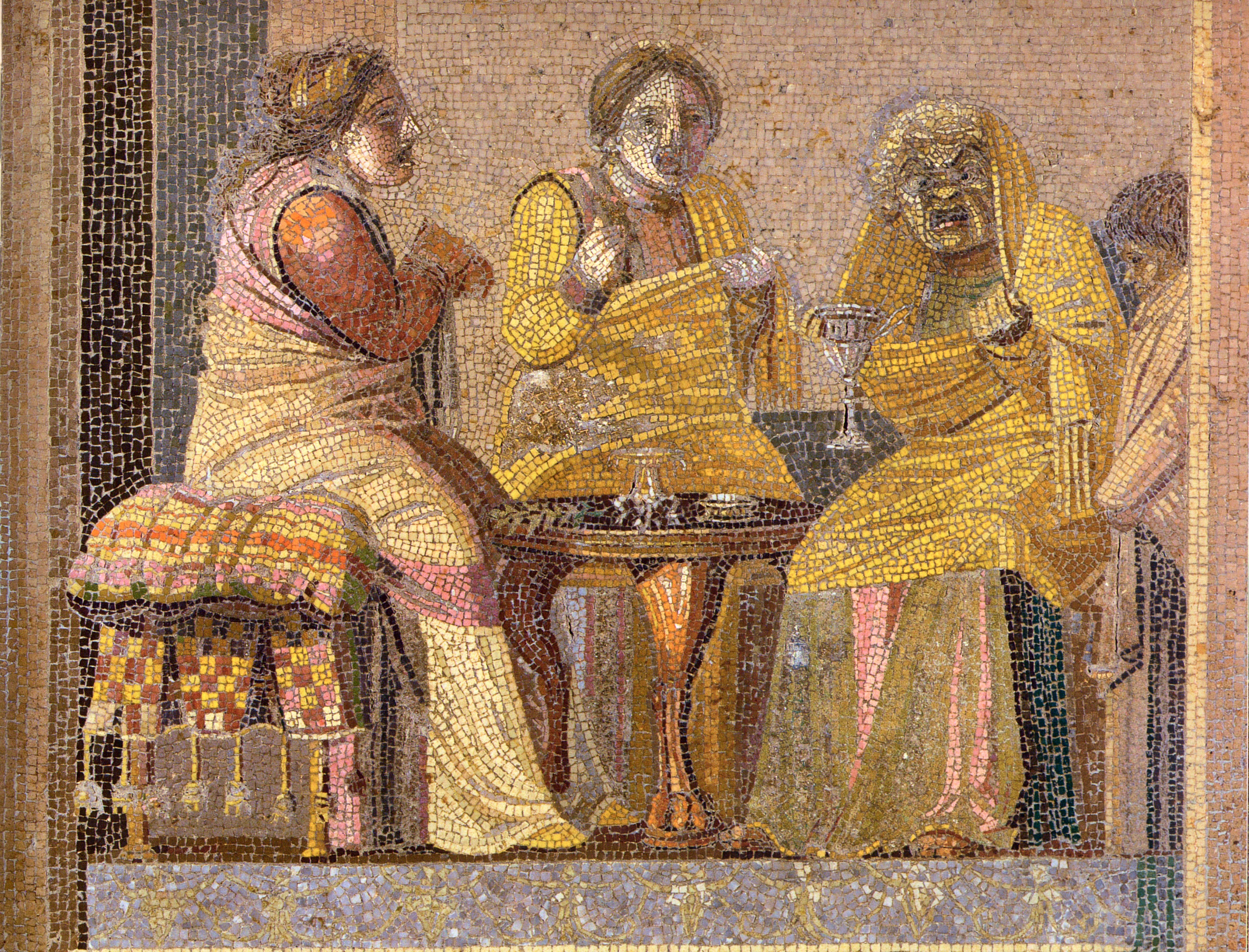

Postclassical Latin is both an advanced investigation of the Latin language and a literature seminar. You will improve your ability to understand Latin naturally, as a varied, organic language, by reading, analyzing, and discussing a variety of texts from the postclassical period, the more than seventeen hundred years (c. 300 ce to the present) when Latin evolved from a living into an immortal language.
Since there are nearly 1 trillion words of extant postclassical Latin (compared to a “mere” 100 million words of Classical Latin), this course will feature four topically and temporally distinct vignettes from the postclassical tradition: (a) late antique centonic and allegorical literature that recombines the lines and half-lines of Vergil into poems sacred (Proba’s Cento) and profane (Ausonius’ Cento Nuptialis), followed by selections of Prudentius’ Psychomachia, a graphic meditation on the war between virtue and vice; (b) vibrant, diverse sacred and secular Medieval works, with special focus on those by the visionary saint, Hildegard of Bingen; (c) a brief stop-over in the European Renaissance (Italian, Dutch, and/or English); and (d) the Latin of “New Spain”, including poems about Mexico and the Virgin of Guadalupe. Along the way, we will drop in on a range of postclassical “best sellers,” readable and popular texts from these periods.
Since there are nearly 1 trillion words of extant postclassical Latin (compared to a “mere” 100 million words of Classical Latin), this course will feature four topically and temporally distinct vignettes from the postclassical tradition: (a) late antique centonic and allegorical literature that recombines the lines and half-lines of Vergil into poems sacred (Proba’s Cento) and profane (Ausonius’ Cento Nuptialis), followed by selections of Prudentius’ Psychomachia, a graphic meditation on the war between virtue and vice; (b) vibrant, diverse sacred and secular Medieval works, with special focus on those by the visionary saint, Hildegard of Bingen; (c) a brief stop-over in the European Renaissance (Italian, Dutch, and/or English); and (d) the Latin of “New Spain”, including poems about Mexico and the Virgin of Guadalupe. Along the way, we will drop in on a range of postclassical “best sellers,” readable and popular texts from these periods.
- Учитель: Bret Mulligan