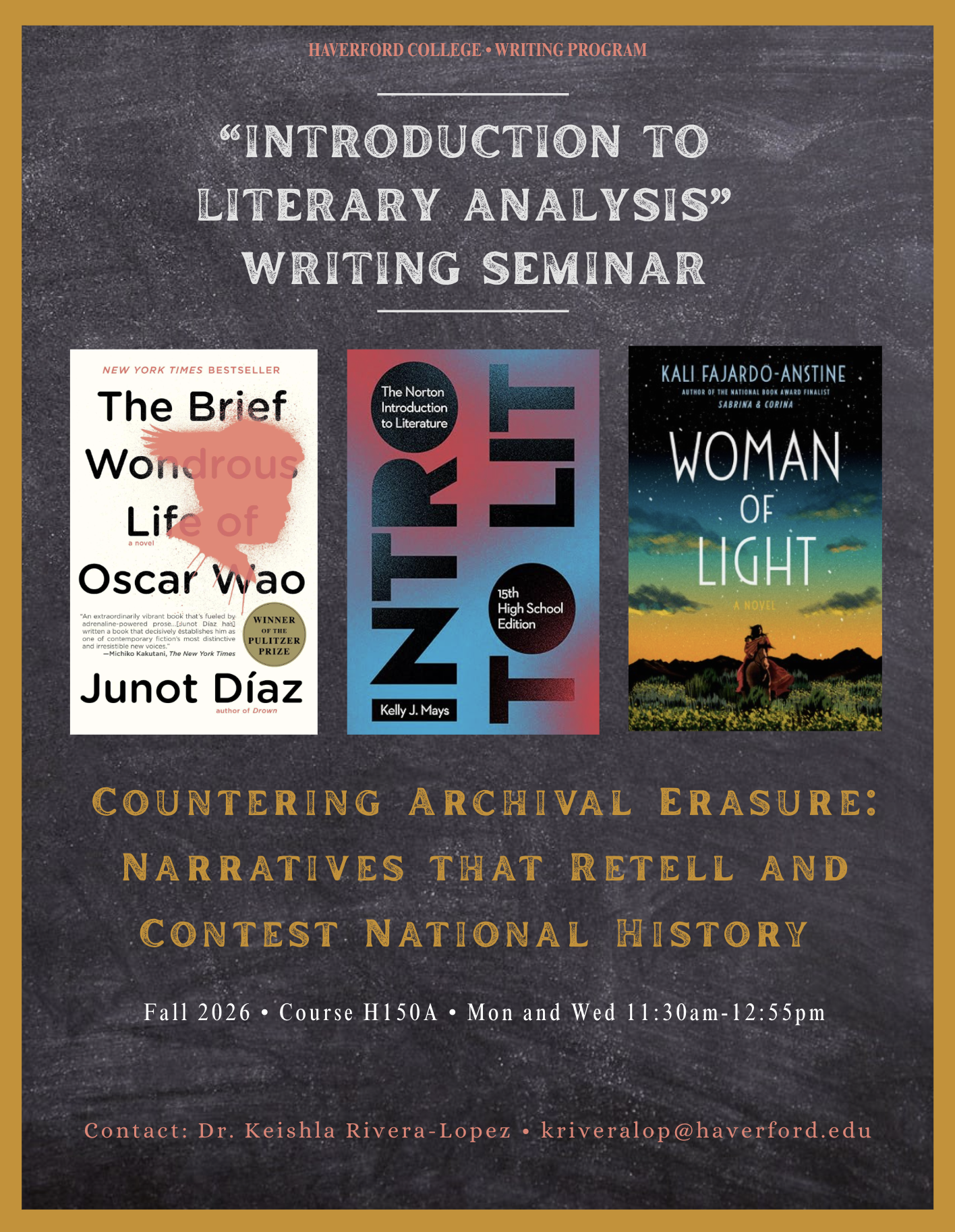
Course Description: In 2018, Black Panther captivated cinemas worldwide and informed conversations about power, history, recovery, and storytelling. In the epic museum heist scene, the antagonist, Killmonger, steals (back) African artifacts at what is presumed to be the British Museum. Before doing so, Killmonger also corrects the museum director who wrongfully describes their origin and purpose, and thus the story behind the artifacts for all patrons. Through this scene and character, the film writers challenge reparations in the present and the idea of the truth, as the proverbial notion that victors write the stories is true. We expect museums, and institutions alike, to provide their visitors, and larger audiences, with the accounts, records, and stories of prominent events that took place in the past and present. How do we remember history? Where are the places we go to seek answers about events that took place before us? Who is narrating the past for us in the present? In this literary analysis course, we will be considering how archival erasures, silences, and misrepresentation are an invitation for us to investigate and rewrite in ways that are focused on revealing truths and recovery. Students will engage with the archive, as theory and noun, to think about recovering stories from the past that may have been occluded, erased, or ignored in literature that engages with national memory. In their course essays, students will investigate how a text of their choice examines a particular topic, era, or event and engages in recovery work as a form of repair through (re)narration and representation. Students will leave the course being able to analyze various genres of literature that engage with writing about the past as it informs the present.
- Учитель: Keishla Rivera-López